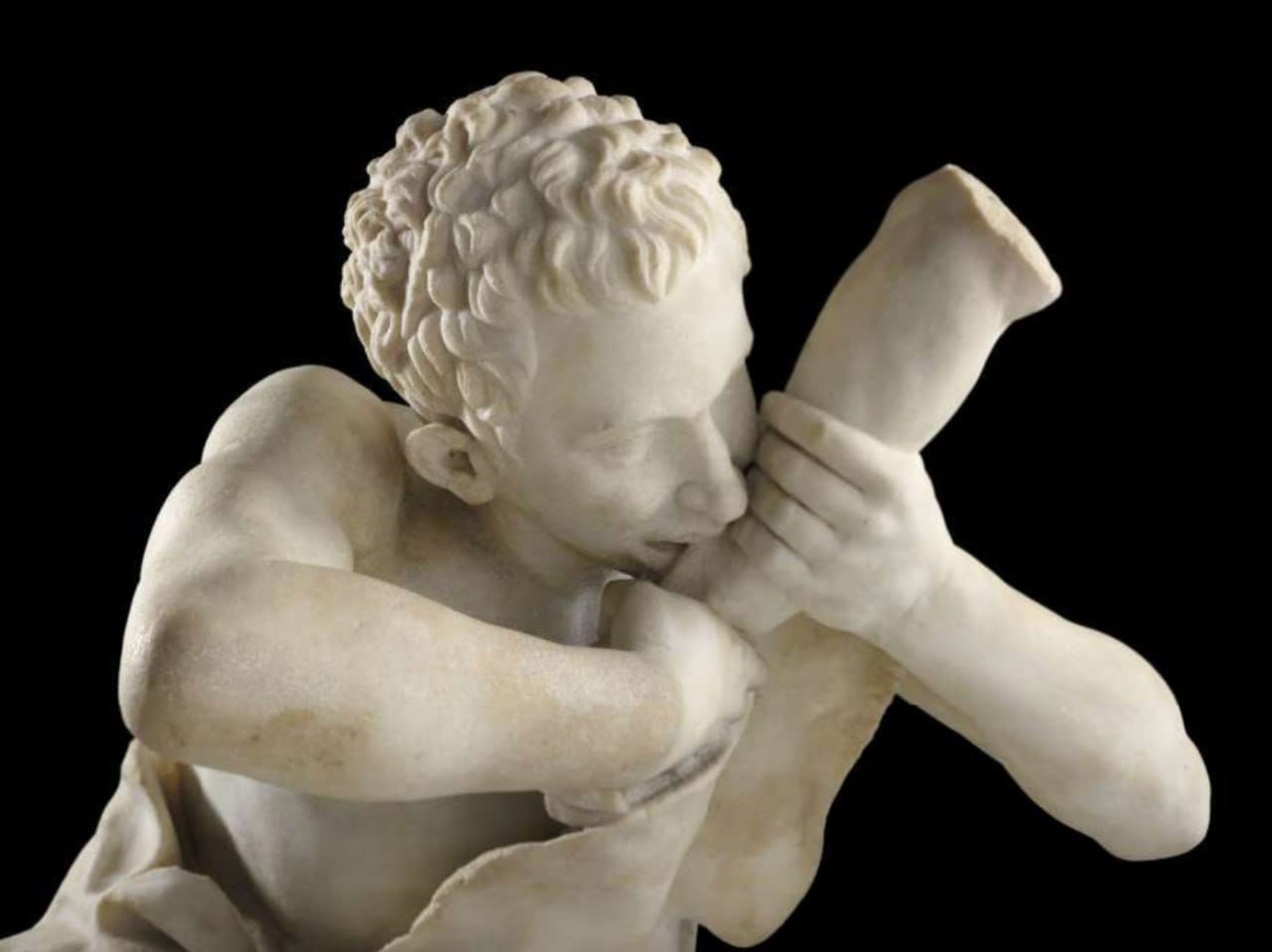
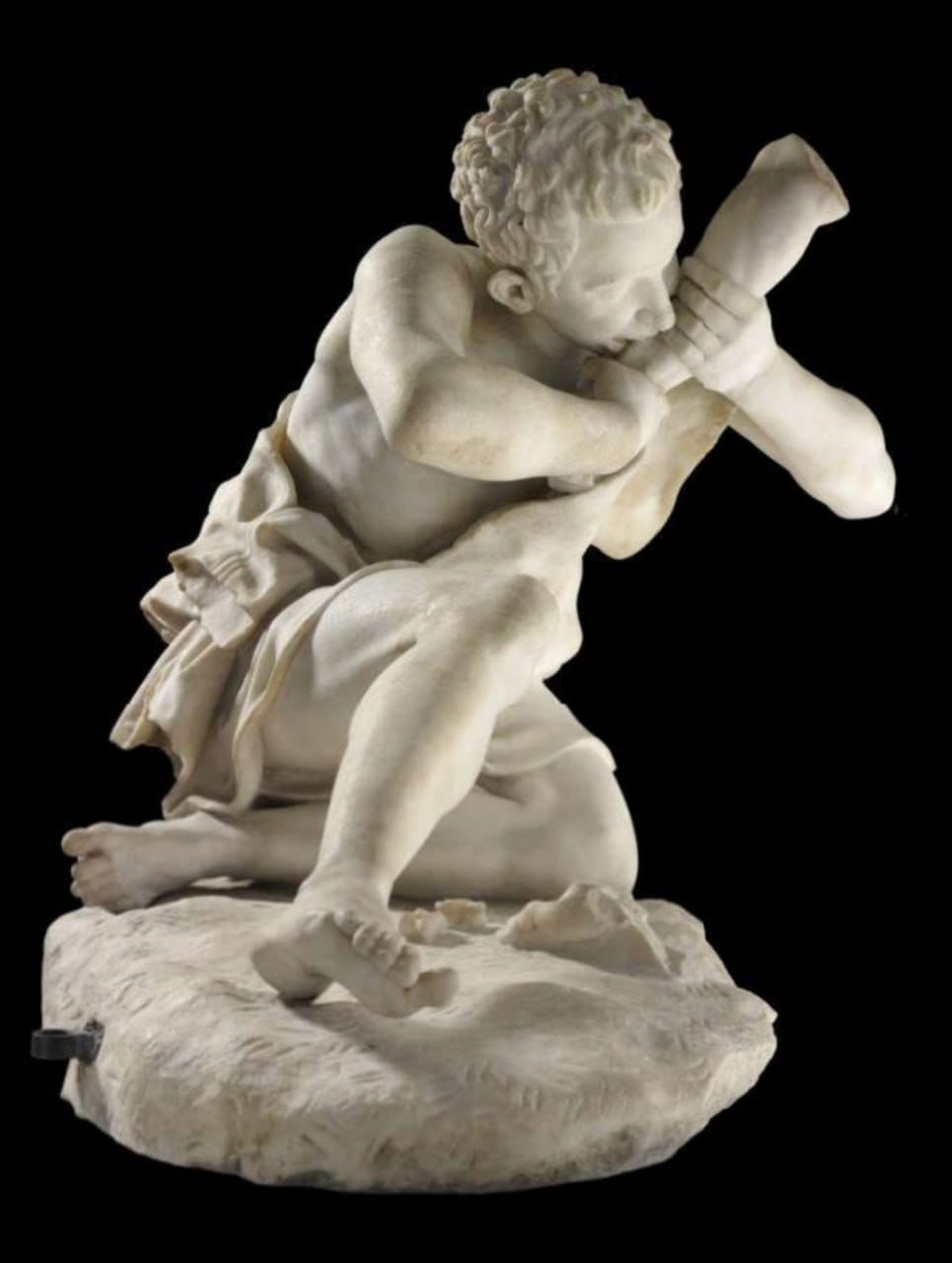
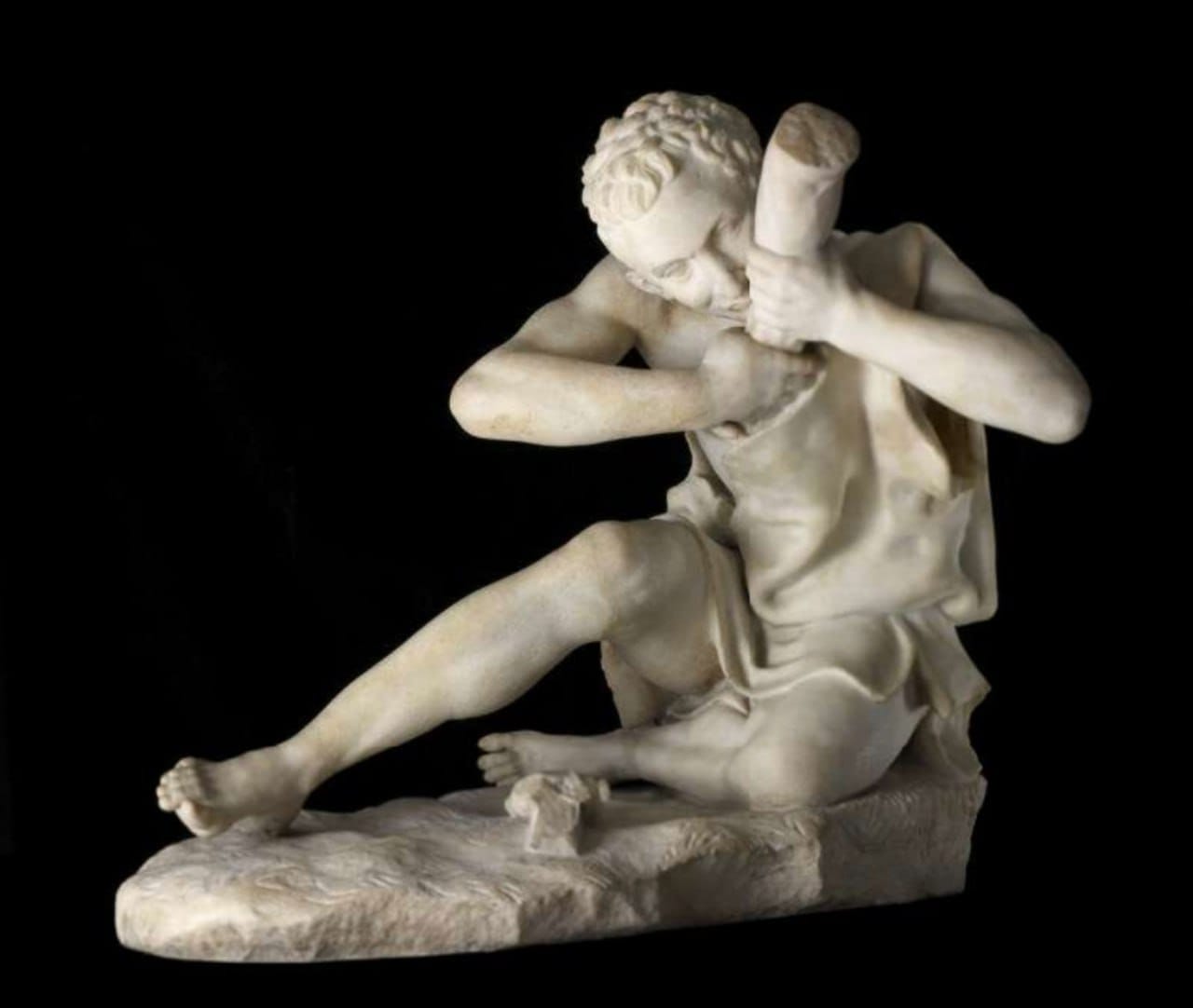
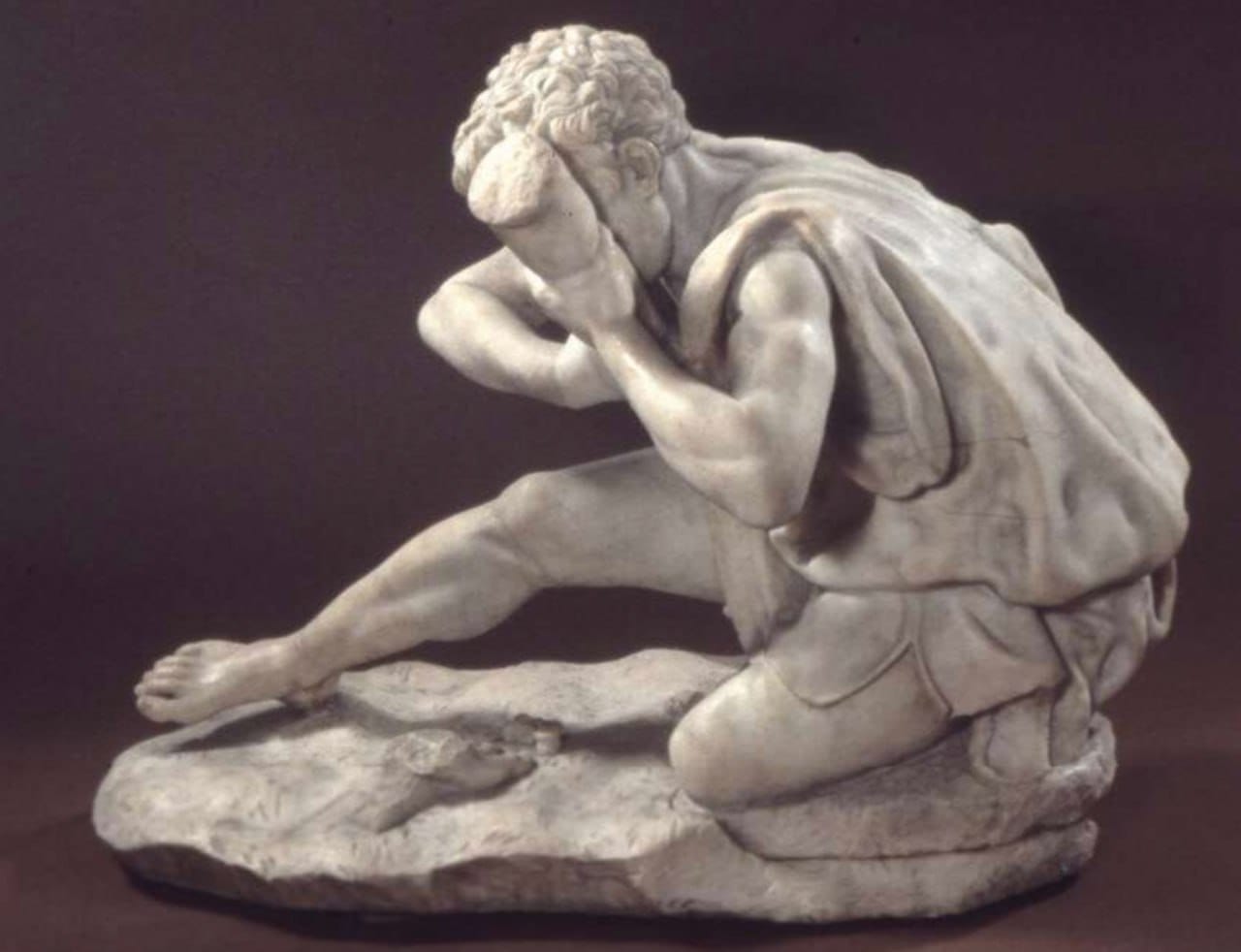
The Roman marble figure of the 2nd–1st centuries BC, found in the Baths of Titus and showing a youth biting the hand of his companion, was at first known as the Cannibal
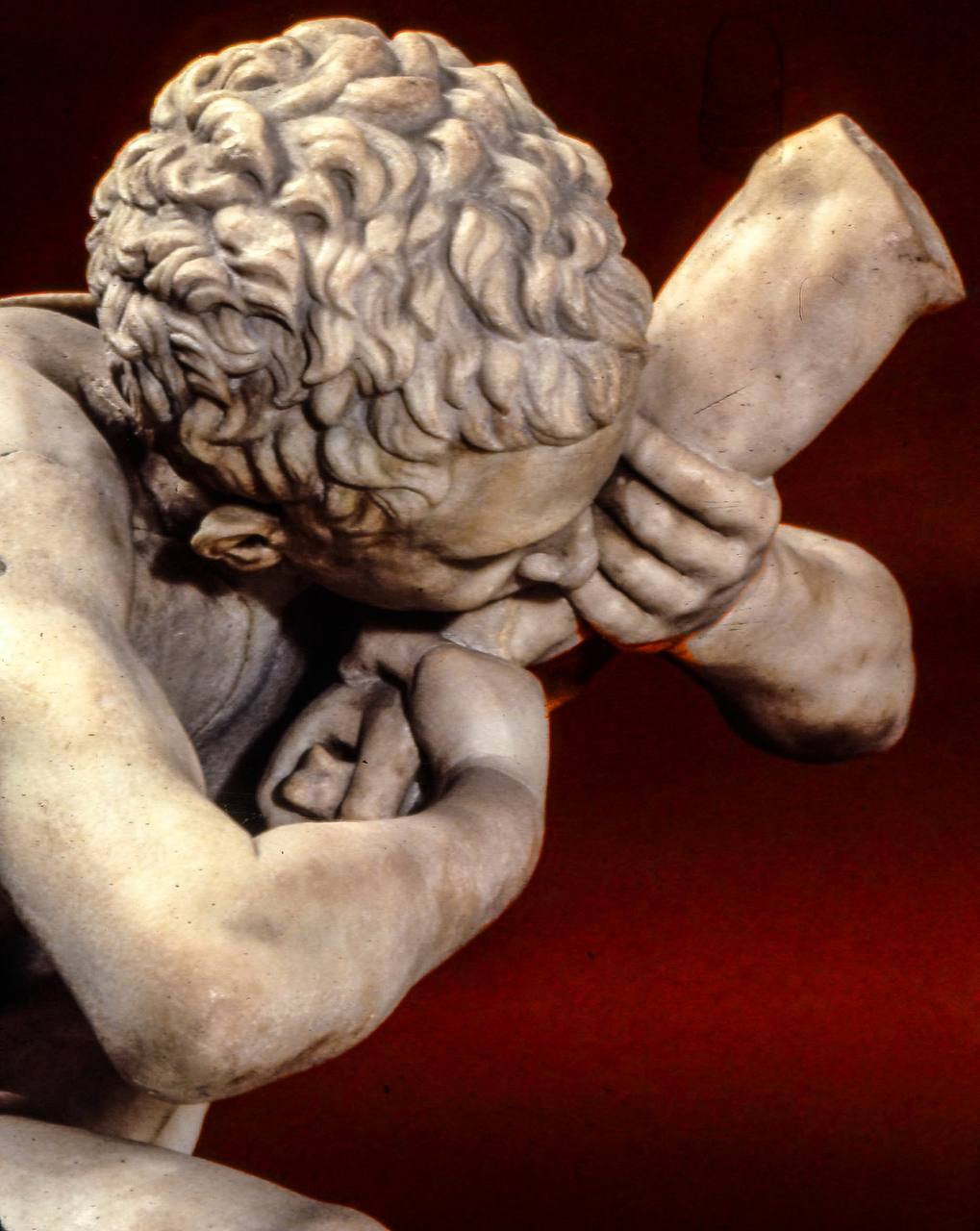
The Roman marble figure of the 2nd–1st centuries BC, found in the Baths of Titus and showing a youth biting the hand of his companion, was at first known as the Cannibal. One man bites another man: who can he be, if not a cannibal?
But in 1760 the German art historian Johann Winckelmann reattributed it as part of a sculptural group of knucklebone players. After the sculpture had been carefully cleaned, a knucklebone was discovered in the hand that is being bitten.
The astragalus of a hoofed animal, clutched in the hand of a marble statue, is the chief attribute of the game of knucklebones, known in many ancient cultures under different names but played with almost unchanged rules. In Rome the game was called astragalus or tali. And it was played just as it has been for thousands of years since, in almost every corner of the world.
In my childhood this game was called mosly or asyki. Each player came with his own set of bones, which might be painted, decorated with appliqué, wrapped in wire or even filled with molten lead. The bones were arranged in a special pattern in the ring, and the players knocked them out in turn, winning their opponents' asyki as their own property. It is a highly emotional and tense game: first, genuinely valuable property is at stake; second, the game allows for various methods of cheating, so one must keep a sharp eye on one another. Brawls on the field of battle are not out of the question. Or, as in our case, bites on the hand.
This sculptural group was described by Pliny. The original is attributed to Polykleitos.
In 1768 the statue came to England. Today it is in the British Museum.