Oldest Tattoo in Dutch Painting Discovered
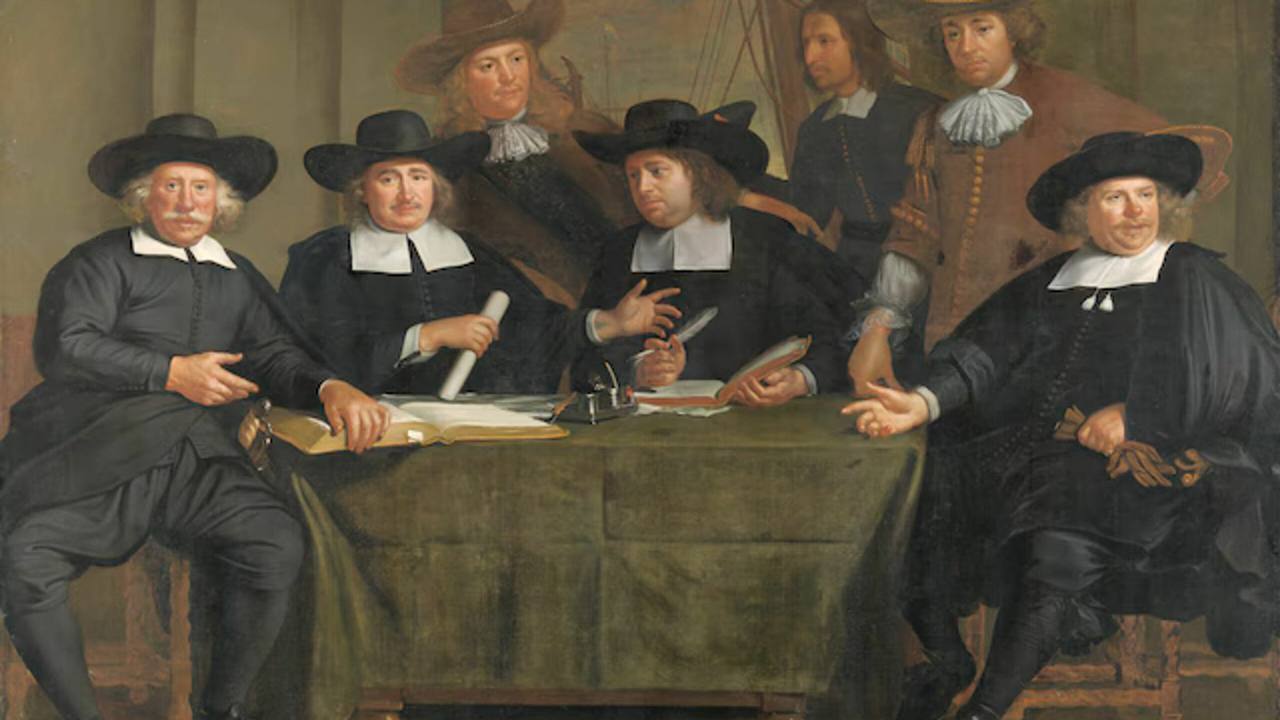
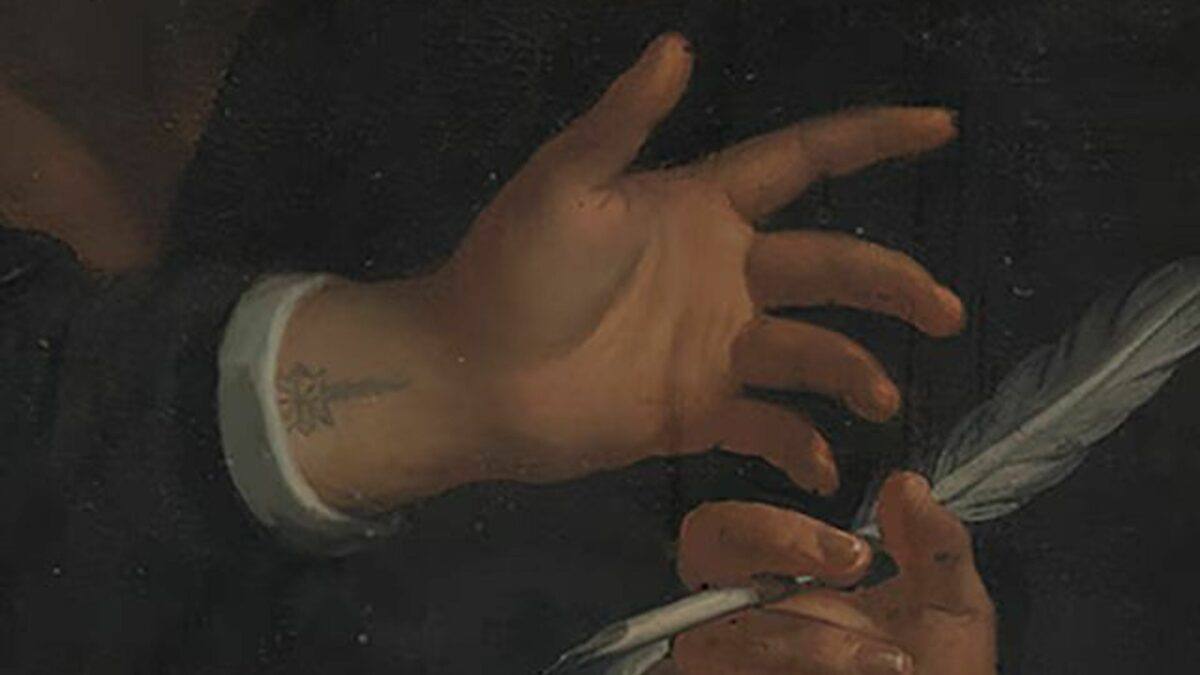
Conservators have discovered the image of a tattoo while examining a seventeenth-century group portrait that had returned from an exhibition. Specialists at the Amsterdam Museum believe the tattoo, found on the wrist of the presumably wealthy merchant Wessel Smits, to be the oldest ever captured by a Dutch painter. The painting, dated to around 1674, is usually attributed to the Flemish portraitist Wallerant Vaillant. Since the image forms part of the original paint layer, the museum's staff are certain that it is not a later addition.
The question is: in what circumstances could one of the notables of seventeenth-century Amsterdam have acquired a tattoo, when among Protestants it was an absolute taboo? The biblical Book of Leviticus strictly forbids any marks upon the body.
The imposing canvas, measuring 3 by 2 metres, “The Governors of the Walloon Orphanage” [sic: original title «Главные комиссары валлонцев» rendered literally below], depicts distinguished Amsterdammers who supervised the ports.
What exactly is drawn on the merchant's wrist? Look closely and the clear outline of a comet emerges. Curiously, the find was made just when everyone is discussing the comet Atlas. And it is strange that for more than three hundred years no one noticed it, yet now, for no particular reason, it has suddenly been made out.
If the guess about the identity of the main figure is correct, then his supposed year of birth, 1618 or 1619, coincides with the spectacular Comet of 1618, one of three seen in the sky that year and, as is commonly held, a portent of the Thirty Years' War.
So it turns out that our hero marked his arm with the year of his birth, depicting its most significant phenomenon?
At that time comets were regarded as ominous omens of war and plague. But the leading specialist on the painting believes that Smits was not superstitious. “He came from an intellectual milieu. His stepfather was a member of a community of scholars, and the author of a pamphlet about this comet was his distant relative.”