Archaeologist Miles Russell calls Verica a woman, but his arguments fail to convince
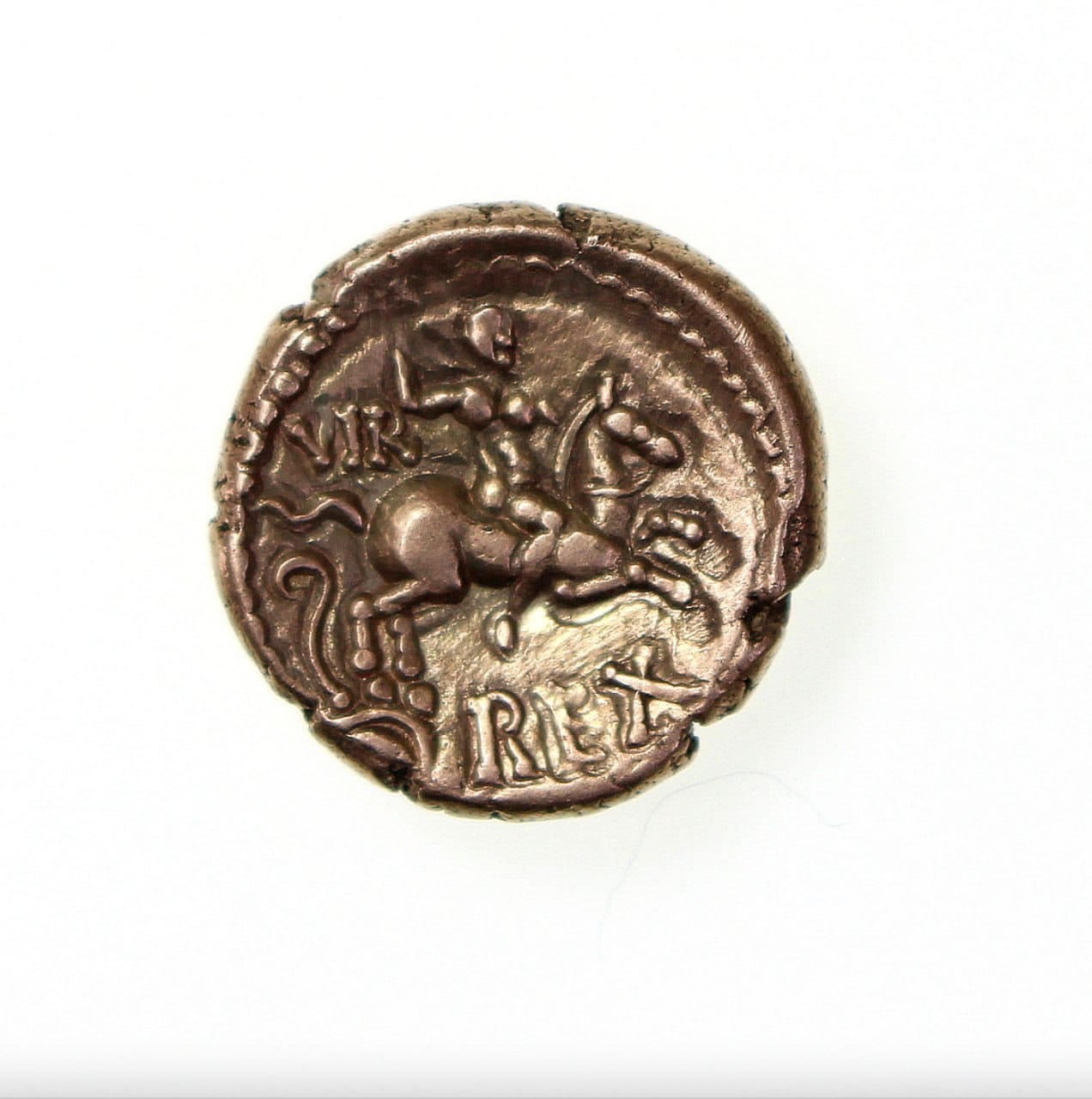
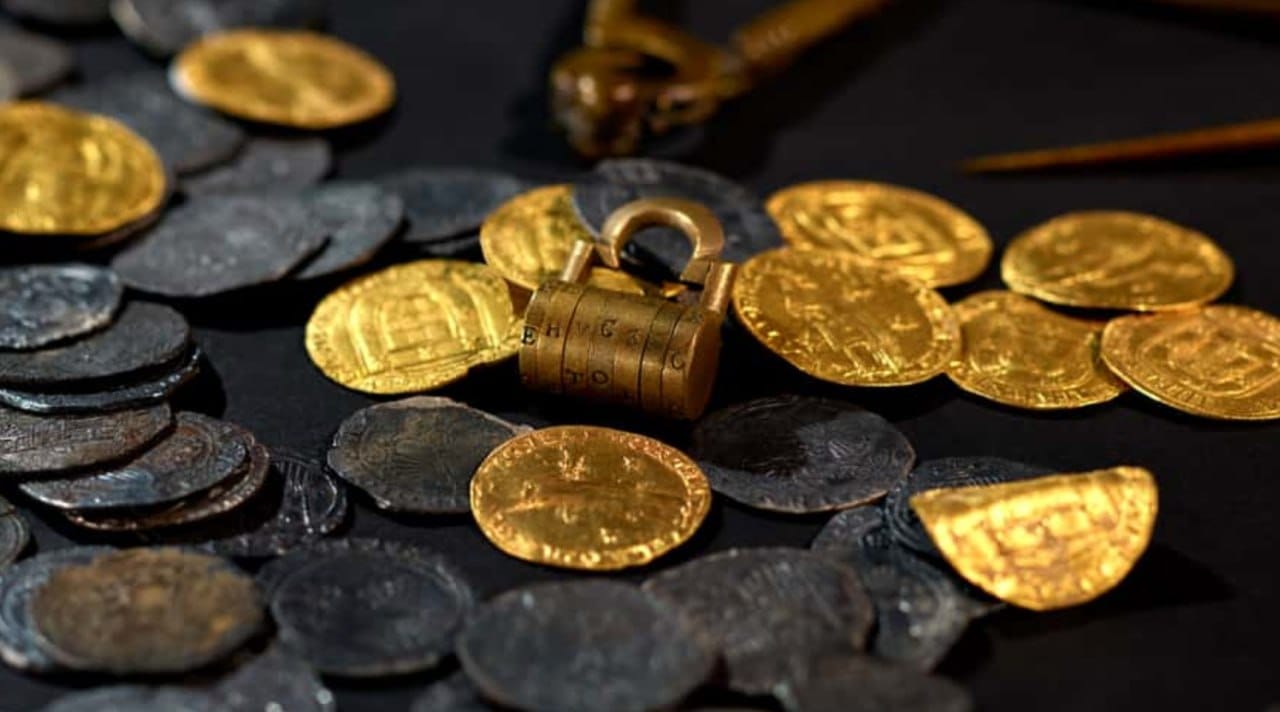
The first image shows a gold stater from the collection of the Victoria and Albert Museum, struck under Verica, ruler of the British tribe of the Atrebates in the 1st century AD. Strange news about Verica appeared the other day. The archaeologist Miles Russell of Bournemouth University claims that Verica was a woman.
There is as yet no scholarly article on the subject, only a university press release, so the full argument cannot be assessed. He offers three points. The name ends in "a", like those of the female rulers Boudicca and Cartimandua. The rider on Verica's coins Russell takes to be a slender naked woman. And the masculine Latin title rex, "king", in his view says nothing of sex, and was supposedly used by Cleopatra. This sounds very odd indeed, since female rulers were called regina, and Cleopatra styled herself in Greek "basilissa". Verica's male sex, he says, was assigned by nineteenth-century historians with their patriarchal outlook.
As for the ending in "a", it proves nothing in itself: Latin has many masculine names ending that way, for instance Sulla and Galba.
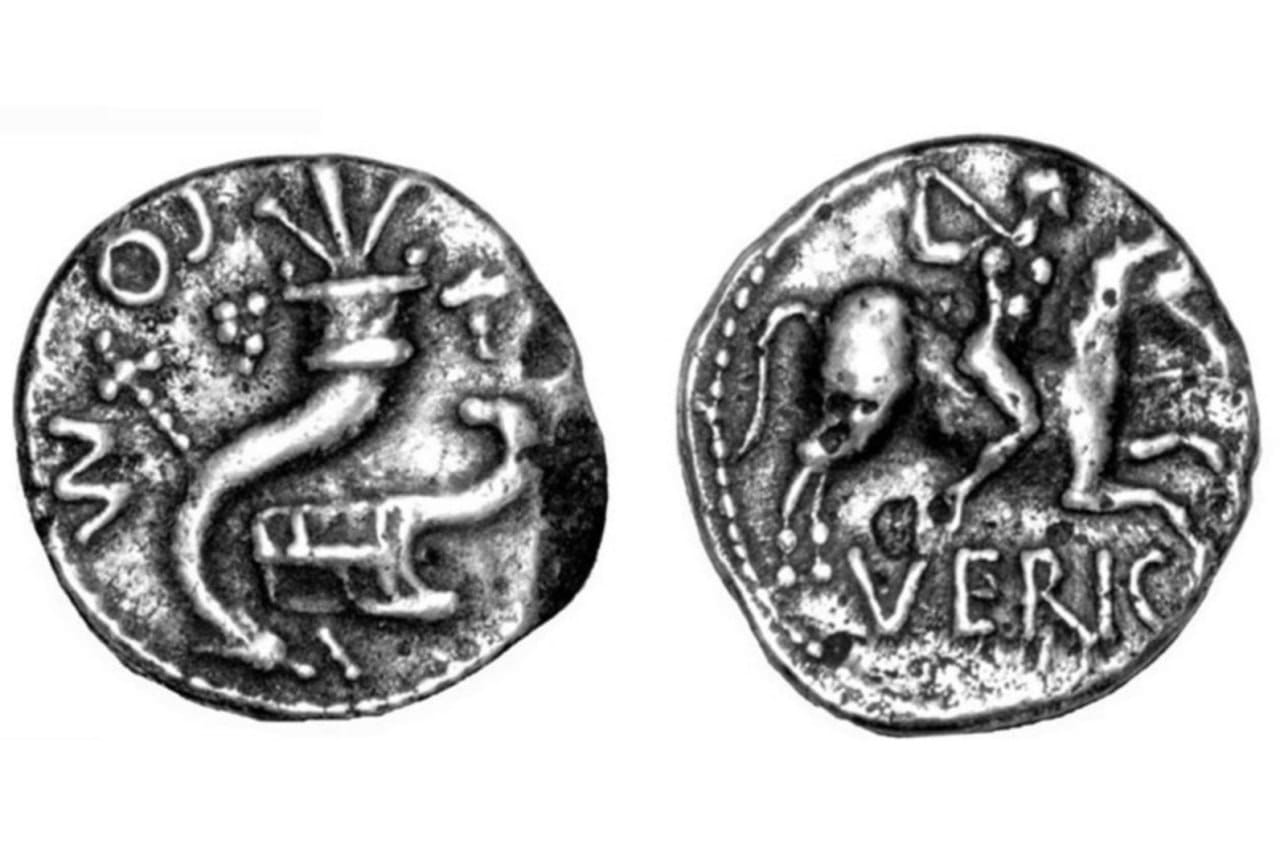
Let us look at Verica's coins and the images of the rider. The horseman, who raises a spear above his head, is, judging by the silhouette, naked. A naked warrior in Graeco-Roman art represented a male hero. And the coin belongs precisely to this tradition, its style borrowed entirely from Roman denarii, since the Atrebates under Verica were clients of Rome.
The round bulges that Russell takes for a woman's breasts were punched out by the engraver with a punch. The same technique was used on these coins for heads, joints and muscles, and not only on the rider but on the horse too. Or does our archaeologist suppose that women's breasts are located somewhere around the shoulder?
If someone, like Russell, sees a woman in this naked rider because of the little circle where the arm joins the torso, then I have a question: does the rider on our coins depict nothing but the ruler? Might it not be a timeless deity, some kind of symbol? Celtic coins go back to the gold staters of Philip II of Macedon, which bore a chariot with its driver. Over several centuries of copying, this motif turned into a conventional horse and rider. And a portrait of the ruler who struck the coin was absent from the very beginning. Verica's engravers took their subjects from Roman denarii, where the riders are most often the Dioscuri, the divine twins Castor and Pollux, or allegorical figures, not the magistrate who issued the coin. The inscription names the one who struck the coin, while the image on it is rather a symbol, of power, luck or protection. After all, nobody takes the cornucopia and the vine on the reverse of the same silver coin for a portrait of Verica, do they?
The only ancient author to tell of Verica, Cassius Dio, calls him Berikos, in the masculine form. According to Dio, it was this exile who persuaded the Emperor Claudius to invade Britain in 43.
Russell is a serious field archaeologist; it was he who in his day brought the investigation of Piltdown Man almost to a direct accusation of Dawson. On the other hand, as a media figure Russell is known rather as a revisionist: he has presented television programmes in which he took King Arthur apart into five different characters and recognised Nero and Trajan in anonymous sculptures. In other words, the man simply loves making loud, scandalous claims and reattributions.
The problem here is rather one of genre, when a stunning thesis is announced by press release rather than in a considered article with a full analysis of the arguments and weighty peer reviewers.
So for now, as regards the female ruler, we are pressing the cancel button.