The Moscow winter Seasons of 1814-15 were brighter and richer than the pre-war Seasons of 1810-11
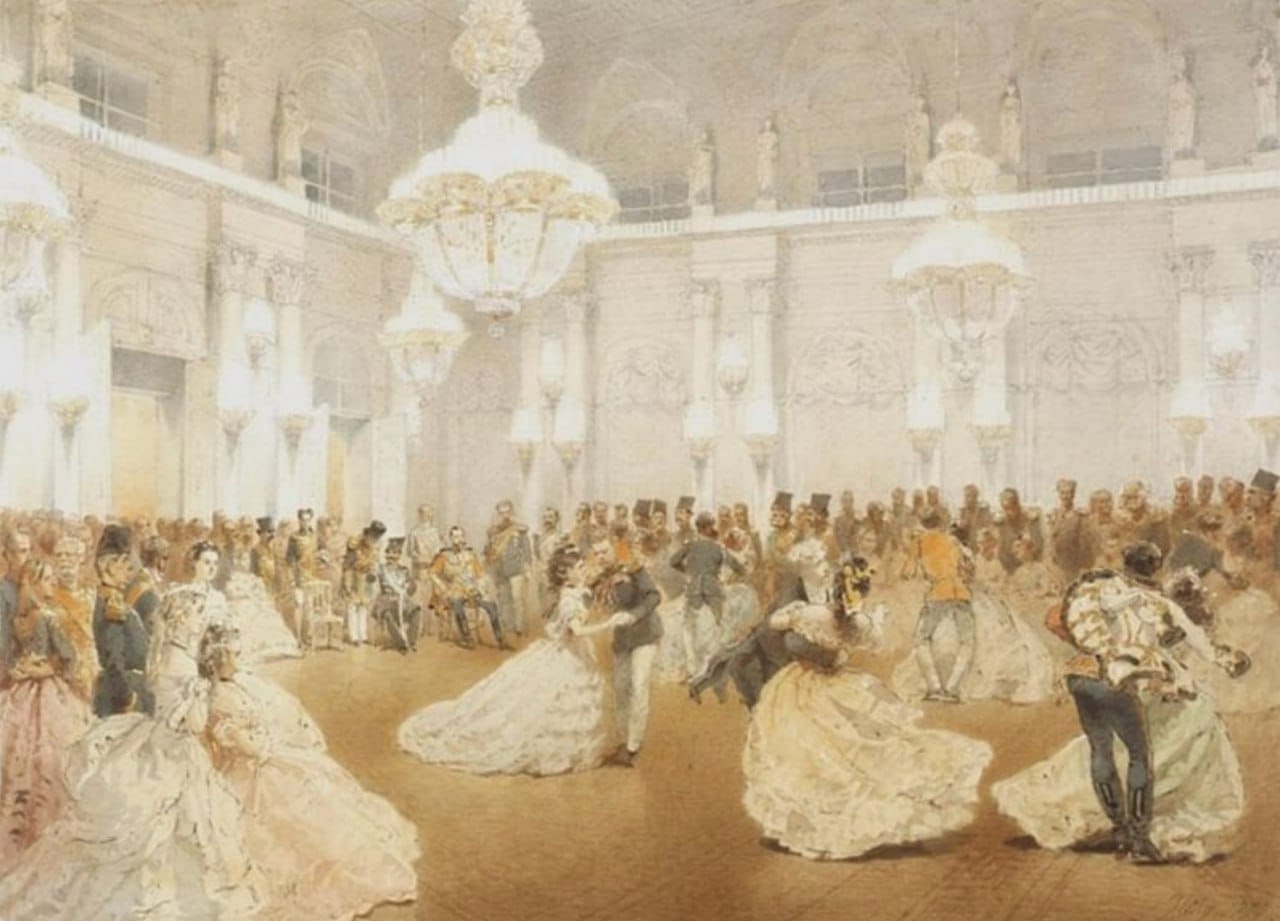
The Moscow winter Seasons of 1814-15 were brighter and richer than the pre-war Seasons of 1810-11. This is understandable: people were exhausted by the hardships of war, by ruin, by universal gloom and endless mourning, and when the time came, they returned to life with new and still greater vigour.
Sofya Alexandrovna Volkova (née Rimskaya-Korsakova) describes one week of her life on 4 January 1815:
Saturday: dancing until five in the morning at the Obolenskys';
Monday: dancing until three at Golitsyn's;
Thursday: a costume ball at Ryabinina's;
Saturday: an evening at the Obolenskys';
Sunday: breakfast at Count Tolstoy's, followed immediately by dancing;
Sunday evening: dancing at Golitsyn's.
All these balls are so lively that one has to whirl about until exhaustion. Afterwards one lies in bed for half the day from weariness.
Unsurprisingly, by February no trace of Volkova's plumpness remained under such a regime. Her loss of weight was even said to be unhealthy. Princess Shakhovskaya also fell ill from the endless merriment, and little Countess Bobrinskaya was brought to the very brink of death by a cold caught at a ball.
This year many have paid dearly for dancing
- writes Volkova to Lanskaya.
To slim down a little from dancing would indeed not be a bad thing, but to run oneself into the ground like Shakhovskaya and Bobrinskaya is, of course, quite unnecessary.