
540-Million-Year-Old Microfossils from Brazil, Long Regarded by Palaeontologists as Traces of the Movement of the Earliest Worm-Like Animals or Meiofauna, Turn Out to Be Fossilised Colonies of Bacteria and Algae
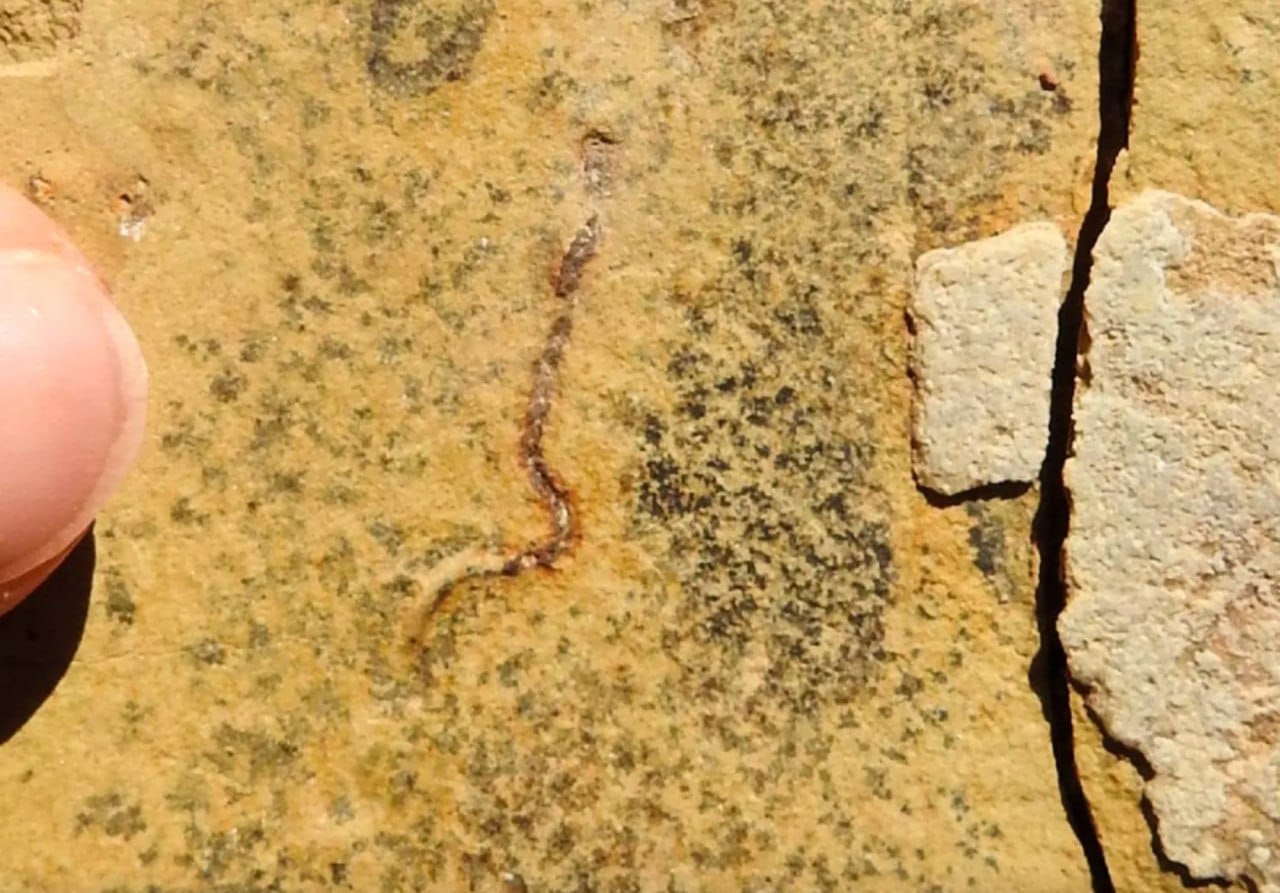
The discovery casts doubt on the hypothesis that complex, mobile animals were widely active before the celebrated "Cambrian explosion". The findings became possible thanks to micro- and nanotomography at a state-of-the-art beamline of Sirius, the Brazilian particle accelerator. The technology made it possible to study structures measuring only a few micrometres at the nanoscale without destroying the specimens themselves.
With the aid of Raman spectroscopy, the scientists found remnants of organic material and pyrite directly inside the cell walls of the fossils. This proved that what lay before the researchers were the bodies of the microorganisms themselves, and not merely physical traces left in the ground by creatures crawling past. The inanimate origin of the "trails" was indicated by distinct internal partitions, coiled filaments and hollow cells entirely free of sedimentary rock within. Crawling animals could not have formed such imprints.
The fossils studied were divided into three size groups, which points to the existence of composite microbial consortia. The larger forms have been identified as ancient green or red algae, the smaller ones as cyanobacteria and sulphur-oxidising bacteria.
These data confirm that in the oceans of the Ediacaran period, some 540 million years ago, the oxygen level was still too low to sustain the active life even of tiny invertebrate animals. The evolutionary leap and the emergence of a diverse fauna, according to the hypothesis now put forward, came later, precisely when environmental conditions changed and the planet had accumulated enough oxygen to support complex organisms.