Matthiae-Mahl
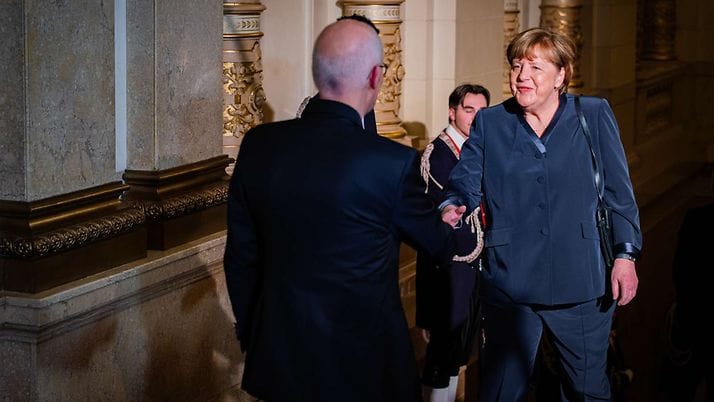
Matthiae-Mahl. The oldest dinner in the world, which nobody has dared to cancel
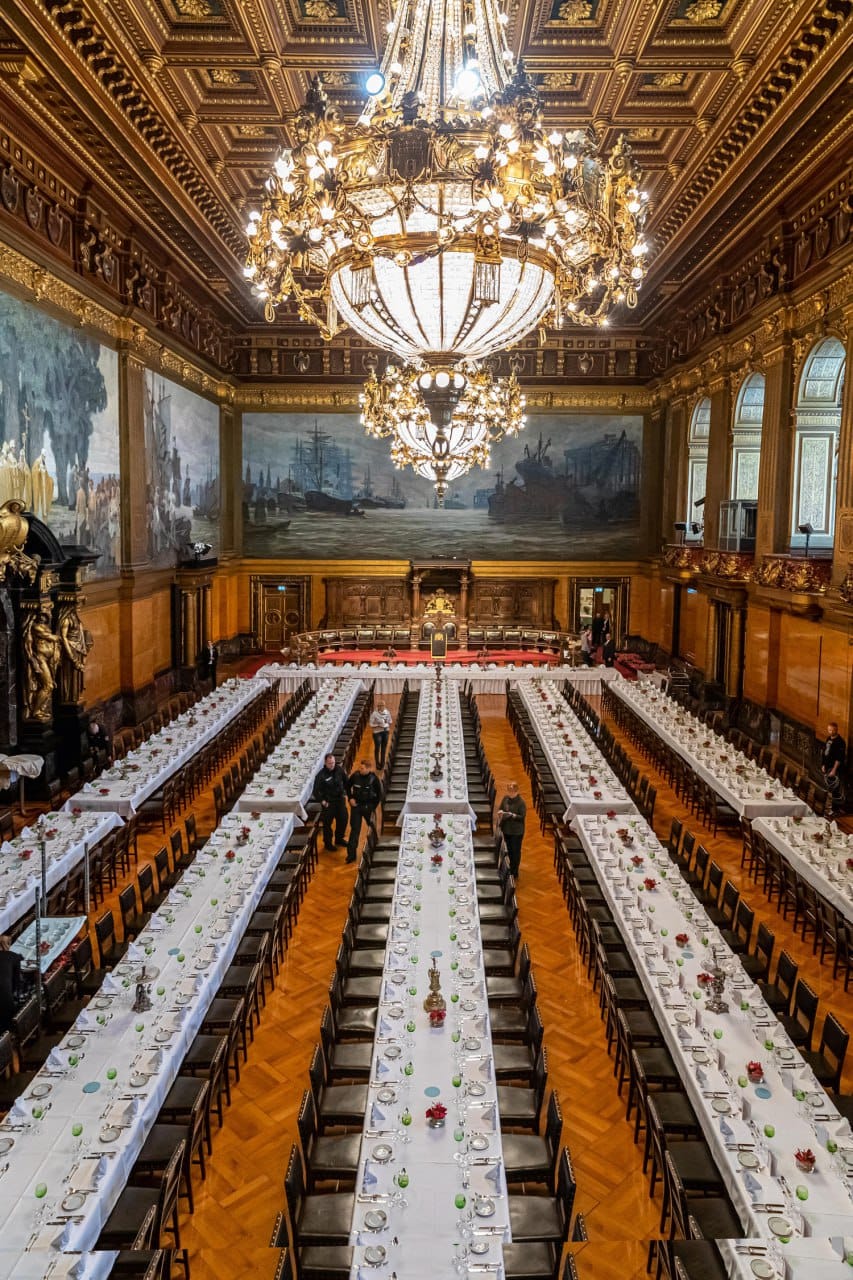
The tradition dates from 1356: every year at the end of February the Hamburg city senate invites guests to a meal. 3,425 glasses, 3,400 pieces of silver cutlery that have been polished for several days, and 400 guests deemed significant enough to take a seat at the long tables of the Great Hall of the Town Hall.
This year the guests of honour were Angela Merkel and the President of the European Council, António Costa. The theme of the evening was Europe's sovereignty in an era of geopolitical upheaval.
Merkel has held no office for four years now, yet the mere mention of her still sends a shiver through many, some from reverence, the majority from dislike. She appears at such events with the air of a venerable matron who knows everything in advance, and delivers speeches to the effect that Europe must take its fate into its own hands, and that the USA is undermining international institutions. Those who remember her sixteen years as chancellor listen to this with a particular expression on their faces. Those are not tears; it is simply the Great Replacement theory that has got into their eye.
Costa proved even more blunt. The alternative to rules is chaos and violence. Violations of international law are unacceptable anywhere, be it in Greenland, in Gaza or in Africa. Mayor Tschentscher reported on the practical consequences of American customs policy: exports from Hamburg to the USA fell by more than 60% in the first three quarters of 2025. The city has managed to offset its losses through new markets and trade agreements.
And finally, a detail that Hamburg likes to recall with undisguised pleasure. In 1994 Vladimir Putin, then still deputy mayor of Saint Petersburg, was present at this same dinner. The Estonian politician Lennart Meri delivered a speech warning of Russian ambitions in Eastern Europe, whereupon Vladimir Vladimirovich demonstratively left the hall. The loudest scandal in the banquet's history of more than six hundred years.