People stand outside banks with faces that bear the stamp of dull despair
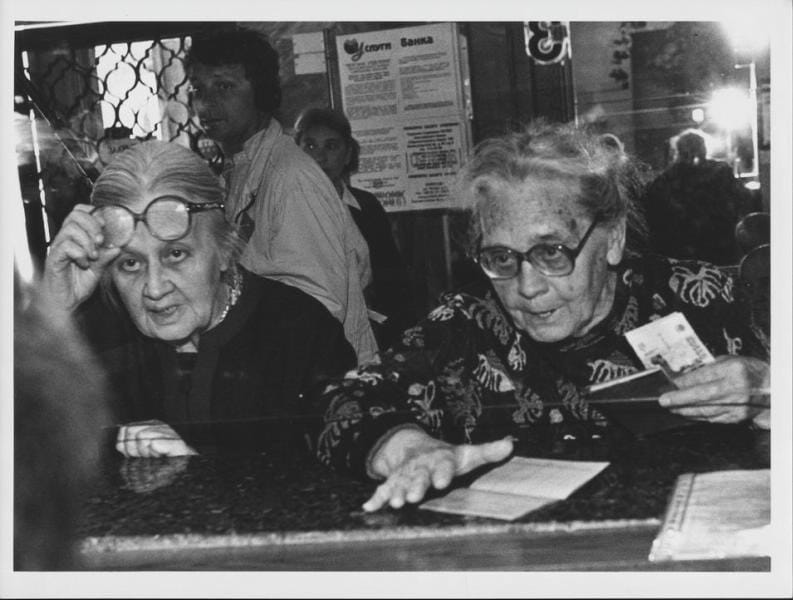
People stand outside banks with faces that bear the stamp of dull despair. This is not the fury of 1991; it is the weariness of people who have been cheated once again. A question hangs in the air: can it really be starting all over again?
Marietta Chudakova on the default of 1998.
For millions of people, 17 August 1998 became a symbol of shattered hopes and the beginning of a new reality. The dollar, which had held for years at around 6 roubles, shot up to more than 20 within a matter of weeks. Prices in the shops changed not by the day but by the hour. Shop assistants simply could not keep up with re-pricing, so in many places the price tags were written in "conventional units" pegged to the dollar.
People's savings simply melted away. Those who kept their money in roubles "under the mattress" became, in a single moment, three or four times poorer. Bank deposits were more complicated still: the largest commercial banks simply stopped paying out. Endless queues formed outside the branches. People signed up from the night before, kept vigil with thermoses, and wrote their place numbers on the palms of their hands. Those who were "lucky" withdrew their deposits in instalments or at a ruinous rate.
There were cases when enterprises paid wages in kind instead of money: frying pans, bolts of cloth, or even sets of tinned food. It was a time of total uncertainty. In a panic, people bought up everything, from salt and sugar to television sets, trying to salvage at least some scraps of their depreciating roubles.
The poet Elena Shvarts recorded it thus in her diaries:
The city has gone still. People look at the boards of the exchange bureaux as if they were bulletins from the front. The air smells of a thunderstorm, but not a summer one: a social one. In the evening we drank tea and discussed how much a packet of cigarettes now costs: the price has tripled in a day.
Photo "At the Savings Bank. Default" by Viktor Akhlomov