A Rabbit on the Wall of the Franciscan College of St Isidore in Rome
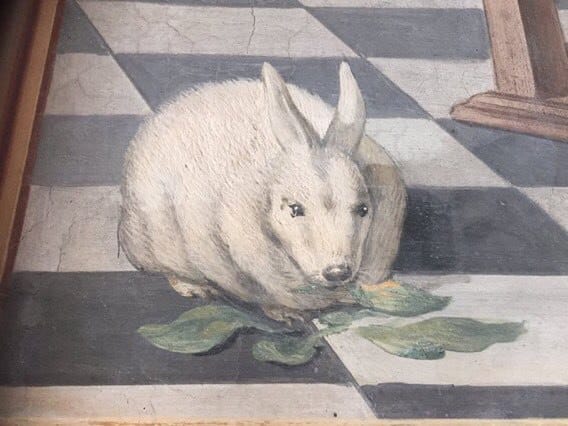
A rabbit on the wall of the Franciscan College of St Isidore in Rome. What is the little fellow doing here, apart from nibbling his cabbage? In the Middle Ages the rabbit was associated with the Immaculate Conception. Notions of the physiology of these animals pointed to purity. It is no accident that a rabbit is also depicted beside Titian's Madonna. It was believed that a doe could produce young without mating with a buck, and this idea, in its turn, goes back to the opinion that female rabbits can have two litters as the result of a single mating. An animal so unusual in its qualities was ranked alongside fabulous and magical beasts. Besides the fact that by winter the rabbit (or hare; medieval authors did not distinguish between them) changes the colour of its coat, it was also thought to change its sex when necessary. In principle, biology too can furnish descriptions of extremely rare cases of parthenogenesis (virgin conception) in rabbits