The 17th-century "Whalers' Cemetery" on Spitsbergen, by the Likneset station, has begun to thaw after 400 years
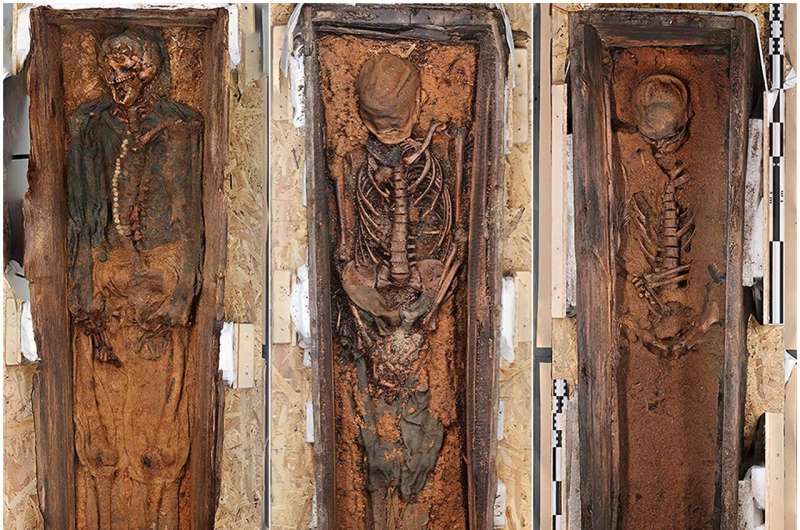
The 17th-century "Whalers' Cemetery" on Spitsbergen, by the Likneset station, has begun to thaw after 400 years. And now Norwegian archaeologists are examining knitted woollen stockings, finely woven woollen trousers, blue silk neckerchiefs, fragments of blue-striped linen shirts, caps and blankets found in remarkably well-preserved burials of young men, who died mostly not of injuries but of exhaustion and malnutrition.
The main subject of the article by Liz Lokt and Elin Therese Brødholt, however, lies elsewhere.
The permafrost is vanishing, coastal erosion is laying bare what was hidden in the ground, and graves are being opened and destroyed faster than archaeologists can describe them. The authors are alarmed that the Arctic system of heritage protection, with its selective choice of priority sites, cannot keep pace with the rate of climate change.
Suddenly the subject of Arctic archaeology and palaeontology becomes highly topical for vast territories of Northern Europe, Russia and Canada. And if for them the retreating permafrost exposes human burials, for us finds of Pleistocene fauna are ever more frequent. Besides its purely scientific interest, the subject also poses certain challenges: for instance, the thawing of prehistoric viruses and some other nastiness.
Let me remind you that the group of Jean-Michel Claverie and Chantal Abergel has been reviving viruses from Siberian permafrost since 2014. The current record-holder is a pandoravirus from a Yakut sample more than 48,000 years old. The laboratory has described over a dozen strains of pithoviruses, pandoraviruses, molliviruses, megaviruses and cedratviruses. Every one of them woke up after tens of thousands of years of deep freeze and briskly set about infecting amoebae in Petri dishes.
So the exposure of four-hundred-year-old coffins is not the worst that the thawing of the far North holds in store for mankind. But the industrial development of the Arctic, which follows from the accessibility of the defrosted territories, together with the exploitation of deposits, road-building and drilling, brings to the surface every year enormous volumes of ancient organic material that no one screens for pathogens of every sort, bacteria, spores and viruses