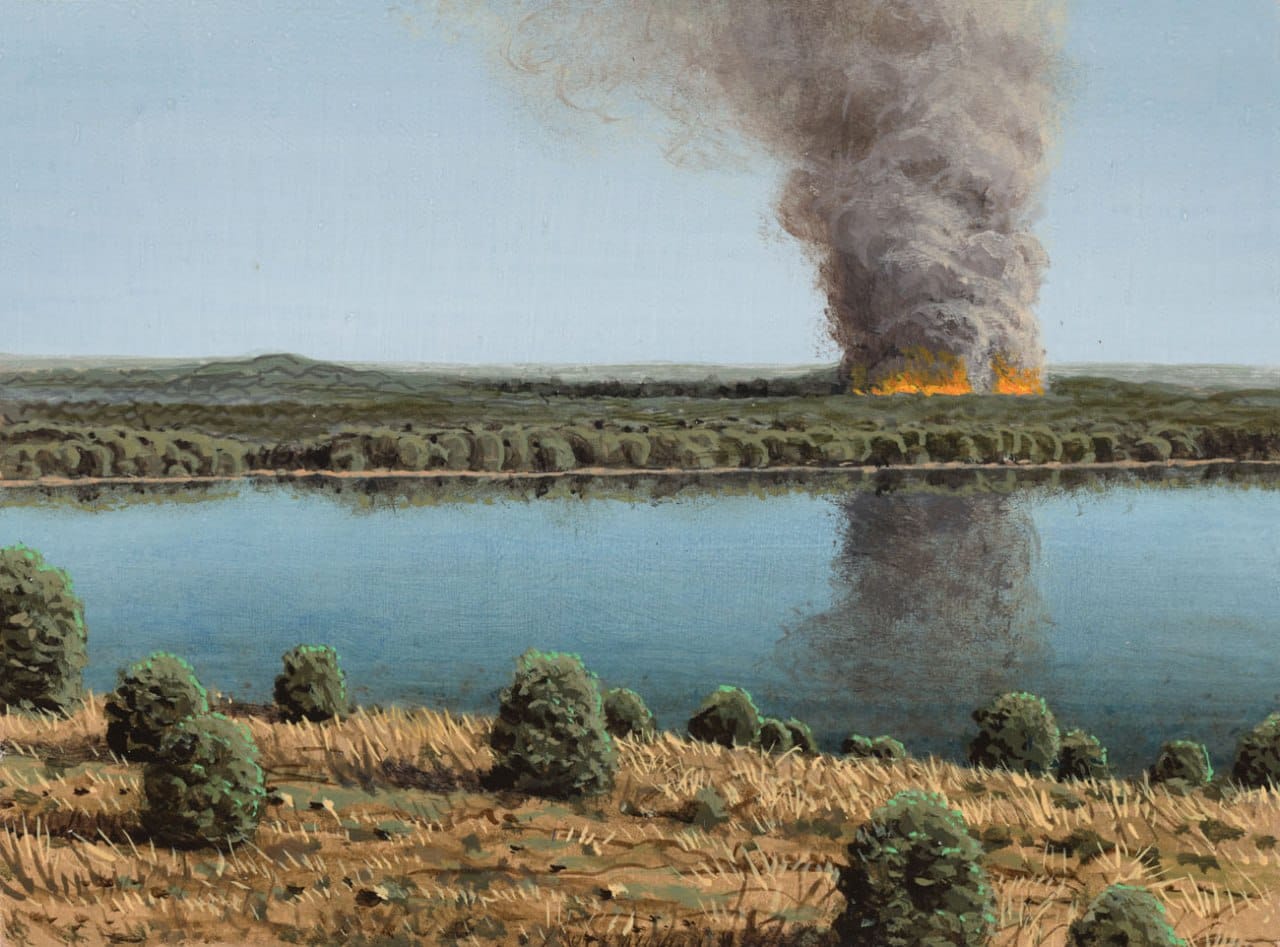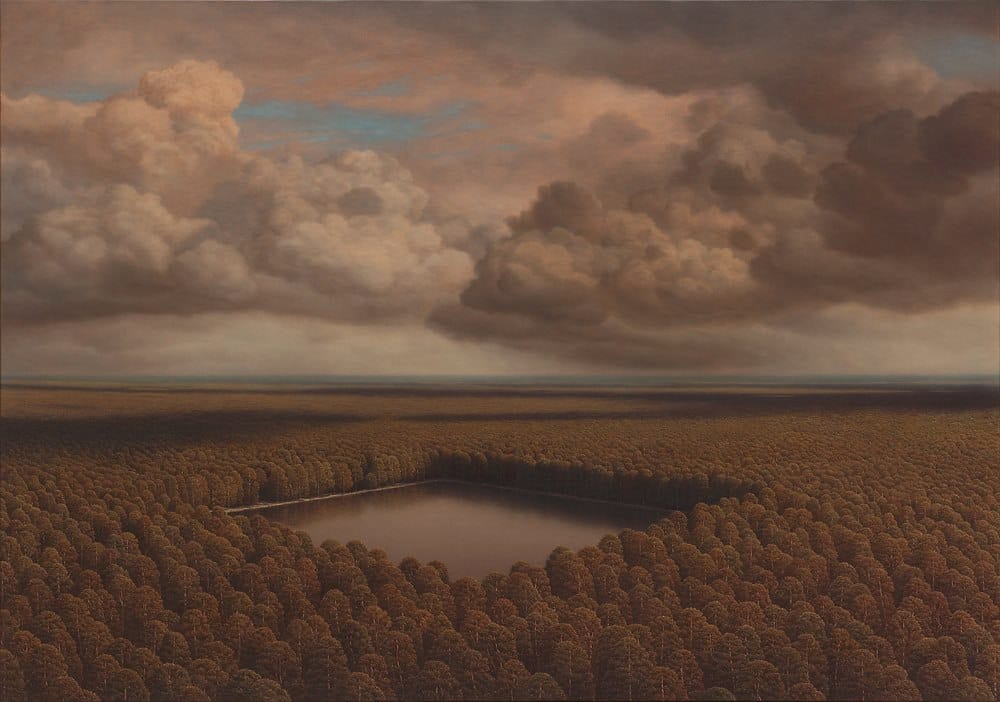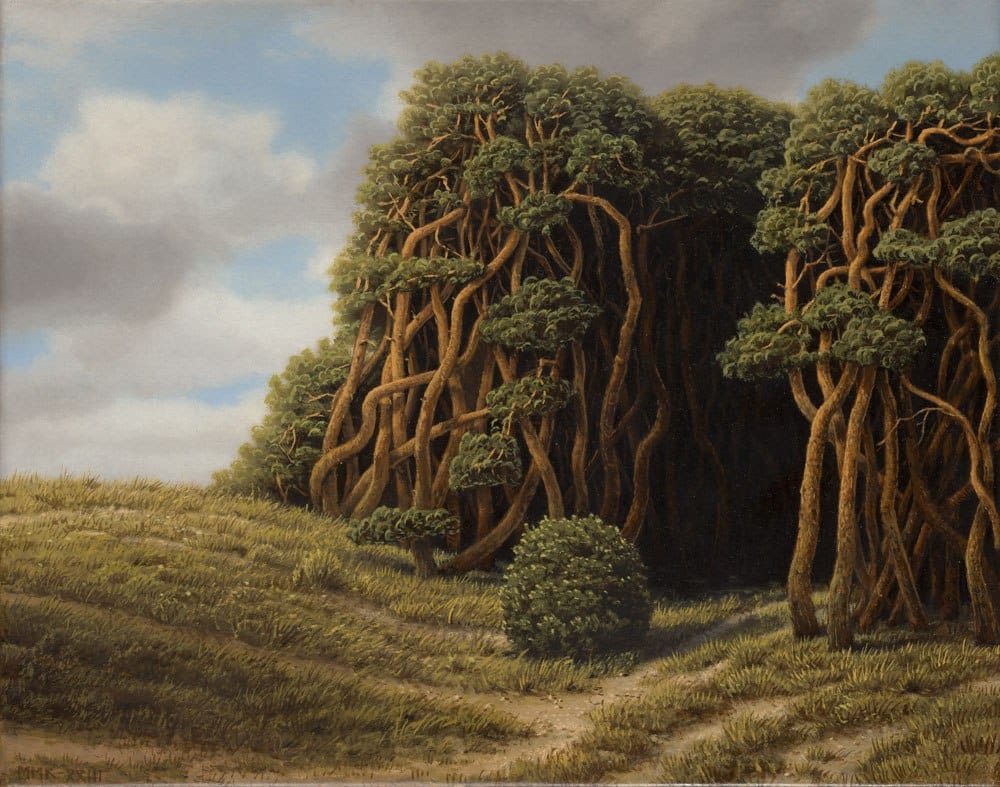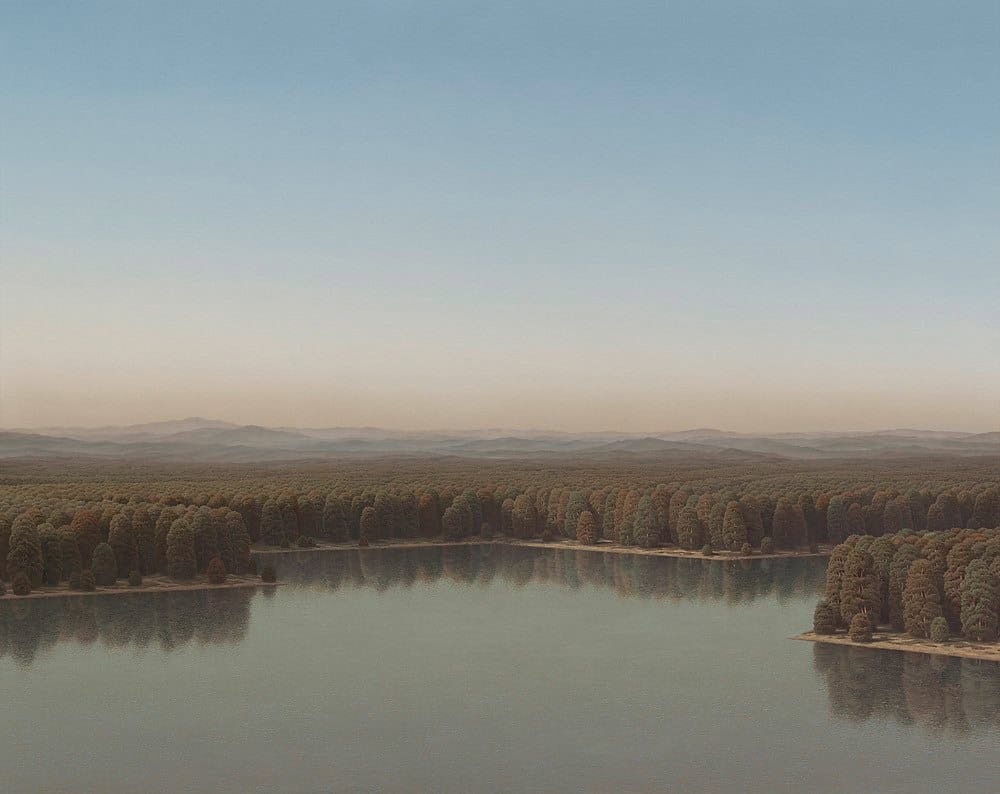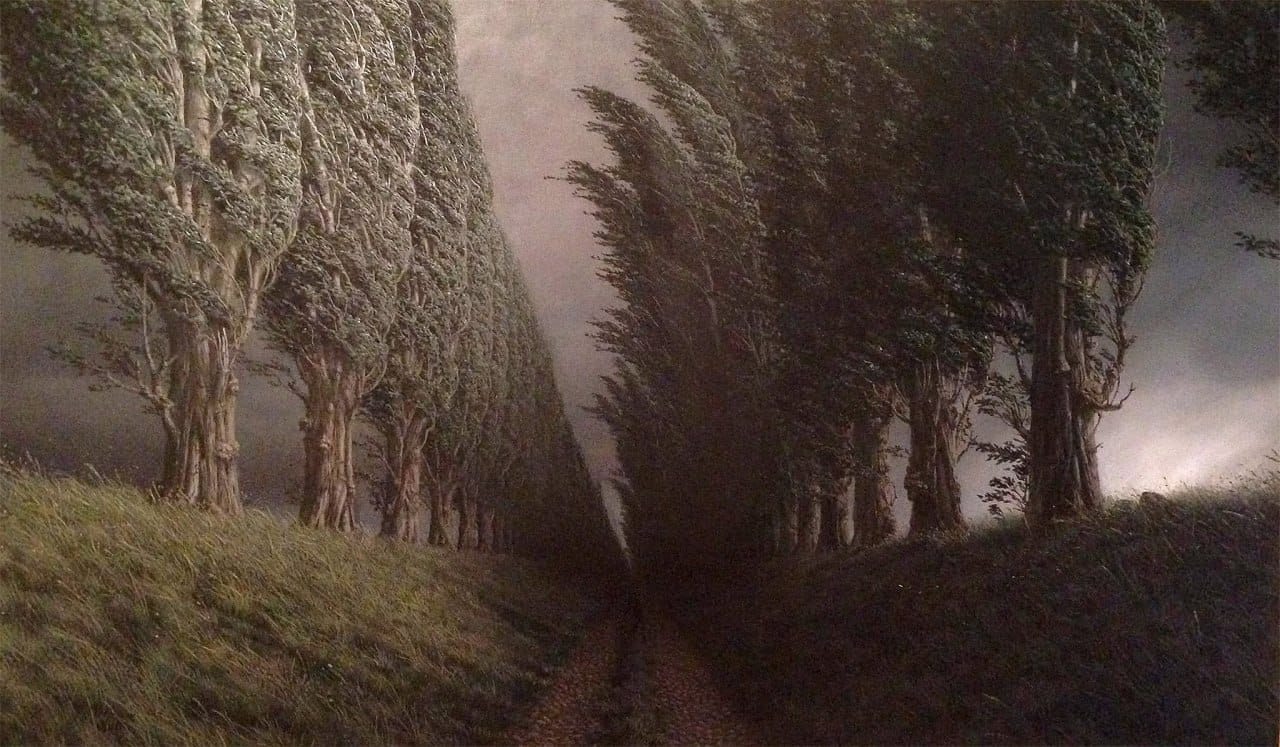
It seems I have a new favourite contemporary artist: Markus Matthias Krüger, the German reformer of academic landscape painting, born in 1981 in Gardelegen
Krüger received his professional training at the Academy of Visual Arts in Leipzig (the Hochschule für Grafik und Buchkunst), under Professors Annette Schröder and Ulrich Hachulla. His work is associated with the third generation of the New Leipzig School, heir to the craft culture of the old masters.
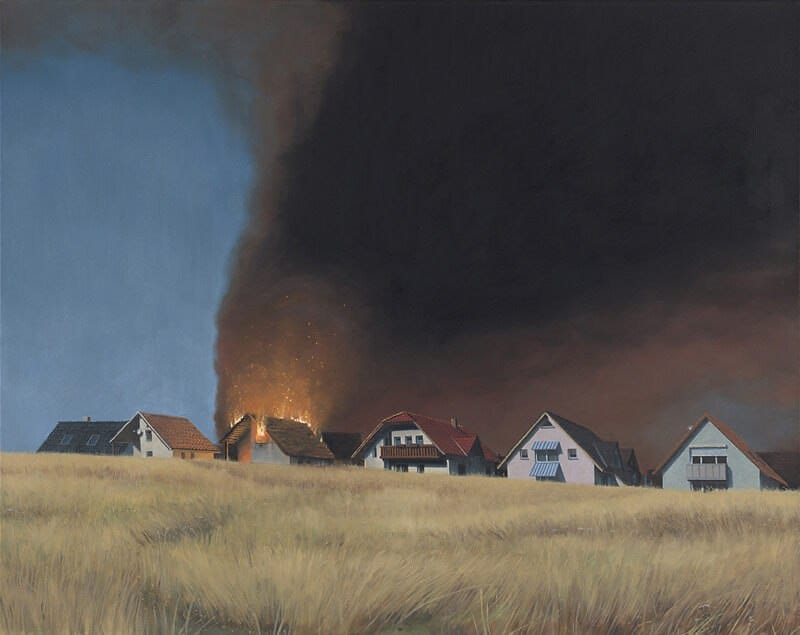
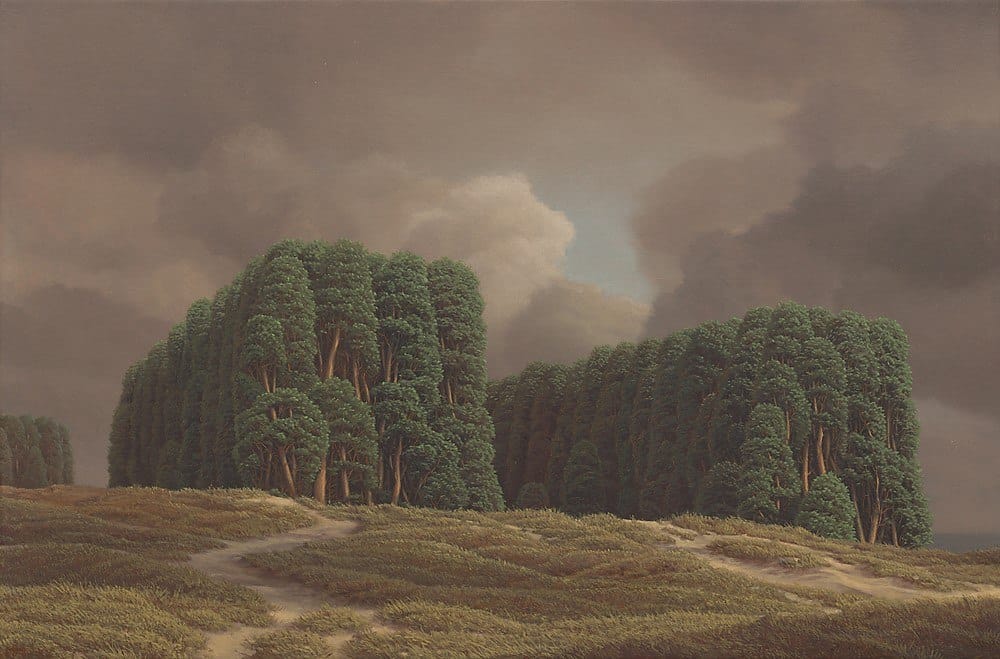
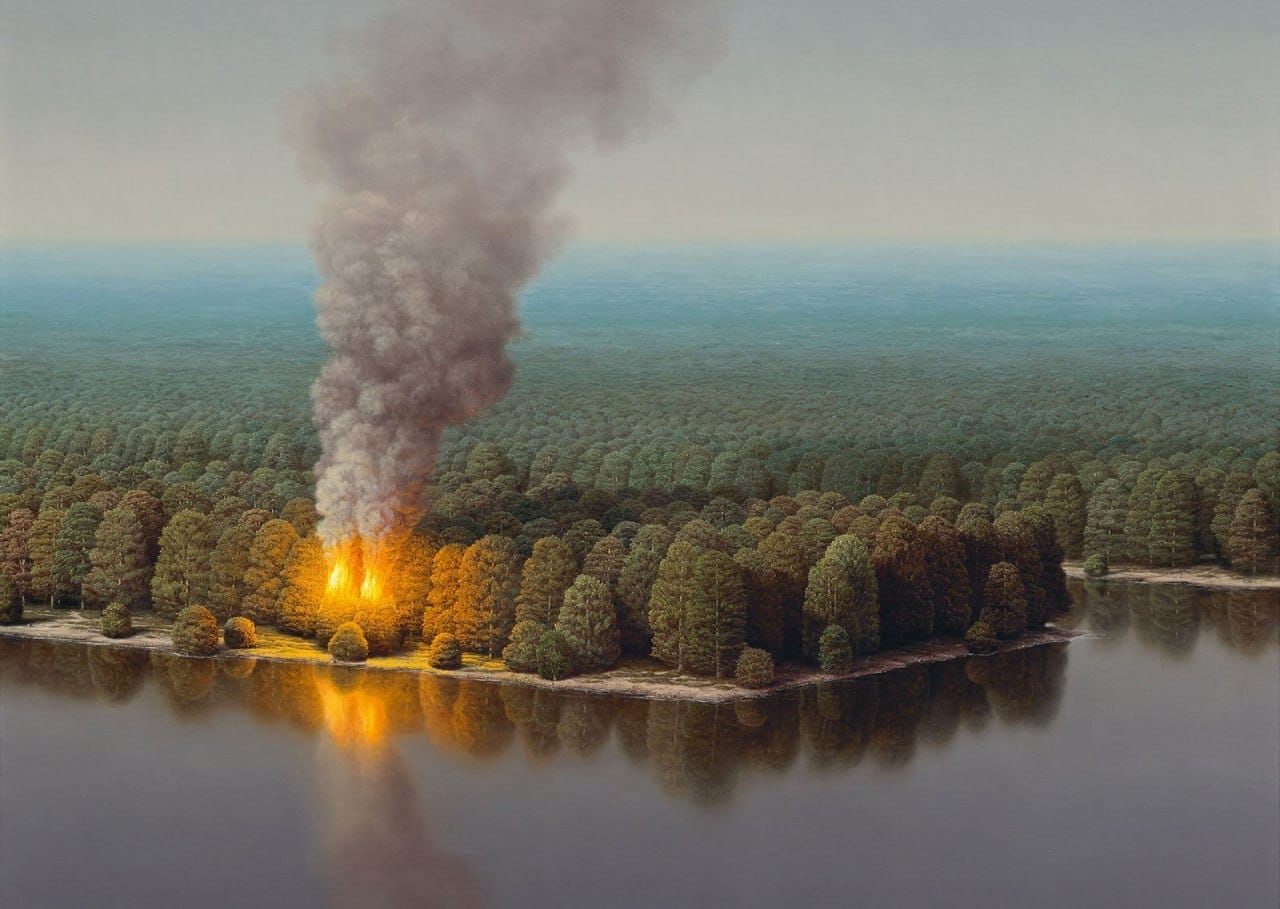
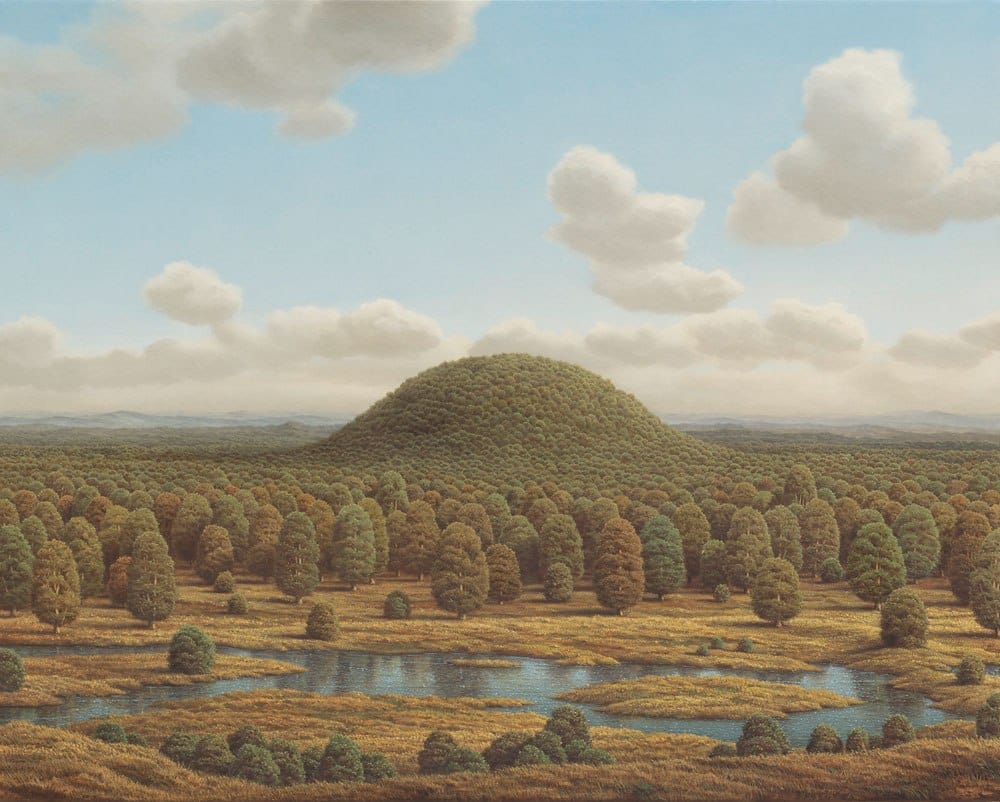
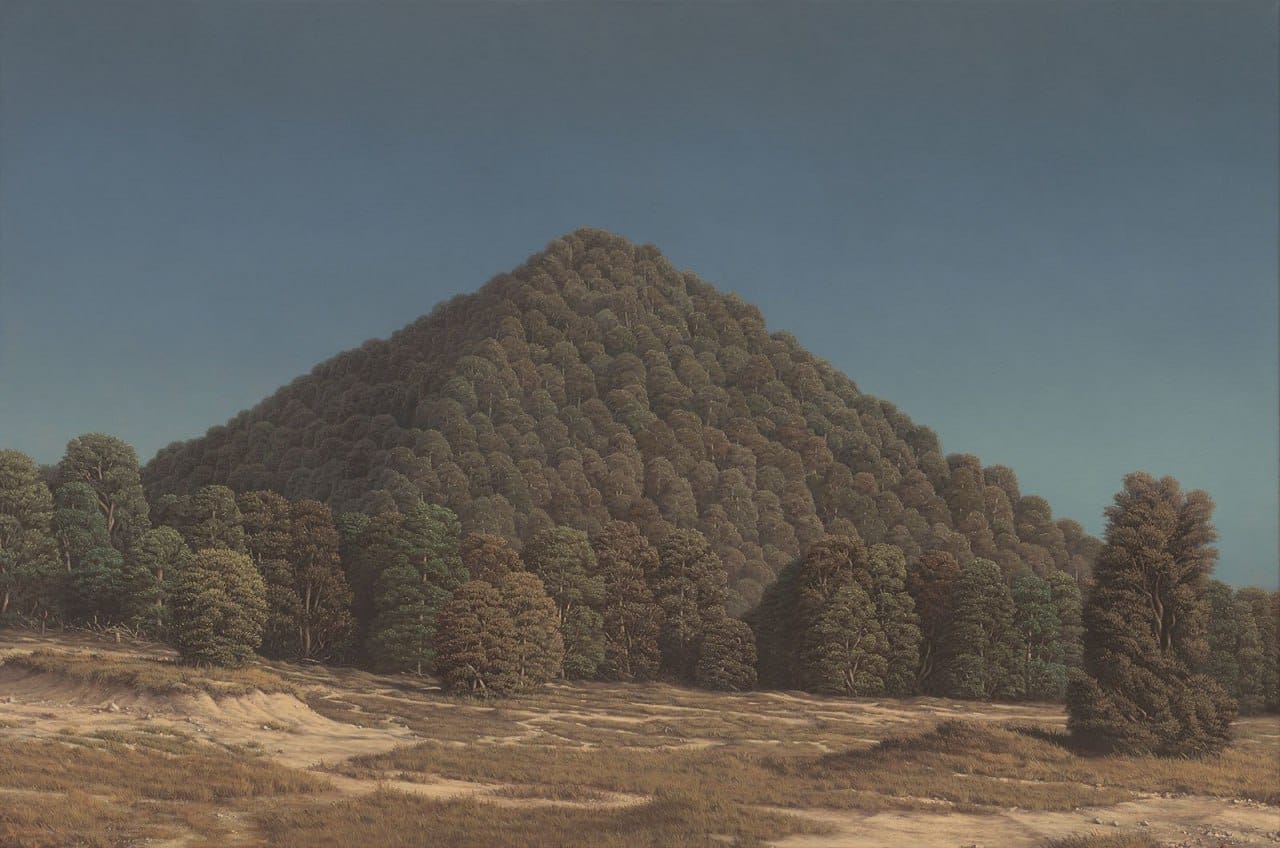
Krüger's method rests on strict mathematical precision, geometry and a virtuoso technique of thin-layered painting in acrylic and oil on canvas or wood. His landscapes are entirely deserted, yet the human presence in them is signalled through the artefacts of civilisation: empty or overturned houses, flooded districts, blind walls, abandoned buildings, stacks of timber, symmetrical haystacks, or the traces of fires.
The artist reduces natural elements to basic geometric forms and constantly returns to his favourite motifs. Krüger's landscape is not merely a reflection of nature but a dramatically charged space. Naturally, one is at once reminded of the whole of German Romanticism of the nineteenth century, in particular the melancholy atmosphere of Caspar David Friedrich, seasoned with post-industrial anxiety.
Looking at Krüger's paintings, one somehow finds no words with which to speak of a crisis of figuration. On the other hand, when such masters exist, it is even strange that artists who fundamentally cannot draw, with their abstract scribbles, should flourish