It is well known that the Grand Duchy of Lithuania remained the last major pagan state in Europe until 1387, when Grand Duke Jogaila formally accepted Catholicism in exchange for the Polish crown
It is well known that the Grand Duchy of Lithuania remained the last major pagan state in Europe until 1387, when Grand Duke Jogaila formally accepted Catholicism in exchange for the Polish crown. There are now some stirrings towards establishing that Lithuania was ethnically mixed long before its baptism.
The degree to which the population was converted to the new faith, and the scale of migration from the Christian world, remain not entirely clear. An international team has examined human remains from a cemetery of the 13th to 14th centuries in the Old Town of Vilnius and established that some of the early Christians arrived in Lithuania from lands of Kievan Rus' corresponding to present-day western Ukraine and southern Poland.
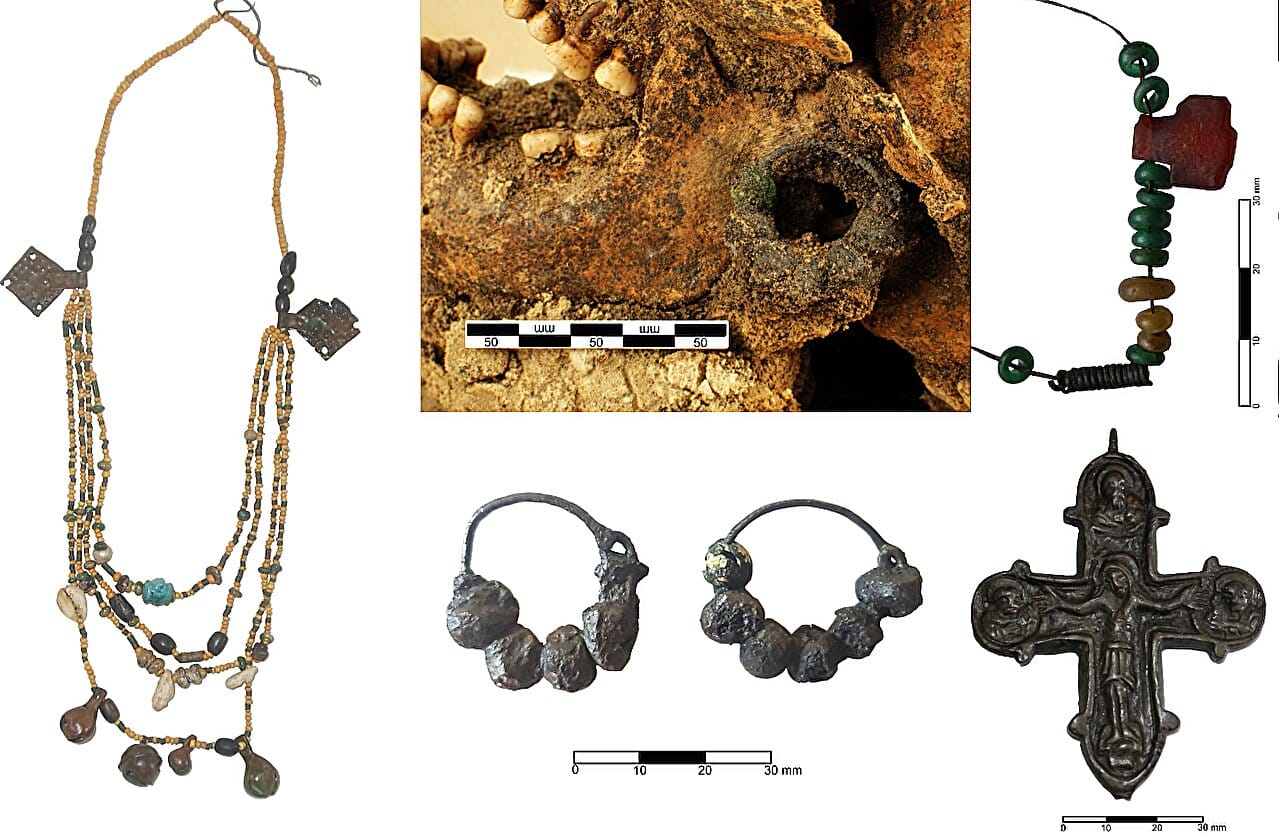
Archaeological finds such as Byzantine-type ornaments, crosses, rosaries and imported grave goods have long pointed to ties with the Russian lands and the Byzantine world.
Researchers at the Institute of Lithuanian History put their conclusions as follows: archaeologists have long suspected that the community of the separate mercantile and artisan quarter of Orthodox Slavs included settlers from the Russian lands, and the isotope data now provide direct proof that at least some of those buried in the cemetery under study came from afar.
Unlike the men, most of the women in the cemetery were local, natives of the Vilnius region, which points to a community formed through migration and mixed marriages. The local women, in all likelihood, came to Christianity through contact with incoming men from the Orthodox lands.