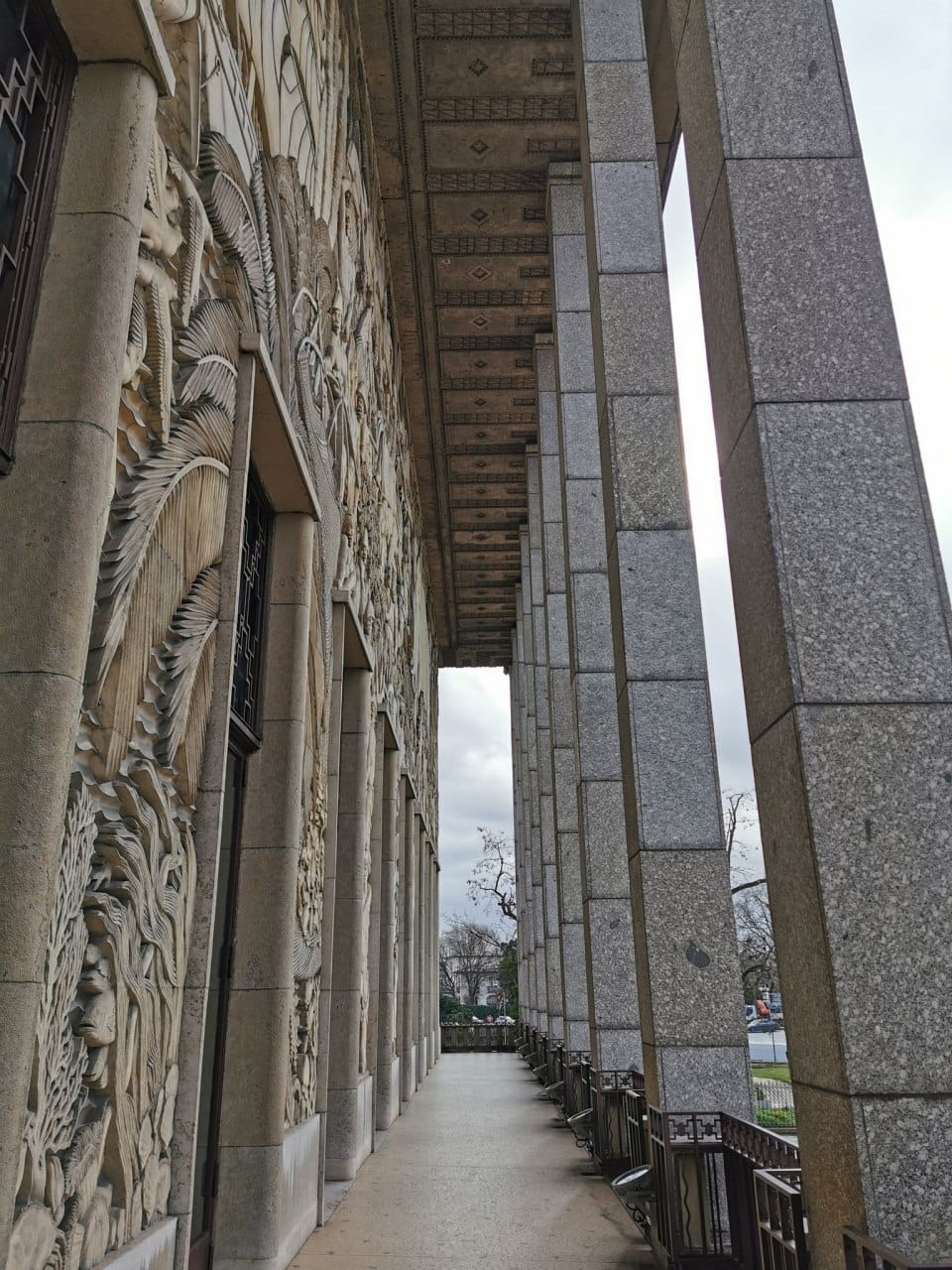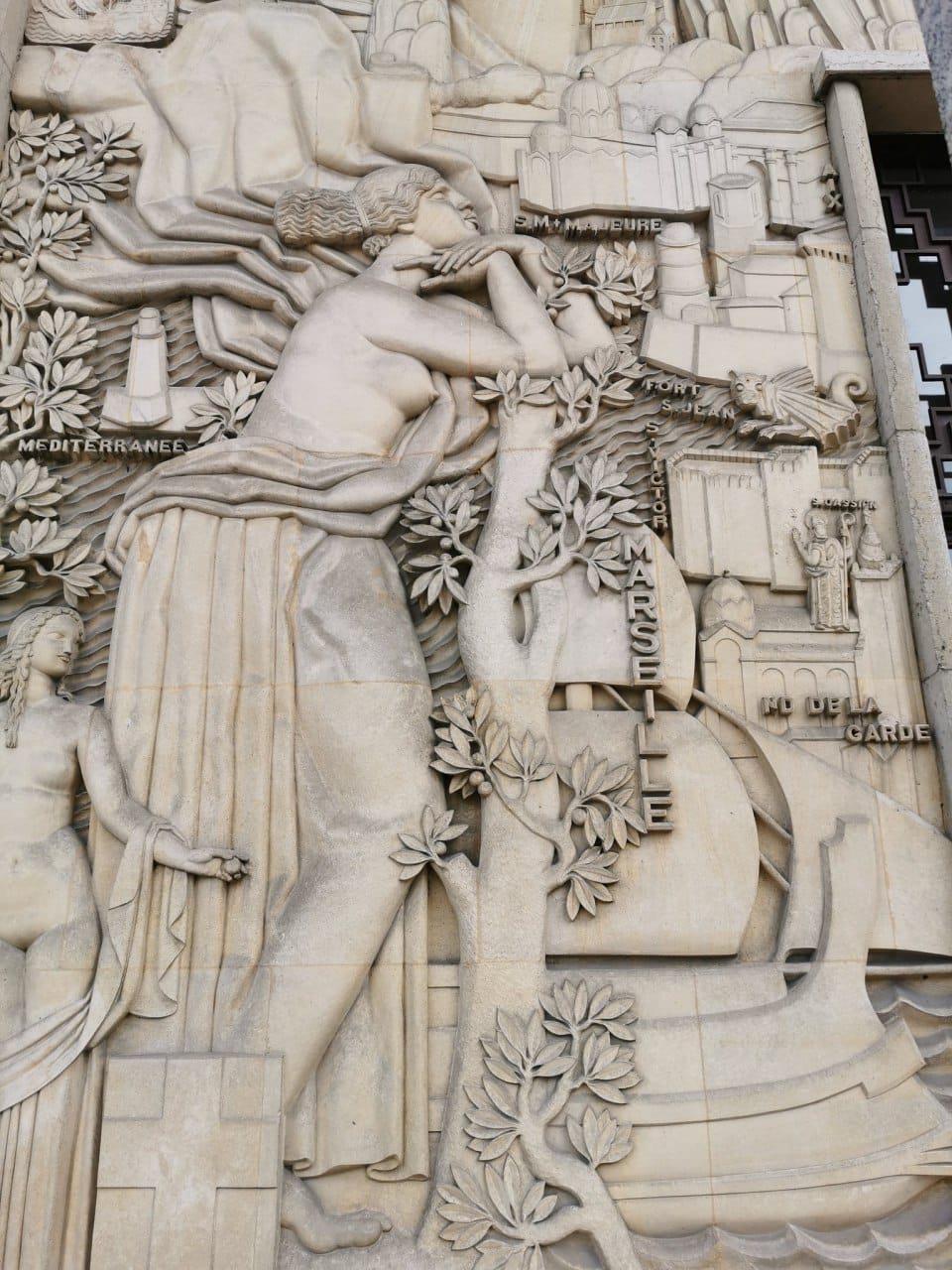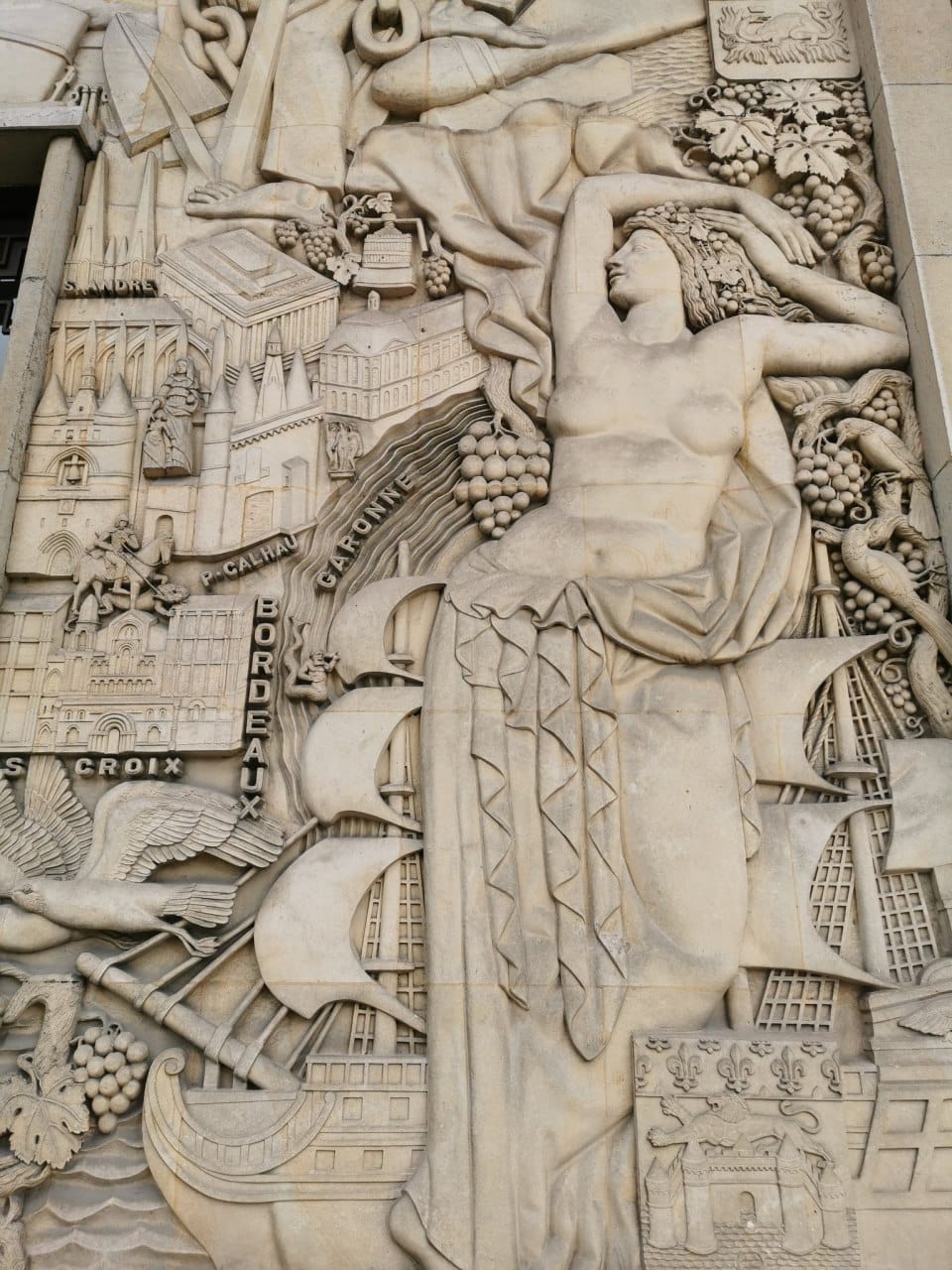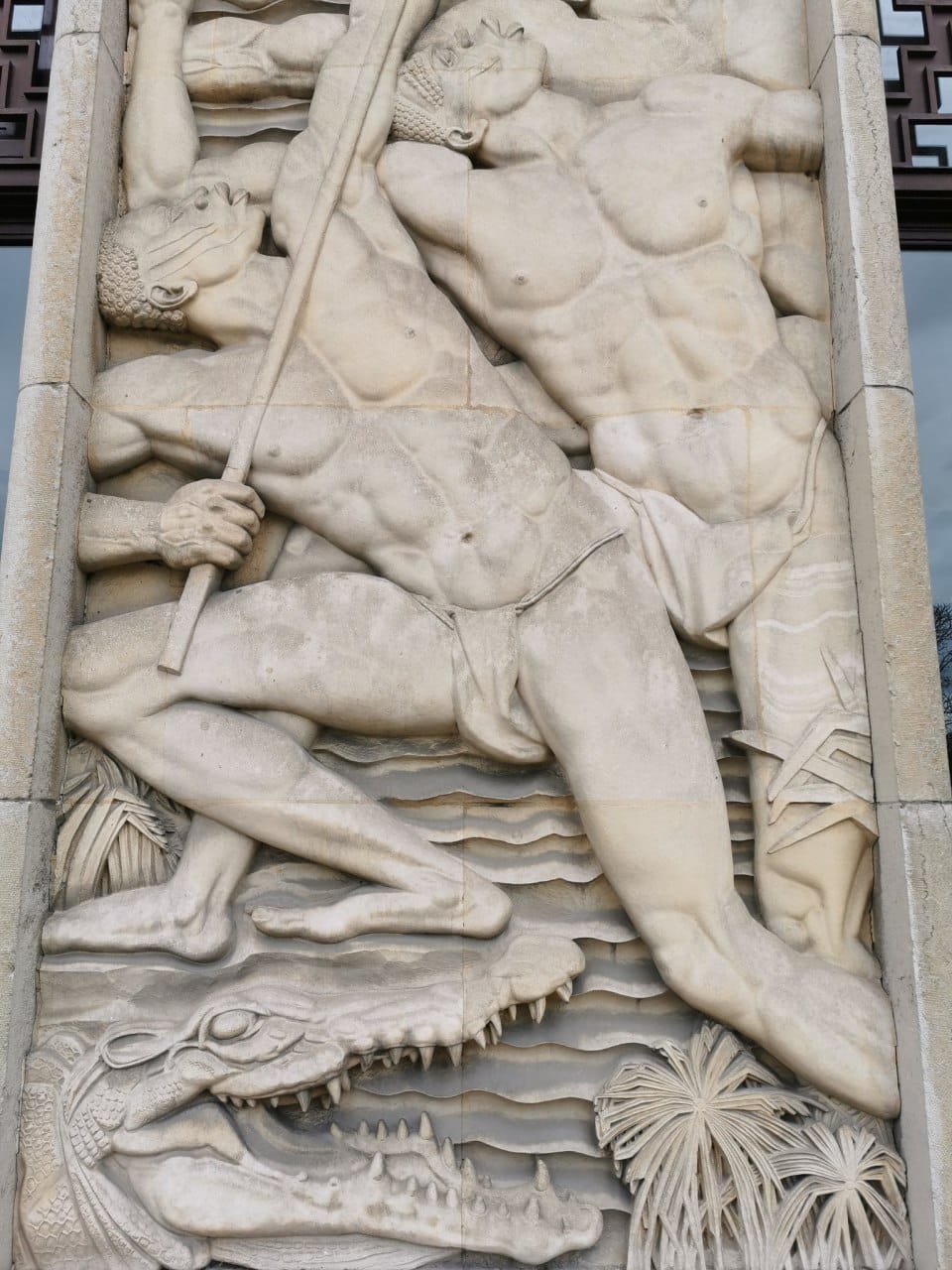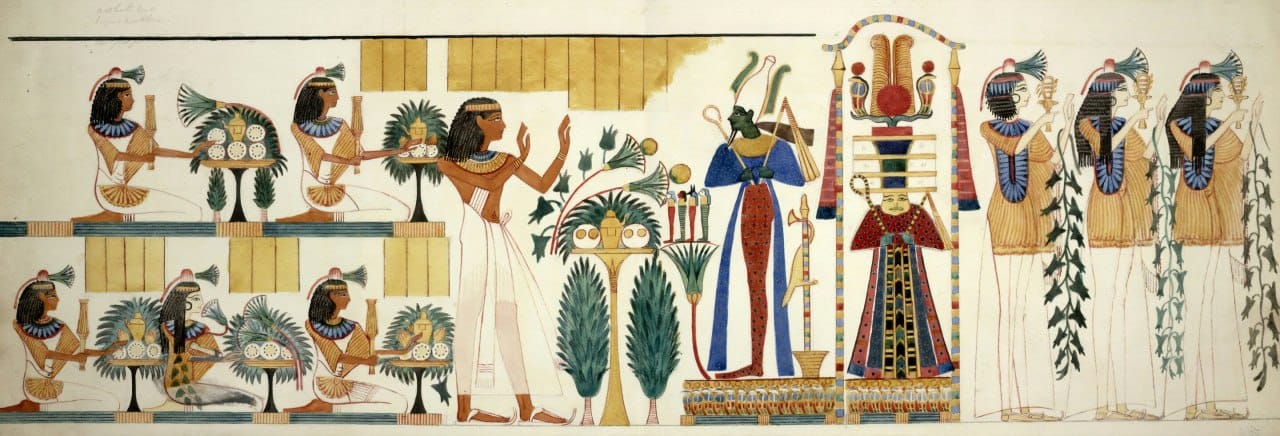
Studying the bas-relief of the Palais de la Porte Dorée, one notices a peculiarity shared by all the colonial figures: like the images of ancient Egypt, they face the viewer in profile, and only the allegorical figure of France, on the central axis of the
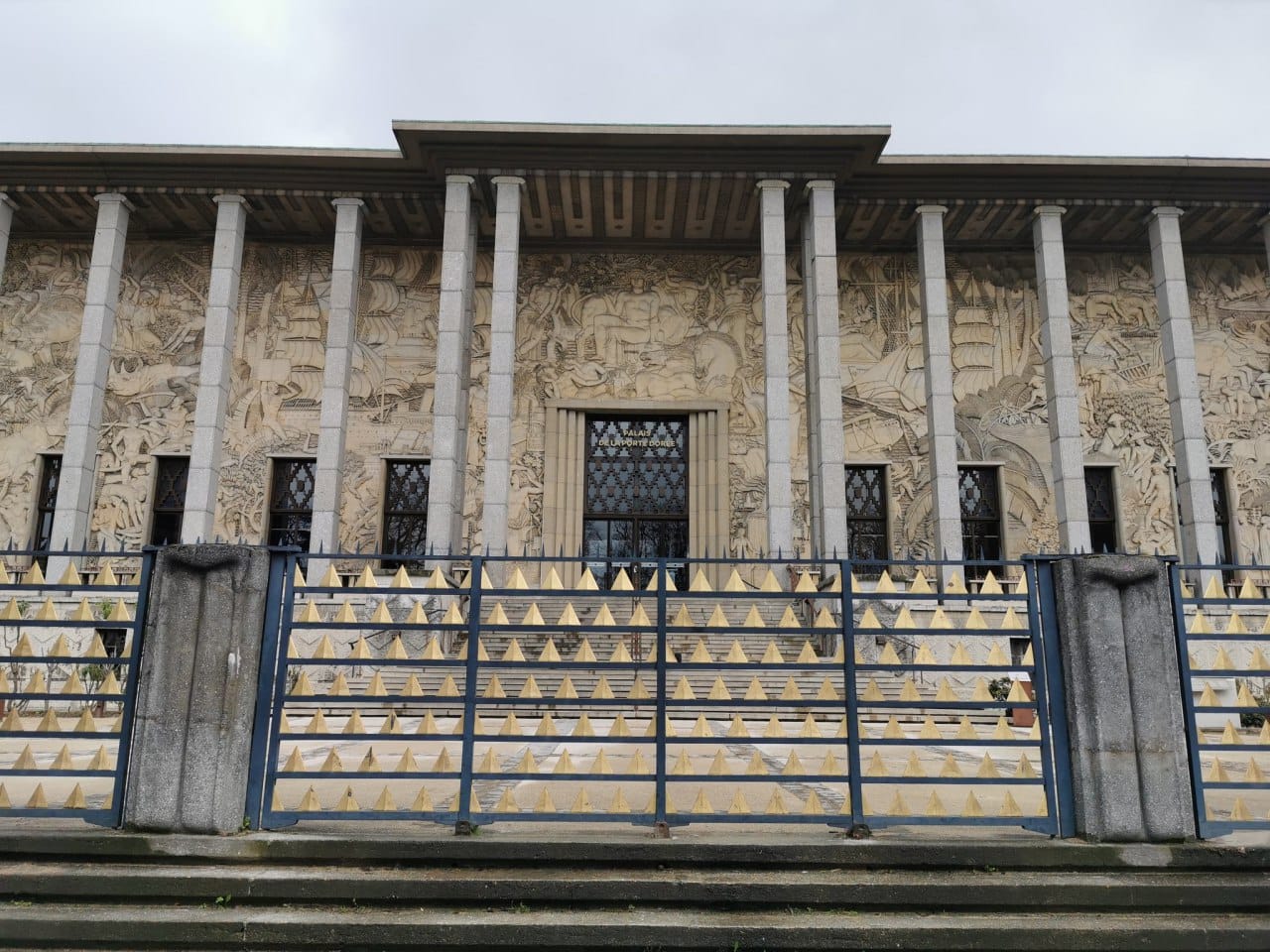
Studying the bas-relief of the Palais de la Porte Dorée, one notices a peculiarity shared by all the colonial figures: like the images of ancient Egypt, they face the viewer in profile, and only the allegorical figure of France, on the central axis of the composition above the doorway, looks at us full-face. The colonies of North Africa and of Africa south of the Sahara are listed from left to right; those of Asia, from right to left. The eastern part of the façade represents the colonies of Oceania; the western, those of the Americas. The inscriptions on the bas-relief are the names of the ports linking the metropole with the colonies. The powerful, healthy people of the colonies seem to idealise the notion of the real state of affairs, diverting attention from the usurpation of power, the shameless exploitation of human and natural resources, the hellish conditions of labour and much else besides. The façade also records the names of the people who contributed to the colonial grandeur of France. Nevertheless, this undeniably unique building demands the close attention of the modern viewer, given the problems listed above and today's view of France's shameful policy in the past.