Undisturbed burials discovered at Göbekli Tepe
Göbekli Tepe lies in south-eastern Turkey. Between 9600 and 8200 BC, hunter-gatherers raised monumental structures and stone pillars here in several stages. This era belongs to the Pre-Pottery Neolithic, that is, the early part of the New Stone Age, when people were already building large structures but did not yet make clay vessels. For many years, researchers, following the site's discoverer Klaus Schmidt, regarded Göbekli Tepe as a sanctuary to which people came for rituals but where they did not live permanently.
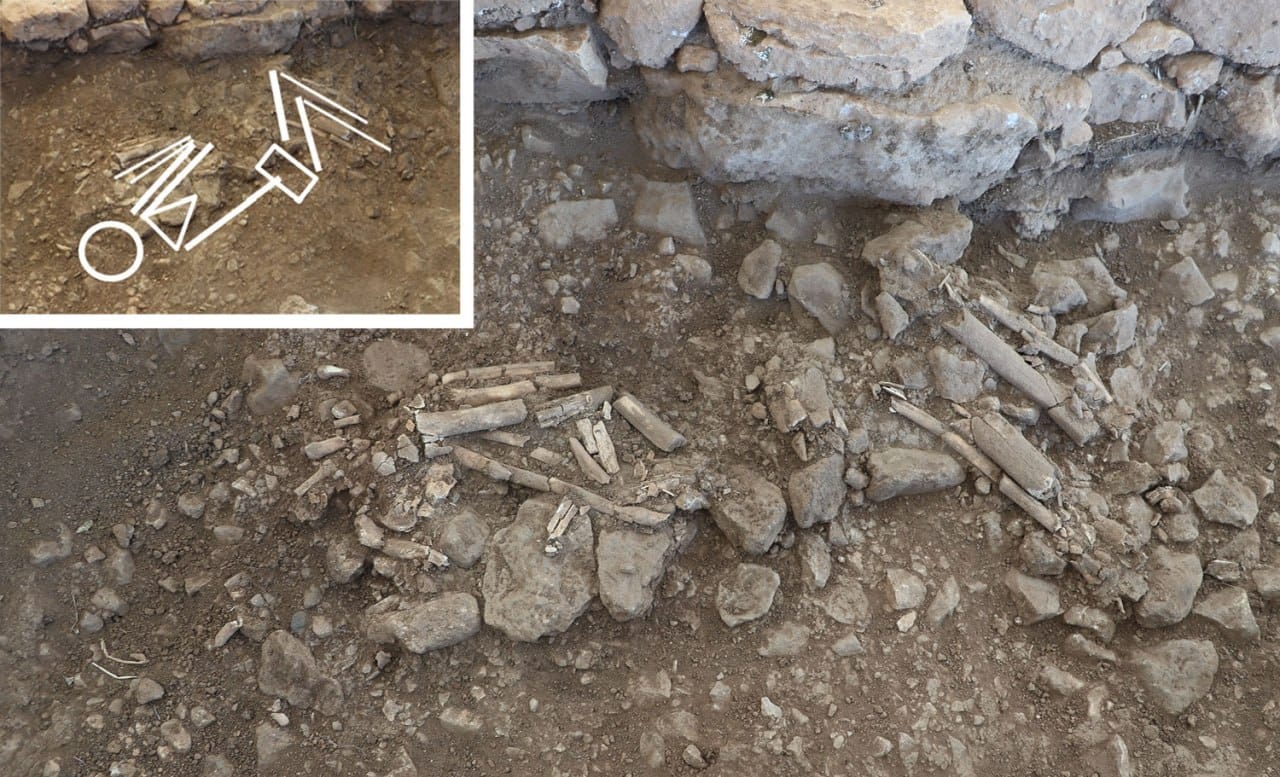
During earlier excavations, archaeologists found in some of the structures only fragments of human bones, mixed with rubble and rubbish from the fill. Now researchers have discovered genuine burials. In a kidney-shaped pit they found the remains of a woman, a young man and a teenage girl. In a separate grave lay the remains of a young woman in a crouched position. The researchers dated these burials to approximately 8700 and 8000 BC.
The bones from the burials proved to be broken, coated in calcareous deposits and gnawed by rodents. The bones that archaeologists had earlier found in the fill of the structures were in the same condition. Researchers now suppose that the ancient people may have placed bone fragments in the structures in the course of ritual actions. Greska allows another explanation: erosion and landslides may have carried the bones into the structures from burials situated higher up the slope of the hill. Moreover, the find suggests that people lived at Göbekli Tepe, and did not merely gather here for rituals.