It is foolish to think that one must read every book one has bought, just as it is foolish to criticise those who buy more books than they will ever be able to read
It is foolish to think that one must read every book one has bought, just as it is foolish to criticise those who buy more books than they will ever be able to read. It is the same as saying that one must use up every fork, glass, screwdriver or drill bit one has bought before buying new ones.
There are things in life of which one's stock should always be in excess, even if one will use only a small part of it.
If, for example, we regard books as medicine, we understand that it is better to have many books at home than few: when you want to feel better, you go to the "medicine cabinet" and choose a book. Not some random one, but the one you need at that very moment. That is why you should always have a choice when it comes to nourishment!
Those who buy only one book read only that book and then get rid of it. They are simply applying a consumerist approach to books, that is, they regard them as a consumer product, a commodity. Those who love books know that a book is anything but a commodity.
Umberto Eco.
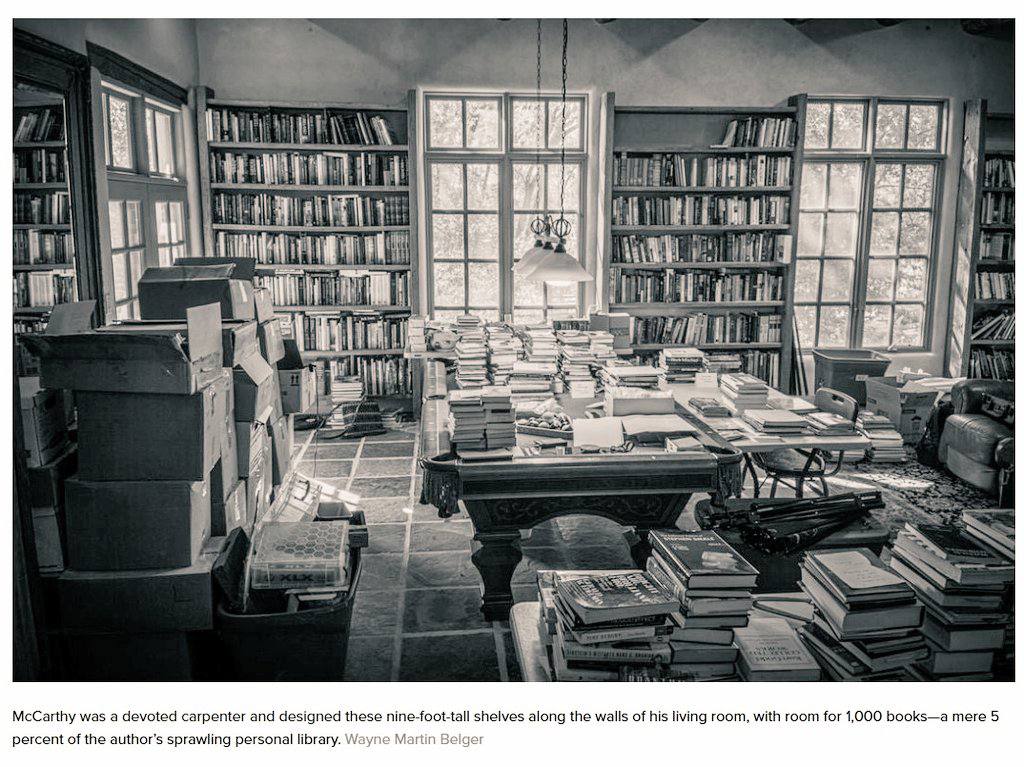
Looking at the photograph of Cormac McCarthy's sitting room with its mere thousand books, I can say that my room looks exactly the same, only one window smaller.
Yet one cannot fail to recall the words of Scrooge McDuck as well:
These old books, oh, they are a whole fortune. "Rare Birds of the Duck Forest", "Great Men in the History of Gooseland"… Eh, what's this, hey, you can't treat books like that!