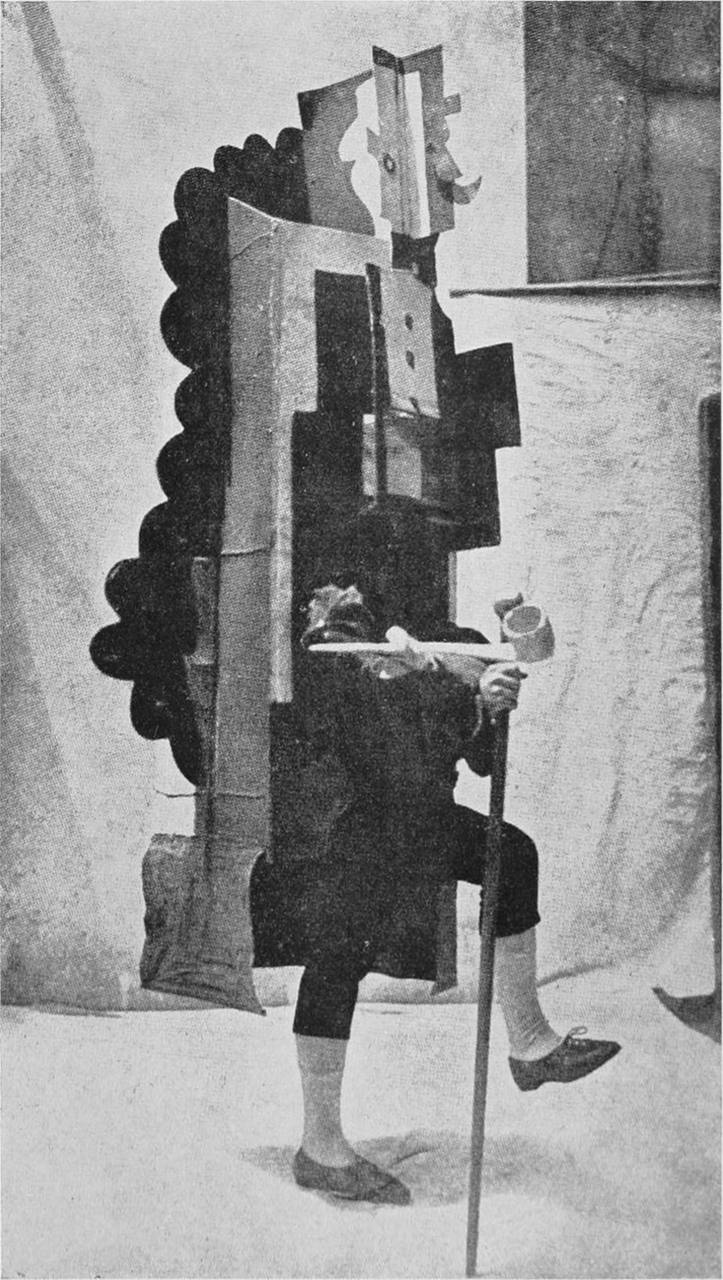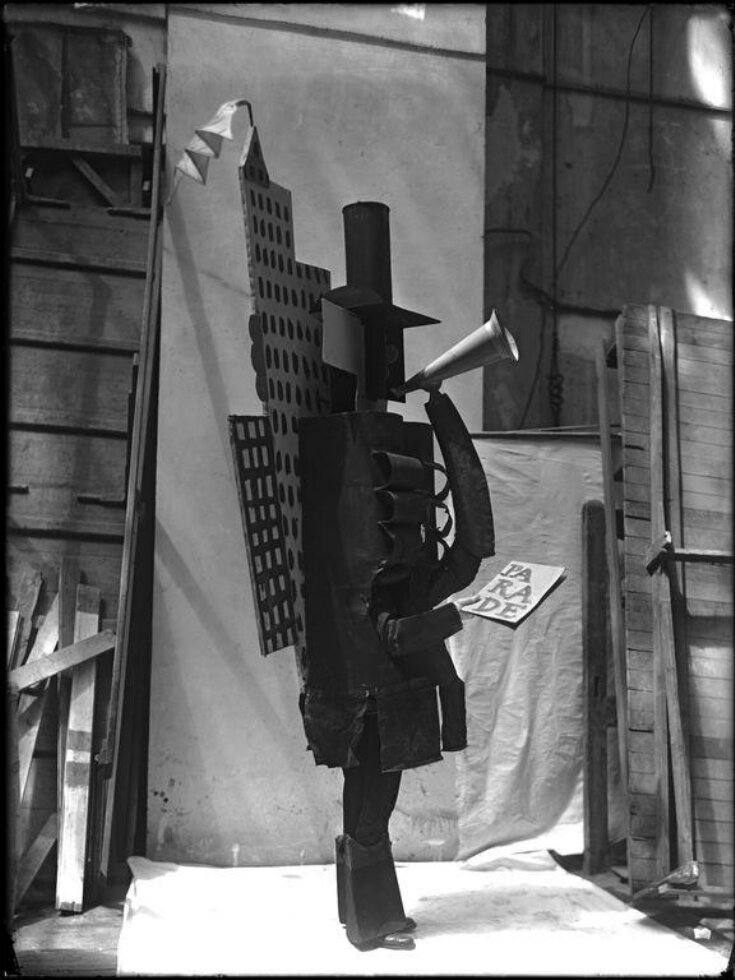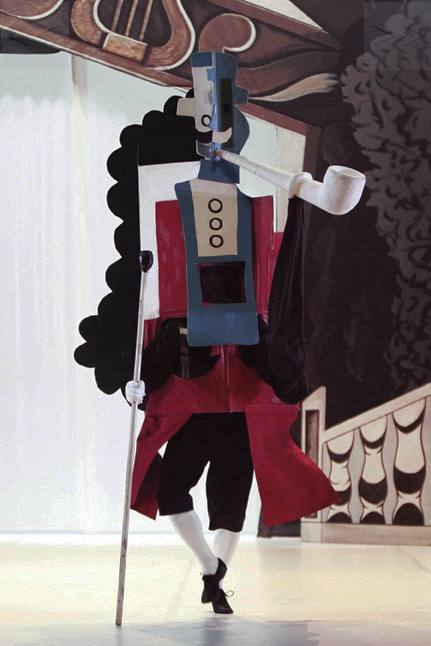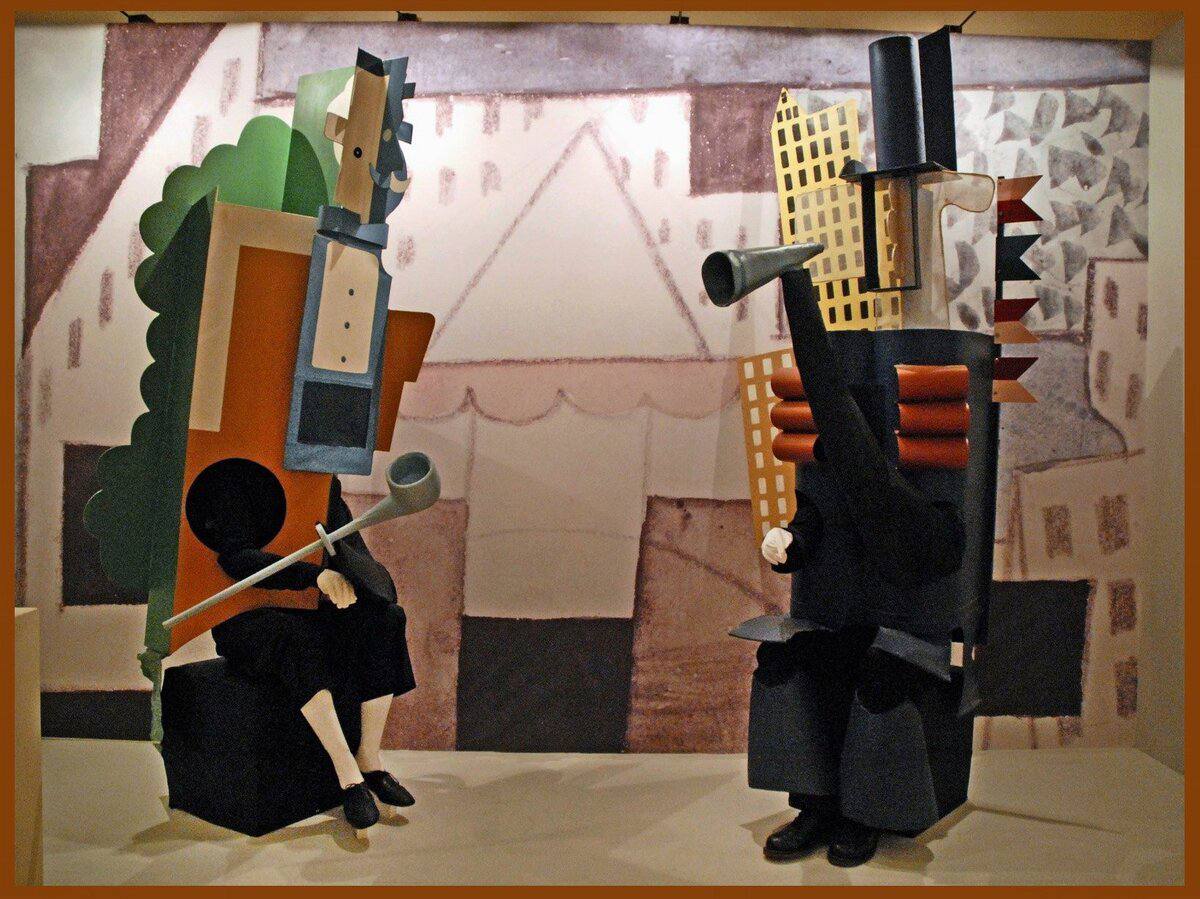
The ballet “Parade” with costumes by Picasso failed in Paris and succeeded in London in 1919
"The geometrical dauber and dabbler Picasso has pushed himself to the front of the stage, while talented artists humbly wait to be put on show," wrote the critic Léo Poldès on 19 May 1917 of Diaghilev's new Russian ballet, Parade…
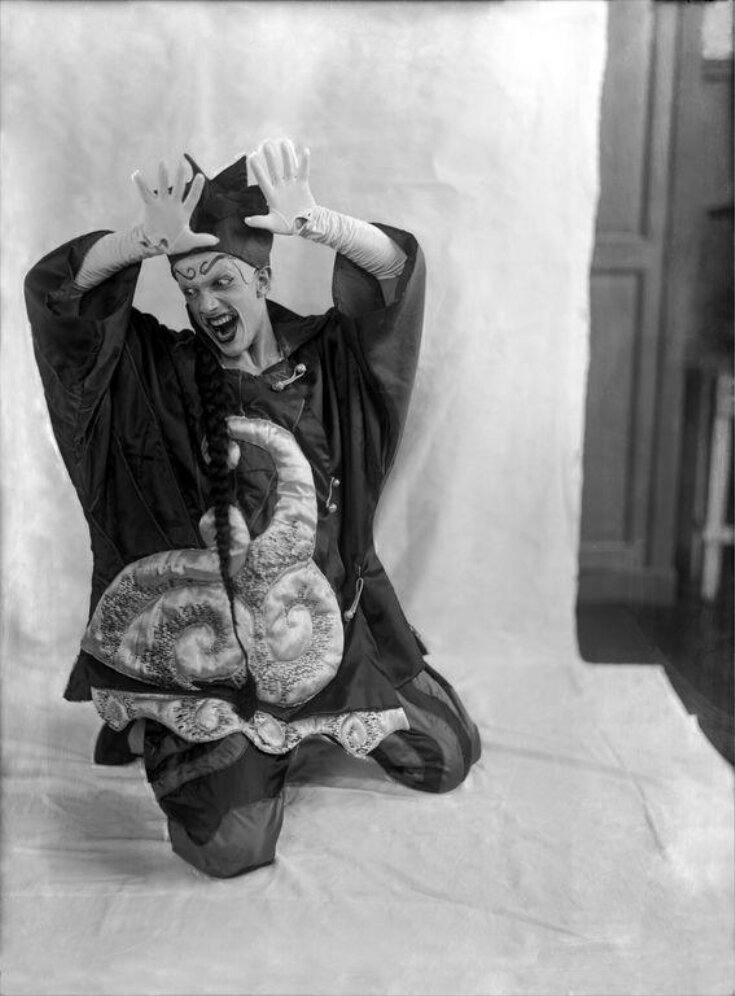
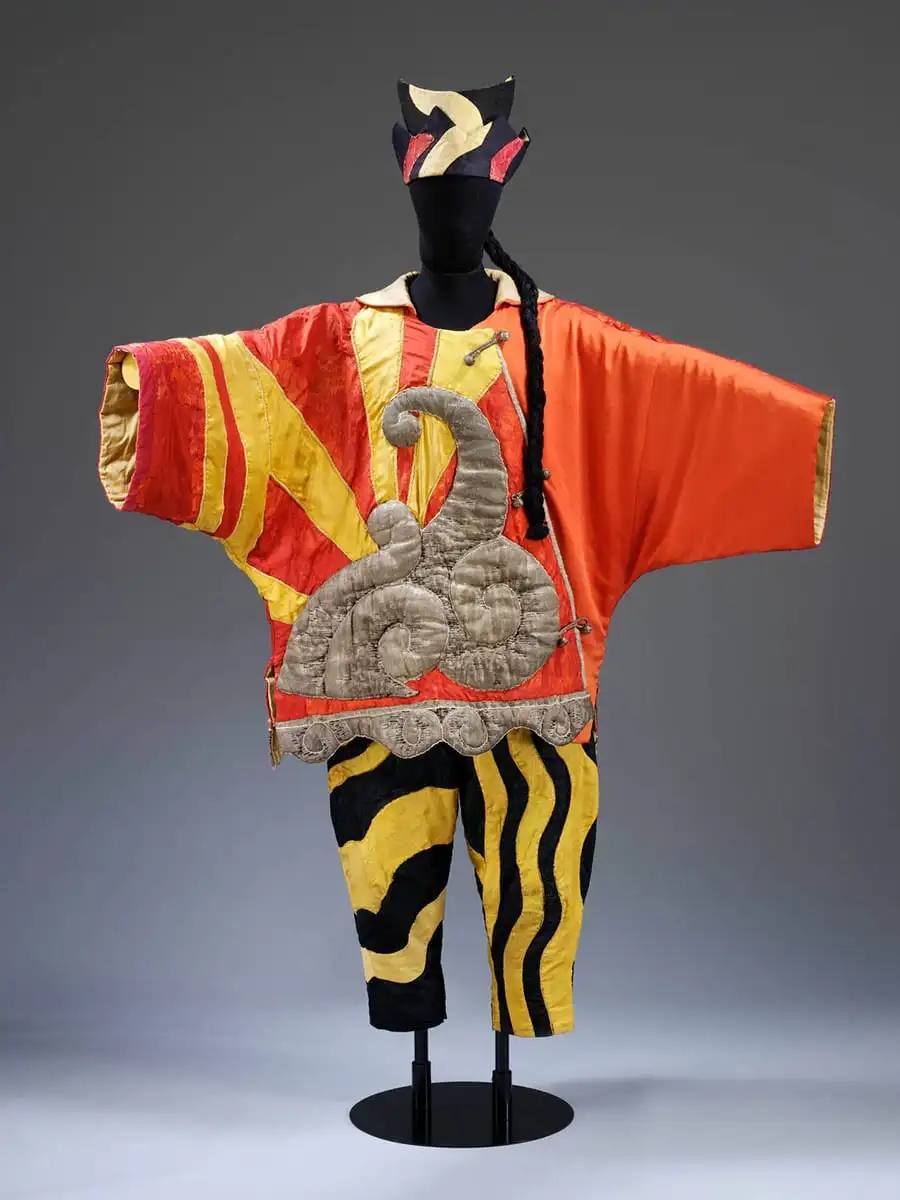
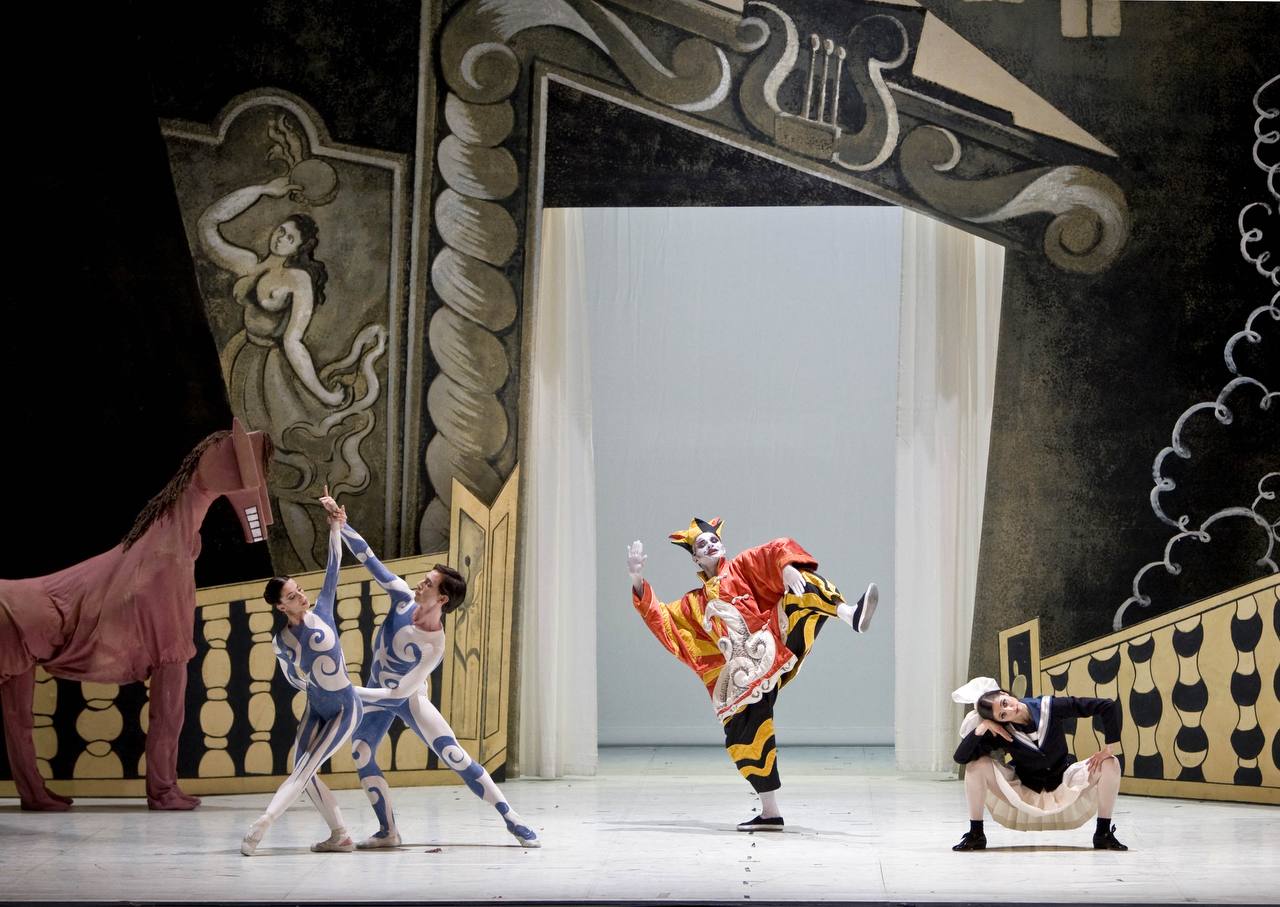
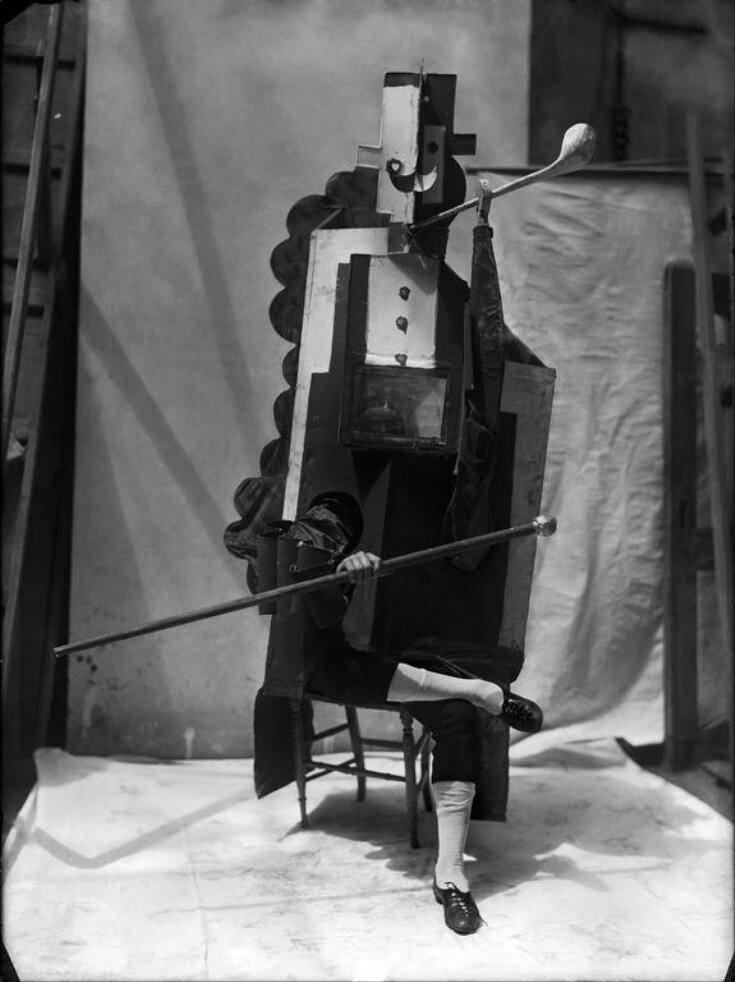
The characters of the ballet: the French and American managers, a Chinaman, two acrobats and the Little American Girl moved in an extremely peculiar fashion, encumbered by cumbersome costumes of paper by Pablo Picasso.
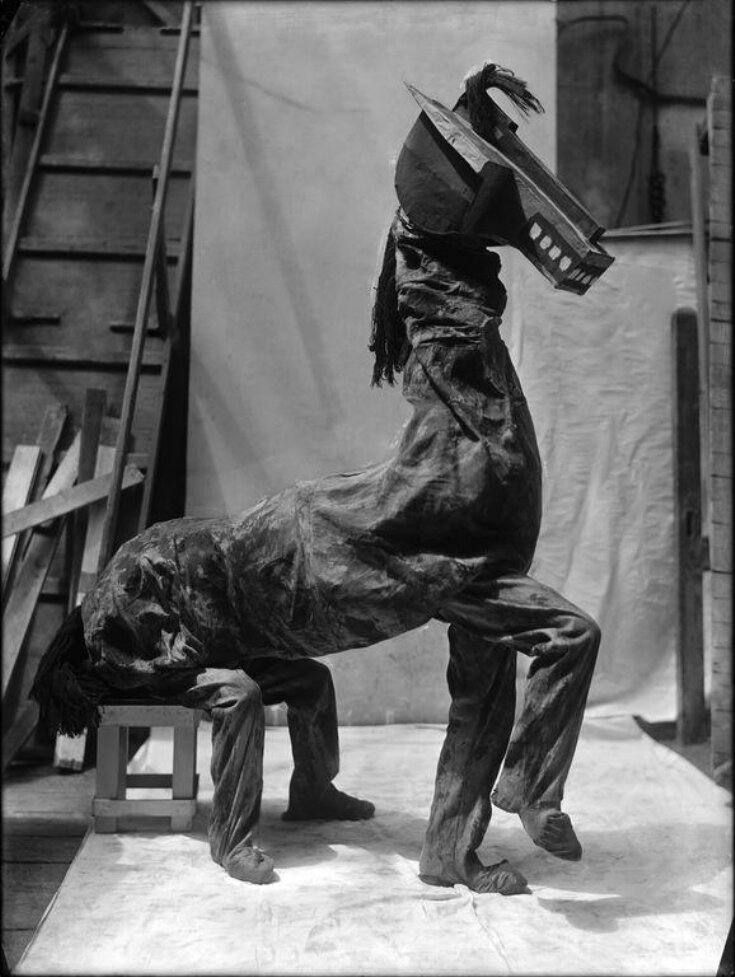
Ilya Ehrenburg wrote: "The ballet displayed the dull automatism of movement; it was the first satire on what has come to be called 'Americanism'. The music was modern, the sets semi-cubist. Pablo had given me an invitation to the premiere. The music, the dancing and especially the sets outraged the audience. Before the war I had attended one Diaghilev ballet that caused a scandal, Stravinsky's The Rite of Spring. But nothing like what happened at Parade had I ever seen. The people sitting in the stalls rushed towards the stage, shouting in fury: 'Curtain!' At that moment a horse with a cubist muzzle came out on to the stage and began to perform circus turns: it knelt, danced, took its bows. The audience evidently decided that the performers were mocking their protests, and lost their heads entirely, howling: 'Death to the Russians!', 'Picasso is a Boche!', 'The Russians are Boches!'"
And if the first production of Parade in Paris was a failure, the London premiere of 1919 met with incredible success, which reverberated all the way back to France.