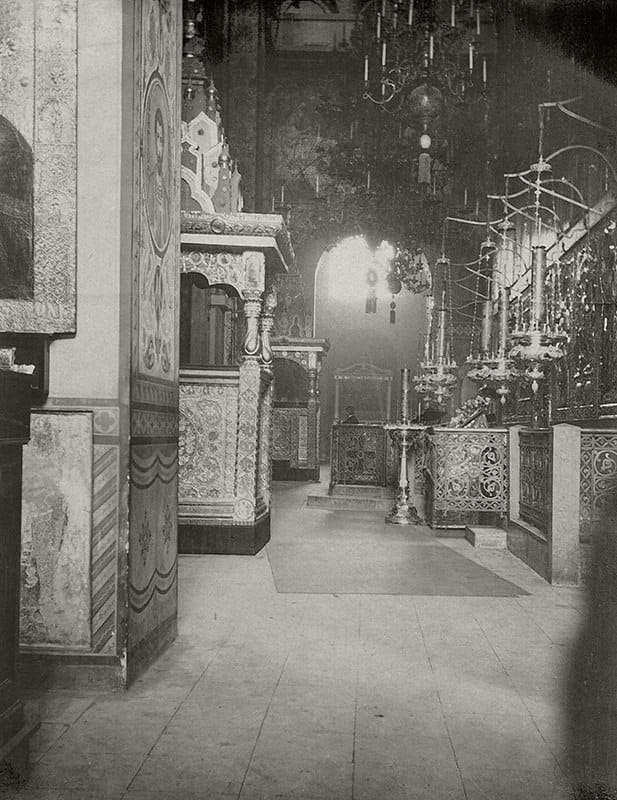
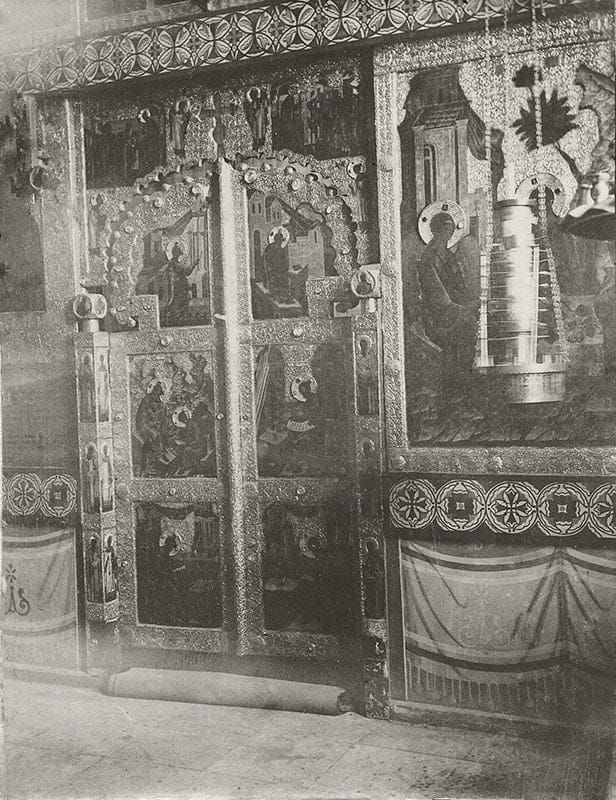
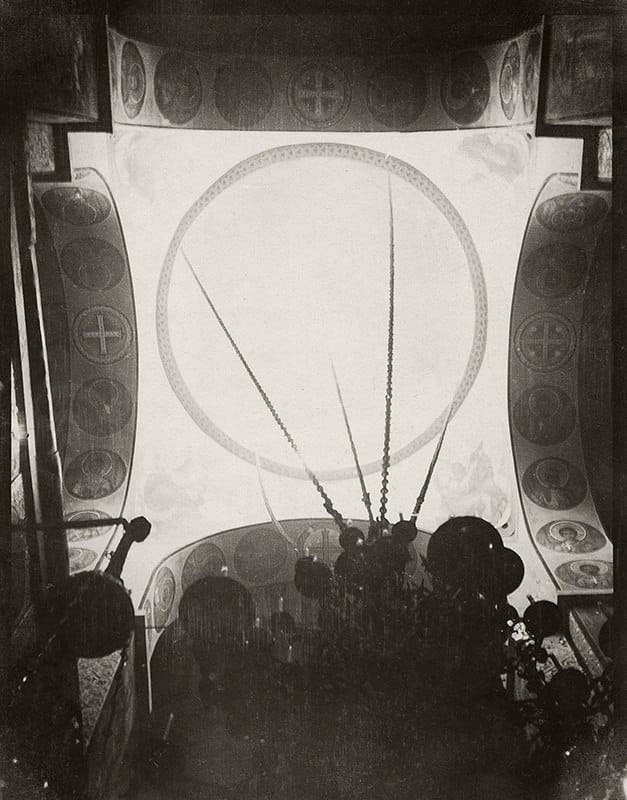
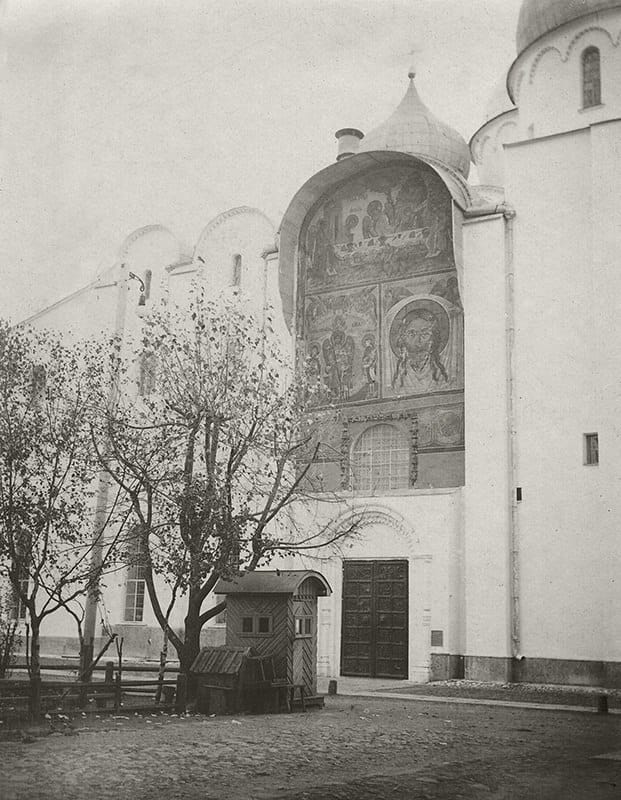
These photographs of St Sophia's Cathedral in Novgorod were taken by Boris Kustodiev in the autumn of 1903, during his journey to the North with Dmitry Stelletsky
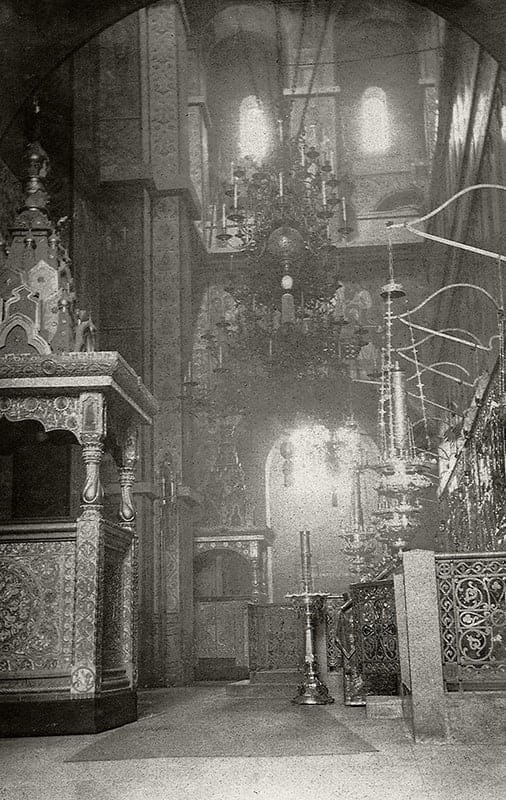
In 1900 Stelletsky and Kustodiev made an expedition through the Kostroma Governorate, and in 1903 through the Russian North and the Novgorod Governorate. They travelled to ancient Russian towns and monasteries, sometimes together, sometimes separately, sketching monastic frescoes and icons and noting down their impressions. Kustodiev, as you can see, also took photographs. In 1907 Stelletsky went alone to the Ferapontov and Yuryev monasteries and around the Russian North, and in the autumn, this time with Kustodiev, they set off for Italy, the journey being paid for by Kustodiev.
Stelletsky used to say that the Russian people ought to have an art of their own, and that only by studying the legacy of one's forebears, even at first slavishly imitating it, could native beauty be resurrected. Although Vera Dokuchayeva observes that Kustodiev shunned works in the Russian style and that stylisation was alien to his nature. Yet from his journeys around the Novgorod lands he brought back impressions for the sets of an unfinished play by Alexey Tolstoy, drawn from the life of thirteenth-century Novgorod, for the Alexandrinsky Theatre, as well as sketches such as "Novgorod, the Church of Theodore Stratilates, Evening".
In January 1903 Kustodiev married Yulia Proshinskaya; in spring he travelled down the Volga from Rybinsk to Astrakhan; he spent June and August in Semyonovskoye-Lapotnoye in the Kostroma Governorate with Stelletsky and Mazin, gathering material for his diploma painting "At the Market"; on 11 October his son Kirill was born, and on 31 October Kustodiev graduated from the Academy with a gold medal and the right to a pensioner's journey abroad. He set out in December, intending to visit Paris and Spain. From Seville he would write that he was doing nothing for his sketchbook, because he could barely manage to see everything.
His son Kirill would recall that some of his father's paintings carried something Novgorodian about them, something of the icon or the fresco: the Novgorod manner showed in the red background and red faces, almost the same colour as the red walls, as in the St Nicholas the Wonderworker.
It is known that Kustodiev prized Novgorod icons, especially their depiction of faces, and that on his favourite wall in the studio hung a large twelfth-century Novgorod icon, "The Life of the Virgin".