If you should ever find yourself in an unequal struggle with the hidebound notion that the history of world culture knows no great women creators, then remember, for instance, Lavinia Fontana, a Renaissance or, as she is sometimes called, early Baroque pa
If you should ever find yourself in an unequal struggle with the hidebound notion that the history of world culture knows no great women creators, then remember, for instance, Lavinia Fontana, a Renaissance or, as she is sometimes called, early Baroque painter from Bologna. Fontana achieved the same successes as her male colleagues and, contrary to the established stereotype, painted not only portraits of noble ladies, such as Eleonora de' Medici, but also worked at the papal court, producing monumental church canvases for the Vatican and painting a great many mythological pictures.
Consider this: the sixteenth and seventeenth centuries, and a woman becomes the official portraitist of Pope Paul V and paints for the Basilica of Saint Paul Outside the Walls. More than that, for her merits and talent she becomes the first woman admitted to the Roman Academy. No fewer than 135 paintings from the brush of Lavinia Fontana have survived, and it remains a separate and considerable question how, with such feverish activity, she managed to bear 11 children.
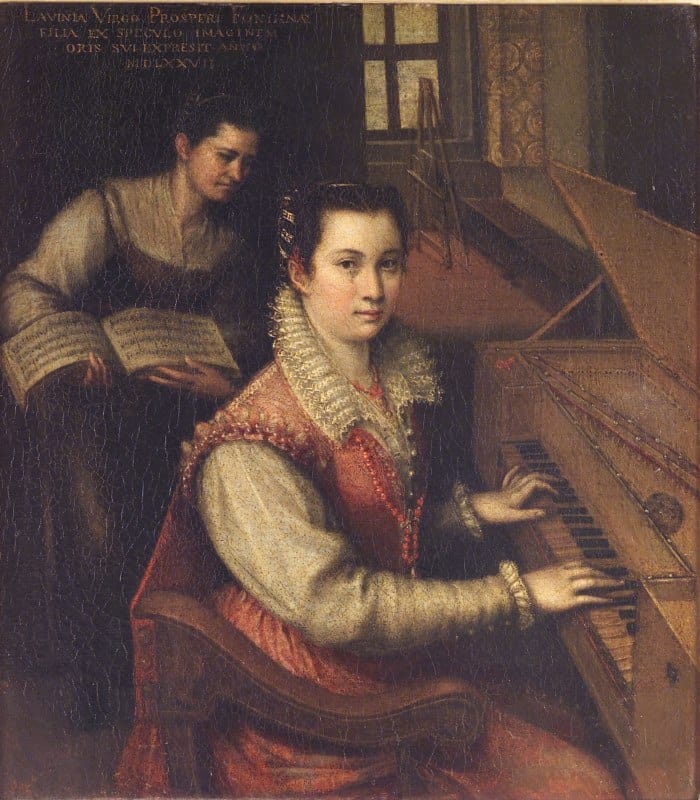
In her self-portrait Lavinia plays a small clavichord or spinet