The Ancient History of Cities Lives On in Their Layout
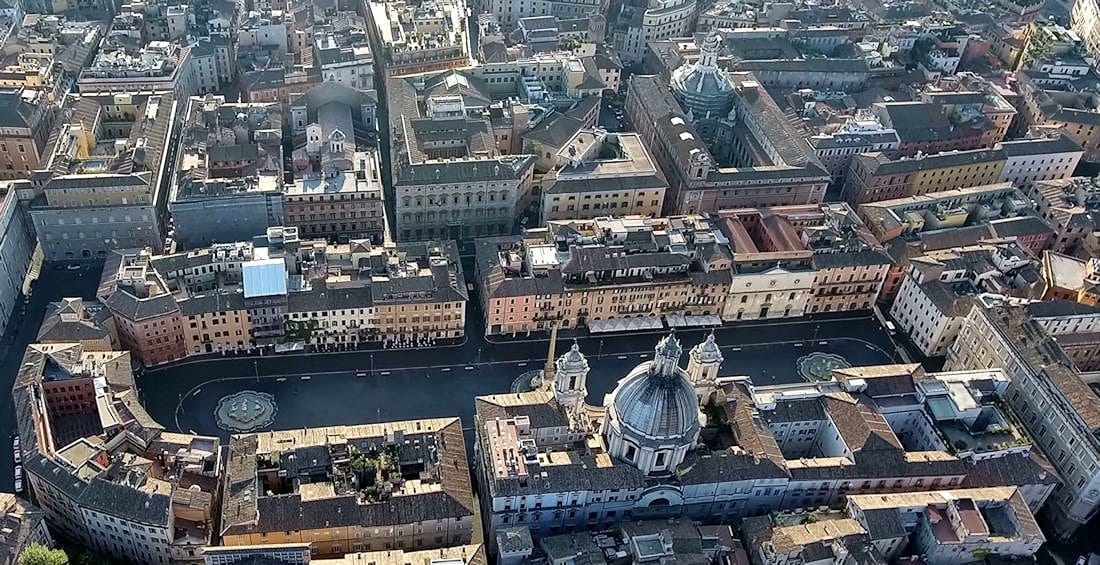
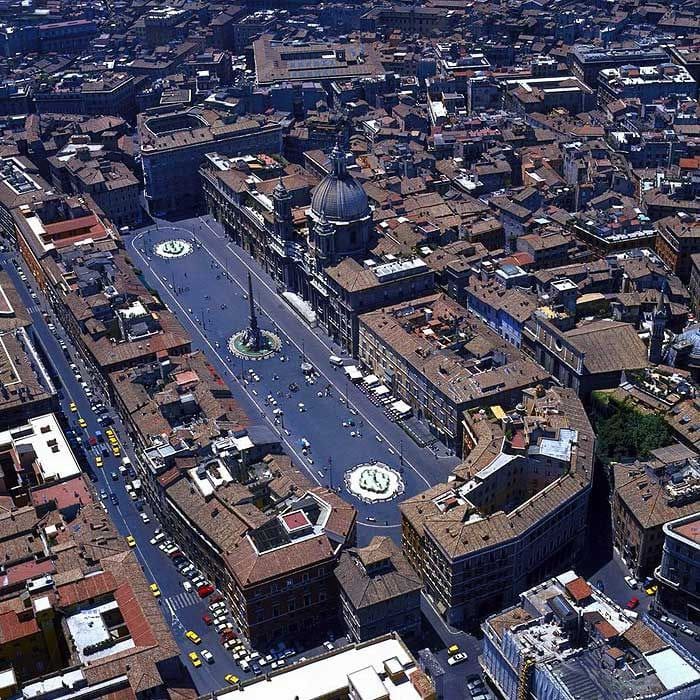
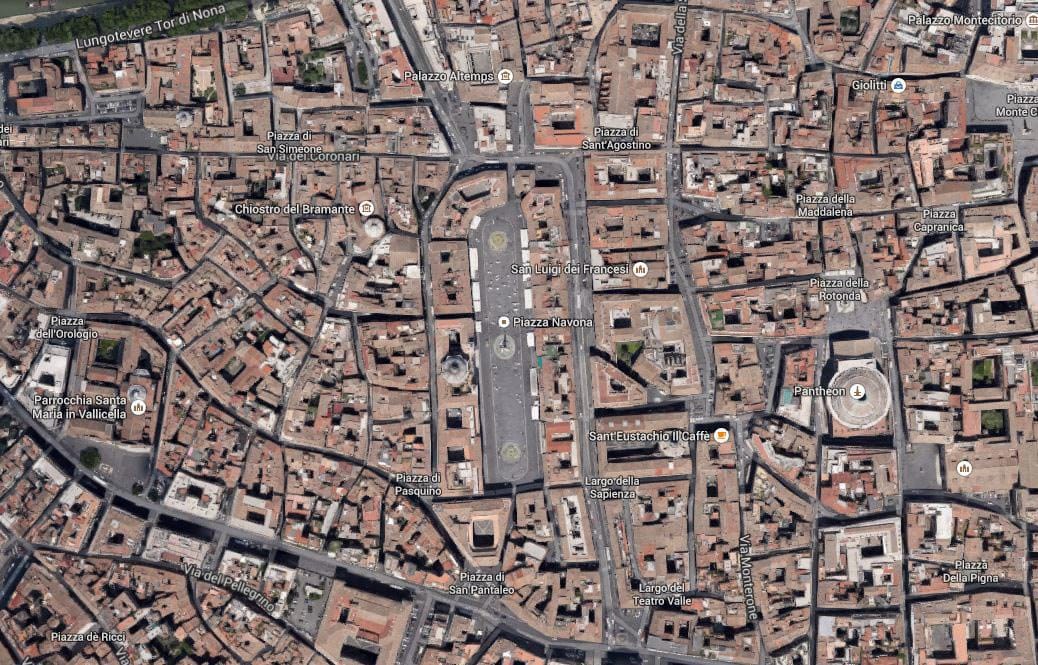
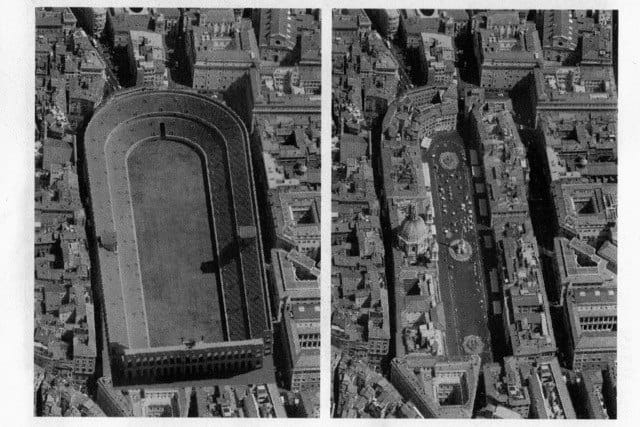
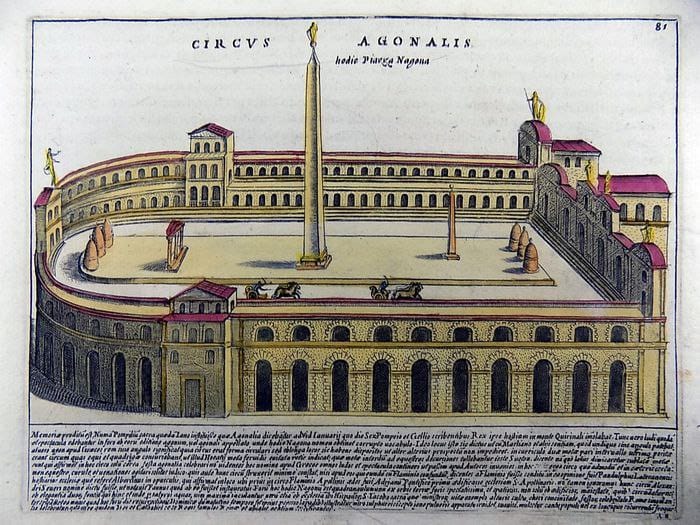
The ancient history of cities lives on in their layout. One of the most beautiful squares in Rome, Piazza Navona, owes its rounded northern end to the fact that in 46 BC Julius Caesar built a stadium here, which the Emperor Domitian later considerably enlarged, giving it the shape of a horseshoe, in AD 85. The stadium was called the Campus or the Circus Agonalis, and festivals and contests were held here until the 4th century. In the arches beneath the tiers, which held 15,000 spectators, there were shops and brothels. In the Middle Ages this part of the city continued to be called a circus, the circus of Alexander or of Alexander Severus, and races were still held here, for an ancient city does not, after all, have so many large open spaces. The houses built around the stadium could conveniently be set on the existing foundations and outer walls, which is why the horseshoe shape has survived to this day