Archaeologists exploring the southern part of Pompeii have found traces of two waves of resettlement, in the late 1st to early 3rd century and in the 4th and 5th centuries
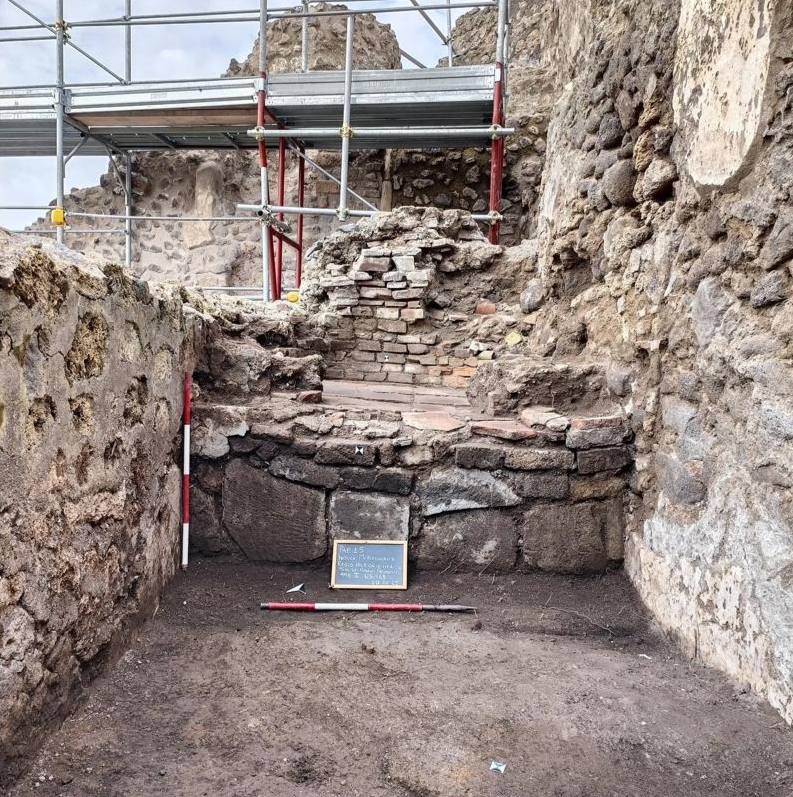
Archaeologists exploring the southern part of Pompeii have found traces of two waves of resettlement, in the late 1st to early 3rd century and in the 4th and 5th centuries. Among the finds are food remains, coins, the skeleton of a horse and the remains of a newborn child, buried with a coin dated to 161.
Life in Pompeii did not come to a halt after the eruption of Vesuvius. Soon after the catastrophe people were already returning to the city and trying to make a home among the ruins. The new settlers raised roofs and staircases on the collapsed walls of the city, dug out cellars and caves, and built ovens from tile, brick and volcanic stone.
It is believed that of Pompeii's roughly 20,000 inhabitants, about 2,000 perished during the eruption, from suffocation or instantaneous heat shock. In the first weeks after the catastrophe the survivors and looters, to all appearances, made attempts to dig through the ruins and carry off valuables from the upper floors of the buildings, but before long the site of the city was declared lost by the Roman authorities.
Naturally, those who chose to live on the ashes were the poorest and most hopelessly unlucky, and atop a layer of hardened ash one could scarcely build anything but slums, put together from whatever materials could be salvaged from the ruins.
But by the 5th century AD the place was finally deserted: another powerful eruption of Vesuvius, in 472, drew the last line under the history of the city.