Archaeologists of the Bulgarian Academy of Sciences have discovered a 2nd-century BC tomb near the Bulgarian village of Kapitan Petko Voyvoda in the Topolovgrad area; the find is already being called the richest Hellenistic-era burial known in the country
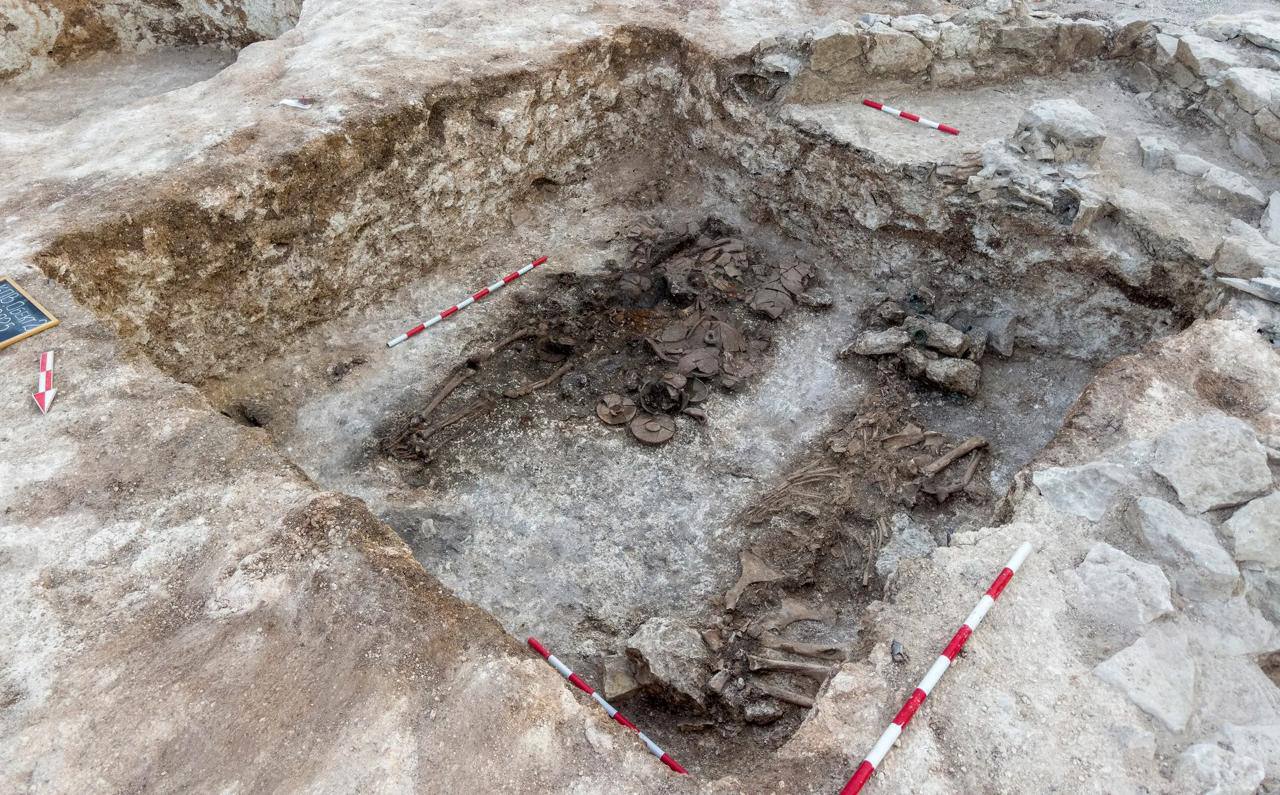
The tomb belonged to a high-ranking Thracian warrior, buried together with his war horse and a great quantity of precious objects.
The Thracians were an Indo-European people who emerged in the Bronze Age. They lived in the Balkans and historically occupied a territory that includes most of present-day Bulgaria, as well as parts of Greece and Turkey. By the time of the Macedonian Wars (3rd to 2nd centuries BC), many of them were serving Rome. Service was rewarded with grants of land, which furthered the Romanisation of these regions.
The burial yielded a gilded silver wreath (a mark of honour in Thracian culture), a silver bracelet, a ring, a richly decorated fibula, and a Greek machaira sword whose hilt was inlaid with gold and precious stones. The horse had been adorned with gold, silver and bronze medallions bearing mythical scenes, among them Heracles fighting the giant Antaeus.