On 28 April the Trump administration dismissed the entire US National Science Board with a single letter: 22 scientists who oversaw the National Science Foundation, with its budget of 9 billion dollars a year
On 28 April the Trump administration dismissed the entire US National Science Board with a single letter: 22 scientists who oversaw the National Science Foundation, with its budget of 9 billion dollars a year. The NSF has been without a director since the spring of 2025, and Trump's candidate for the post is the investor Jim O'Neill, a man with no scientific training who calls himself a vitalist. Over the past year the agency's staff has been cut by 40%, the Extremely Large Telescope programme has been halted, and the directorates for education and for the social sciences are being closed. What remains under protection is AI, quantum technology and biotech: everything that promises a military and commercial return.
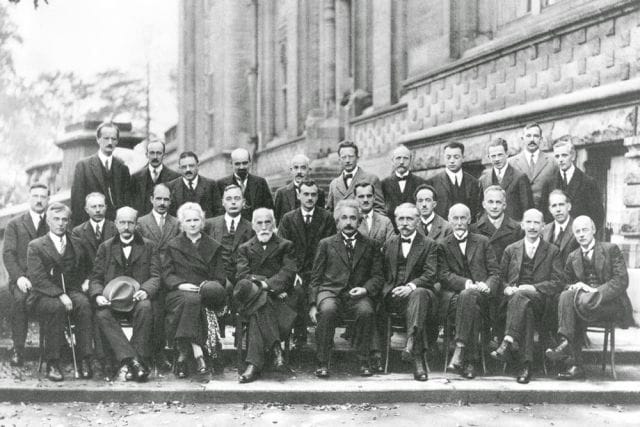
In 1933 the Nazi "Law for the Restoration of the Professional Civil Service" dismissed up to 3,000 scholars from German universities. Among those who left were Albert Einstein; Max Born, one of the founders of quantum mechanics; Edward Teller, the nuclear physicist and later creator of the hydrogen bomb; Leo Szilard, who conceived the nuclear chain reaction; and Hans Bethe, who explained how the stars burn. Half of them went on to work on the Manhattan Project.
In 1948 Lysenko, with Stalin's backing, declared genetics a bourgeois pseudoscience, and more than 3,000 biologists were dismissed; Nikolai Vavilov had by then been dead for four years, having starved to death in a Saratov prison. Soviet biology dropped out of world science for fifteen years.
In all the cases listed the mechanism is similar. First the removal of those who exercise oversight, then an amateur placed at the head, then the ideological filtering of funding, and in the end an irreversible drain of specialists.
Where American scientists will go can be guessed from 1933: to wherever there is money and autonomy. Only there are now few such places. European science is chronically underfunded, Japan and Korea are strong in applied research, and China draws people to itself at a peculiar political price that not everyone is prepared to pay.
For decades world science has functioned on the premise that the United States was the principal donor of fundamental research. If that function collapses, the rest of the world is left with a void which, as I see it, there is no one to fill. Germany never regained the scientific heights of the 1920s after 1933. Soviet biology did not catch up with the world's until the collapse of the USSR. What do we have today? In all likelihood, in some ten years' time it will turn out that the fields quietly zeroed out are not being developed by anyone else either, and not only by the Americans. Though they, unlike certain others whom we shall not name, do at least occasionally roll things back, returning to common sense