David of Thessalonica and the 13 days separating Greek and Russian church calendars
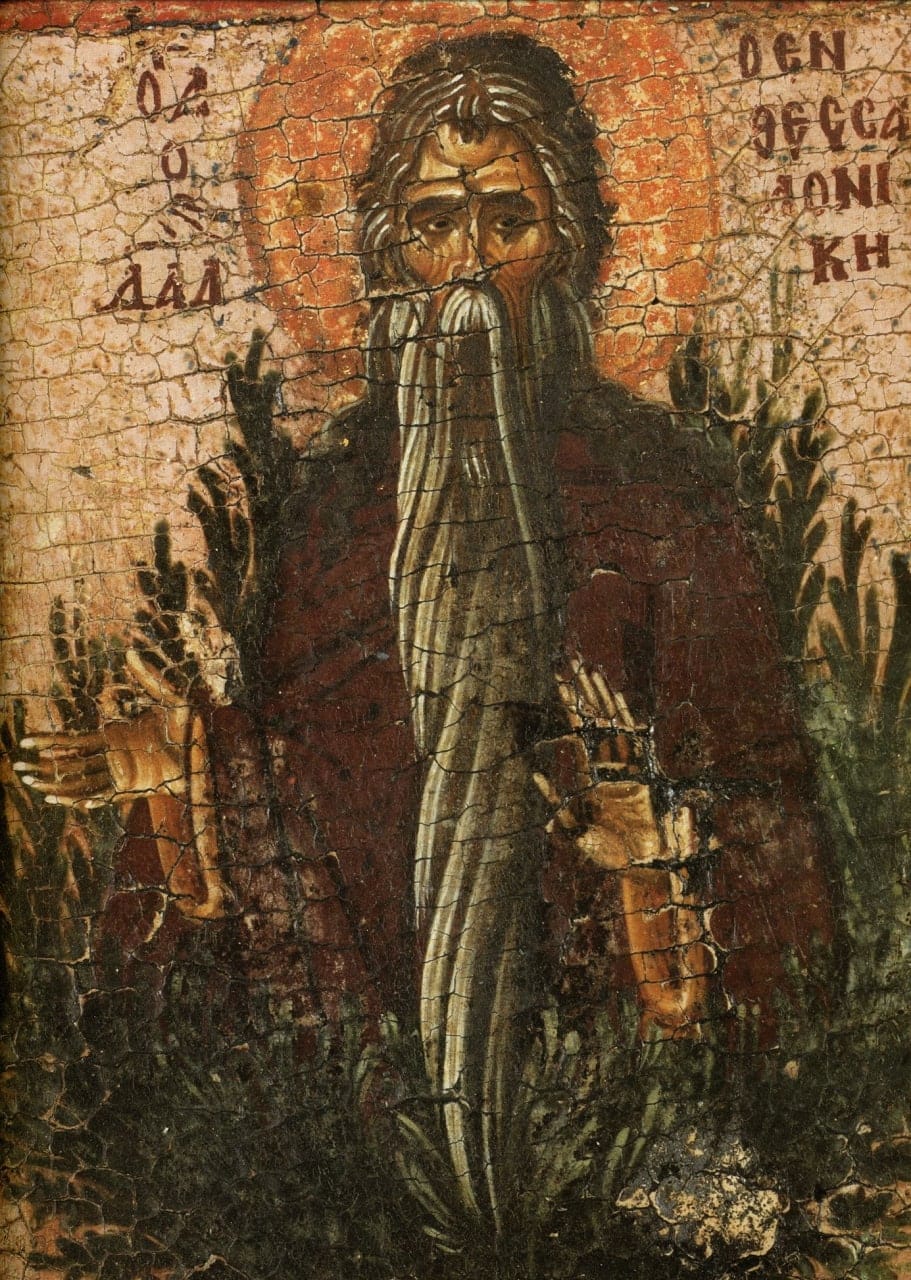
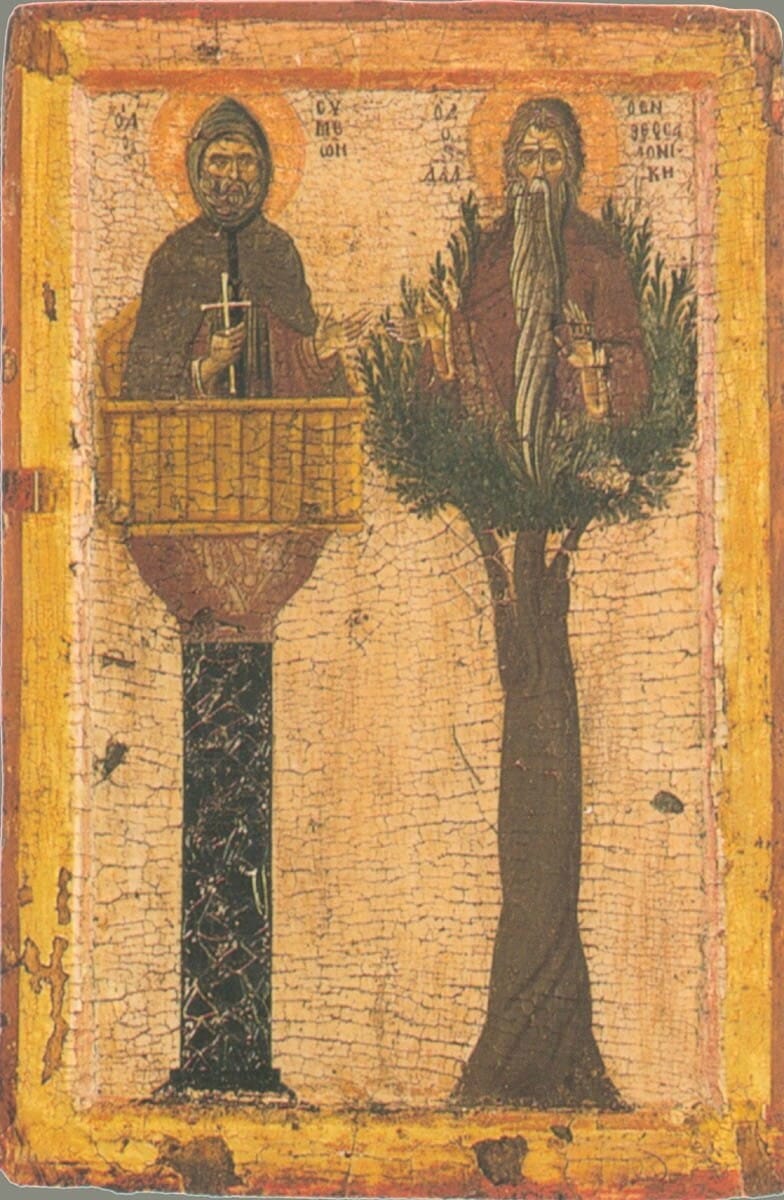
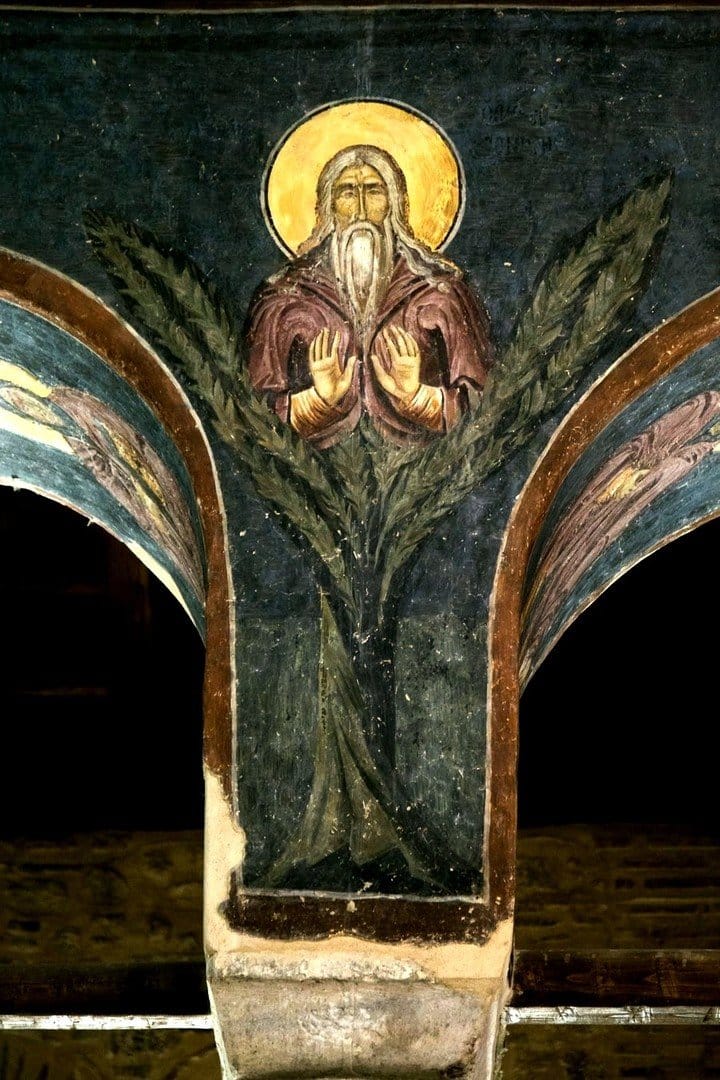
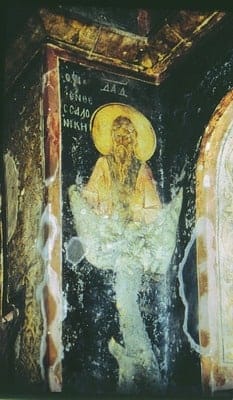
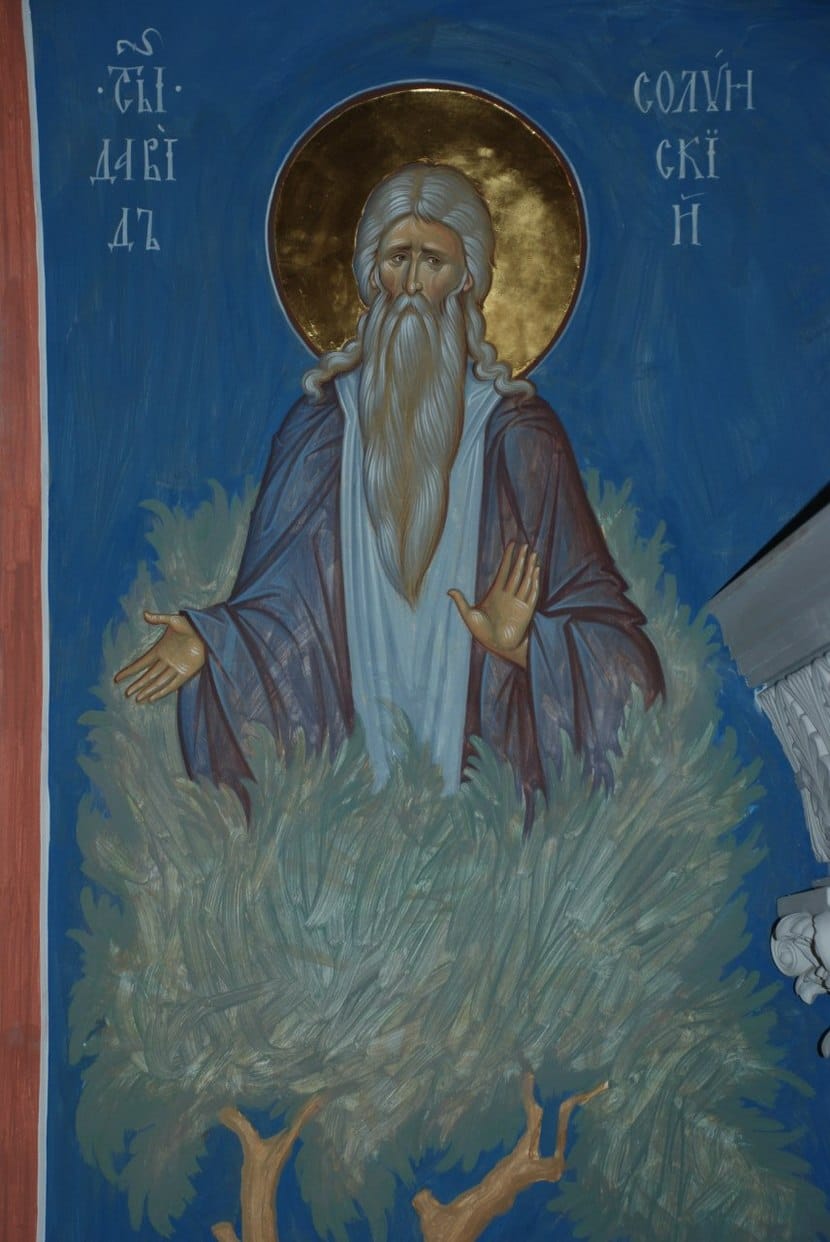
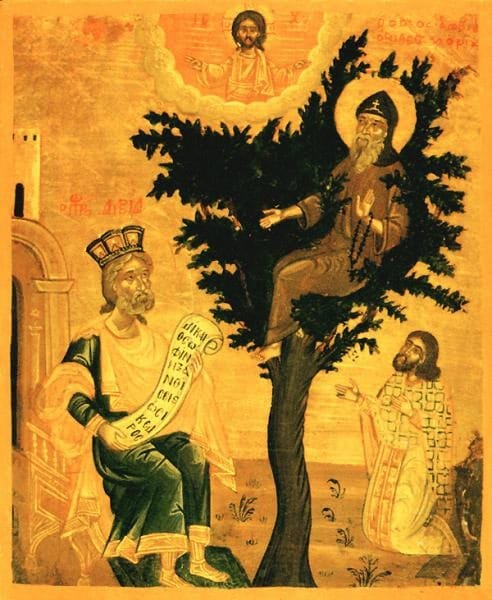
On 26 June the Greek Orthodox Church honours the memory of the hermit Saint David of Thessalonica. Of his ninety years, the venerable saint spent seventy in fasting, prayer and asceticism in a hut beneath an almond tree. Even in his lifetime he was recognised as a wonder-worker: he healed the sick and could hold live coals in his hands. The iconography of David of Thessalonica is bound up with a tree, above which the saint's image is depicted.
In the Russian Orthodox Church the saint's memory is also kept on 26 June, but by the Julian calendar, that is, 13 days later.
Why is it not so in Greece? The point is that the Greeks use the Revised Julian calendar, which will coincide with the Gregorian until February 2800, and so the two are often confused. Thanks to the use of the Revised Julian calendar in Greece, as in the other local churches apart from the Russian, Georgian, Polish, Serbian, Jerusalem and Ukrainian ones, all the fixed church feasts are kept 13 days earlier than in the churches that live by the truly Julian calendar. Easter, however, coincides with that of the Russian Orthodox Church.