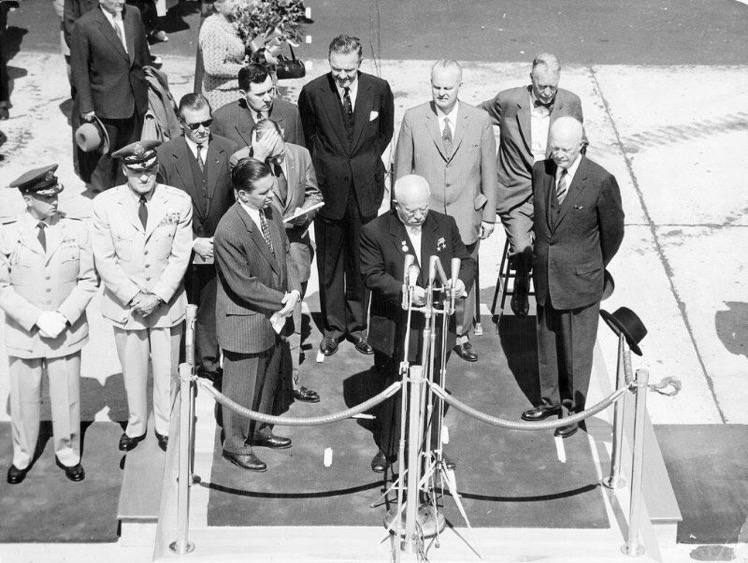
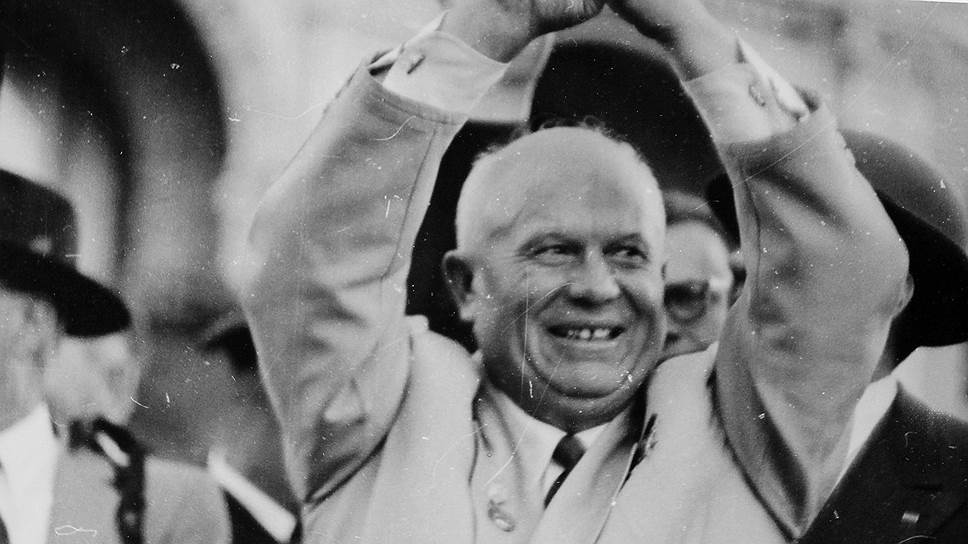
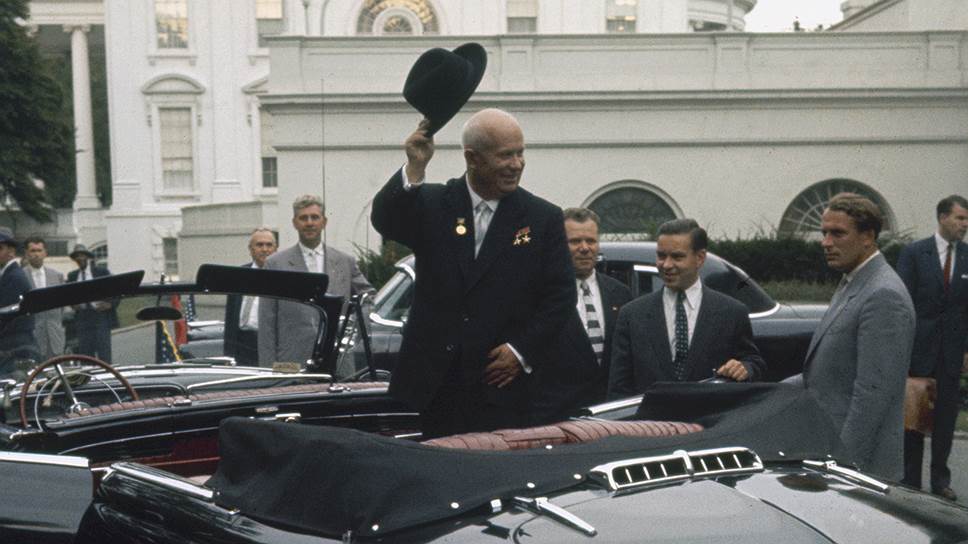
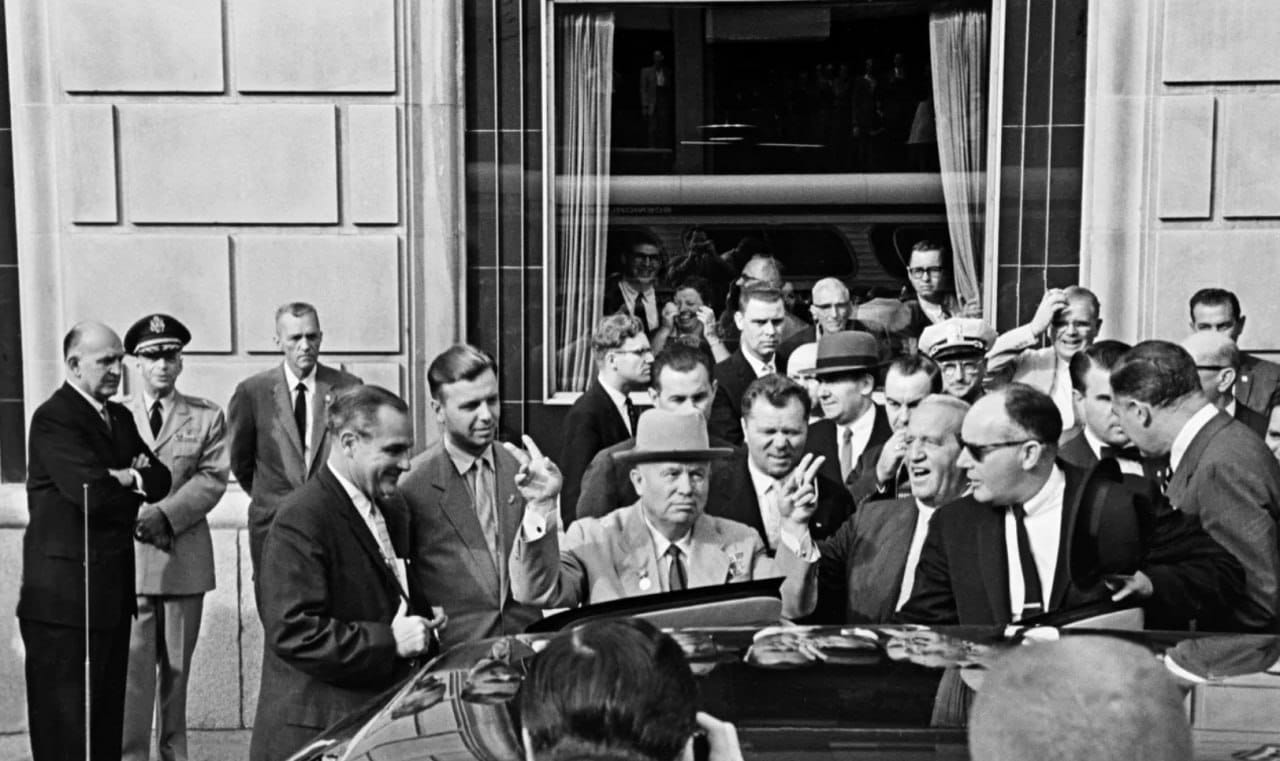
On 15 September 1959 the first visit by a Soviet leader to the United States began
A Soviet sputnik in Earth orbit, a Soviet rocket on the Moon, and the Soviet leader arriving in the United States aboard a Soviet Tu-114, the largest passenger aircraft in the world.
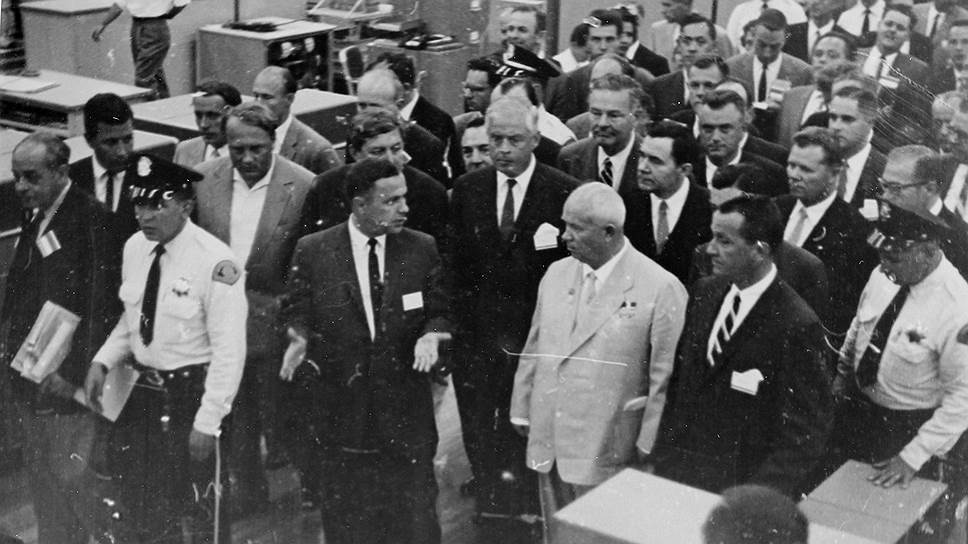
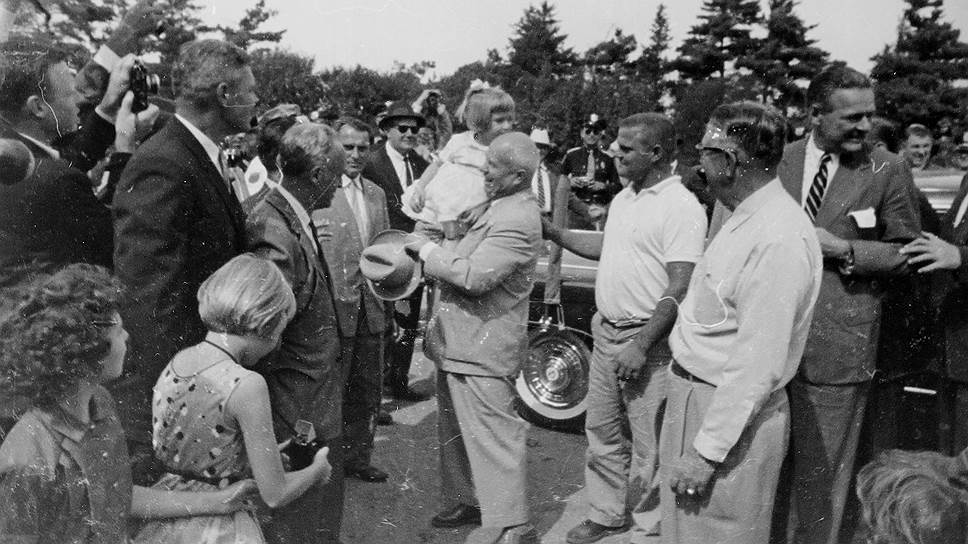
Khrushchev visited Washington, New York, Los Angeles, San Francisco and Des Moines, and astonished the Americans with the directness and originality of his views.
Of his meeting with the financial magnates at the Economic Club of New York, Khrushchev said it reminded him of the crowd that gathers in the remote parts of the USSR to look at a camel, and perhaps to give its tail a tug. When a Communist appears among the flower of the capitalist world, Khrushchev went on, it is understandable that people should want to have a look at him, and, if it turns out that he has a tail, to give that a tug too.
Khrushchev's trip to the United States is described in great detail in the book "Face to Face with America". What strikes one is Khrushchev's constant appeals for peace.
In New York he said: "We are proud of our system, our people, our state and our achievements. We want to be good trading partners with you, as with all countries."
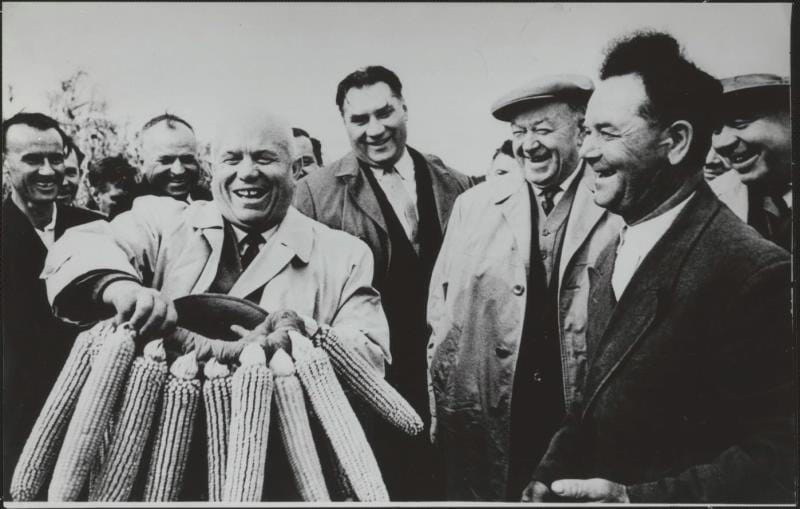
At an agricultural machinery plant in Des Moines he proposed competing in the production of maize rather than bombs: "Yes, our people have put forward the slogan: 'Catch up with and overtake the USA in per capita output.' But can one really see in this some kind of 'threat' to the Americans? We, for example, are not in the least inclined to consider the farmers of Iowa aggressive people on the grounds that they produce considerably more maize and meat than the collective farms of the Kuban do at present. We challenge you to compete in the production of meat, milk, butter, consumer goods, machinery, steel, coal and oil, so that people may live better. That is a far more useful contest than a race to pile up hydrogen bombs and weapons of every kind. Let there be more maize and meat, and no hydrogen bombs at all!"
He returns to this thought more than once: "If we take the path of peaceful competition, all peoples will gain from it, since there will be no wars between states and no human blood will be shed."