Etruscan fresco from the François Tomb at Vulci showing Achilles sacrificing Trojan captives
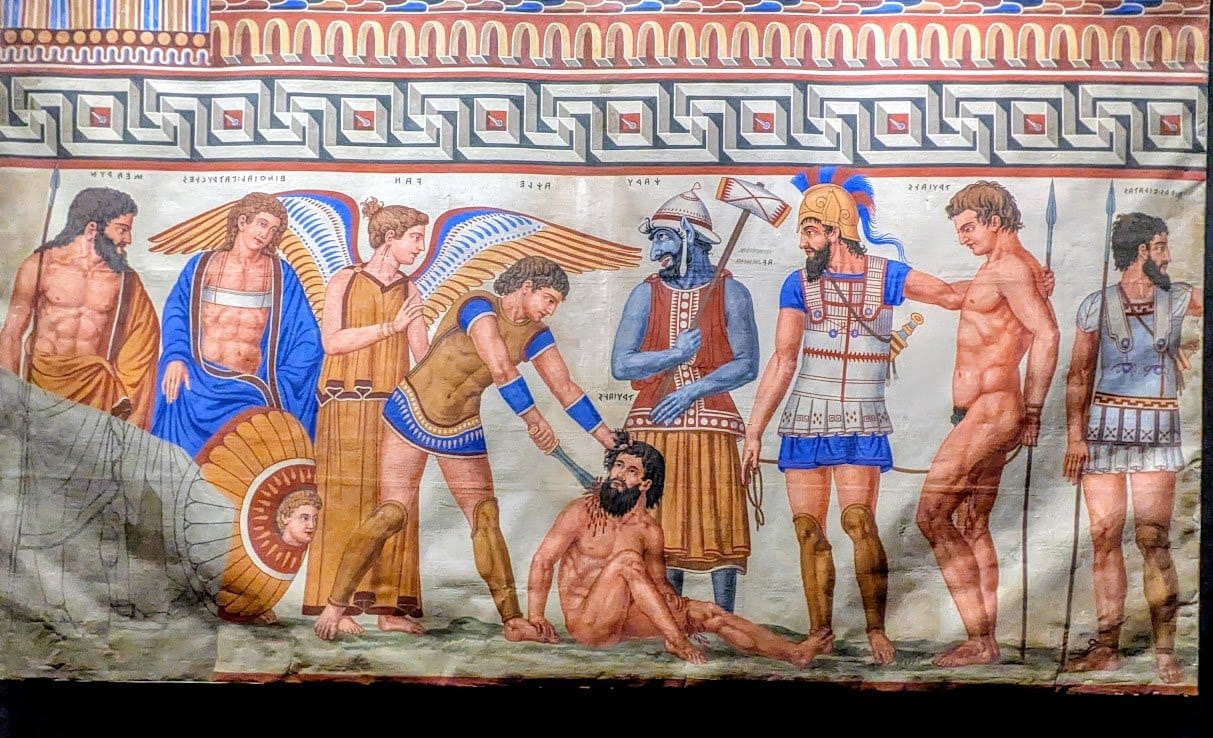
A celebrated Etruscan fresco of the late fourth century BC from the François Tomb at Vulci depicts a cruel ritual of the Trojan War. The central scene of the composition is the sacrifice of Trojan prisoners, which the Greek hero Achilles performs in honour of his fallen friend Patroclus.
The painter conveys the dramatic moment in detail: Achilles holds a naked youth by the hair and delivers a fatal sword-thrust to his neck.
The fresco shows how the Etruscan aristocracy reinterpreted the great Greek legends, weaving them into their own religious culture and funerary rites in order to heroise their dead ancestors.
The uniqueness of this monument of ancient painting lies in its syncretism of Greek myth and the Etruscans' own beliefs about the afterlife. The Greek warriors are surrounded by eerie otherworldly beings drawn from local demonology.
To the left, behind Achilles, stands the winged goddess of death Vanth, while in the very centre looms Charun, the blue-skinned Etruscan demon of the underworld, a heavy hammer in his hands, waiting for the moment to carry the souls of the slain down to the netherworld