The All-Russian Museum of Decorative Art Shows Vrubel from the Side Least Known
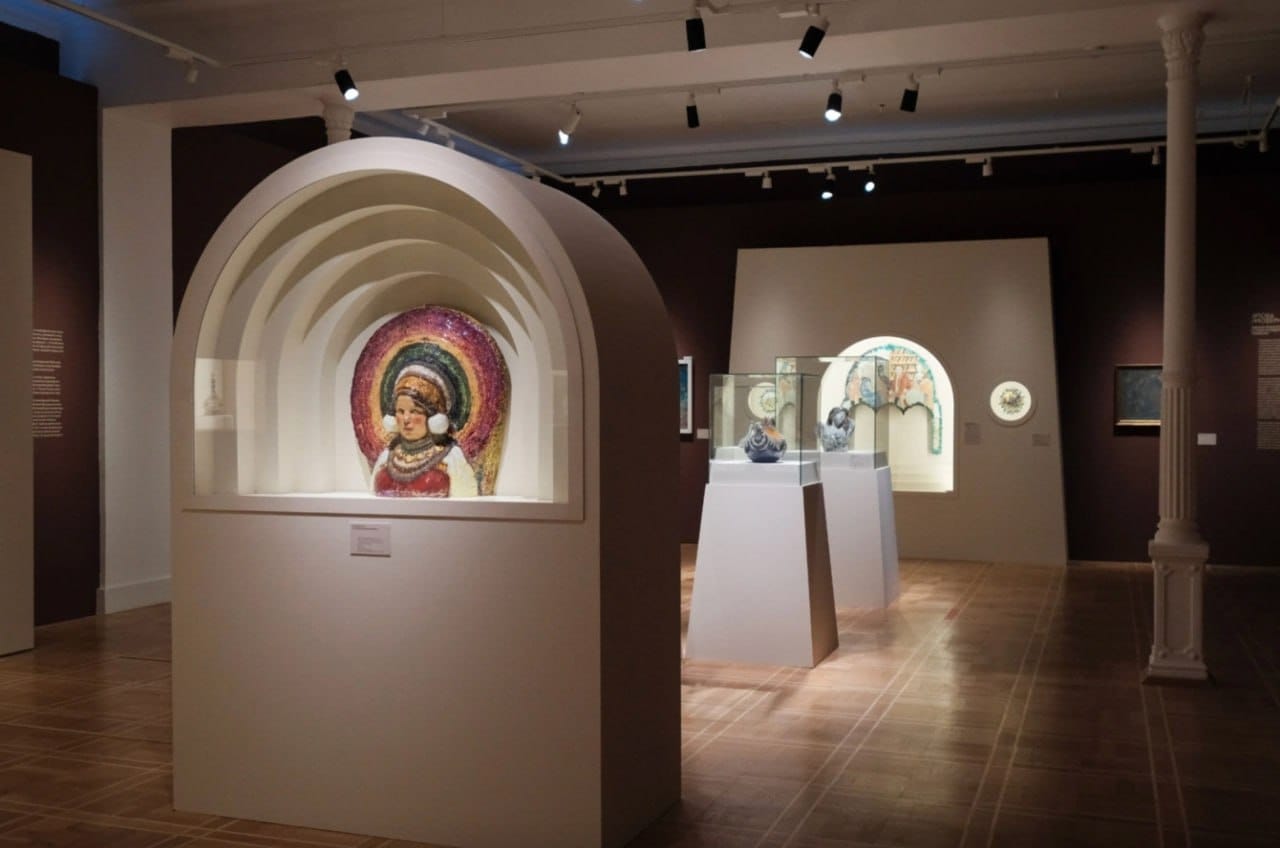
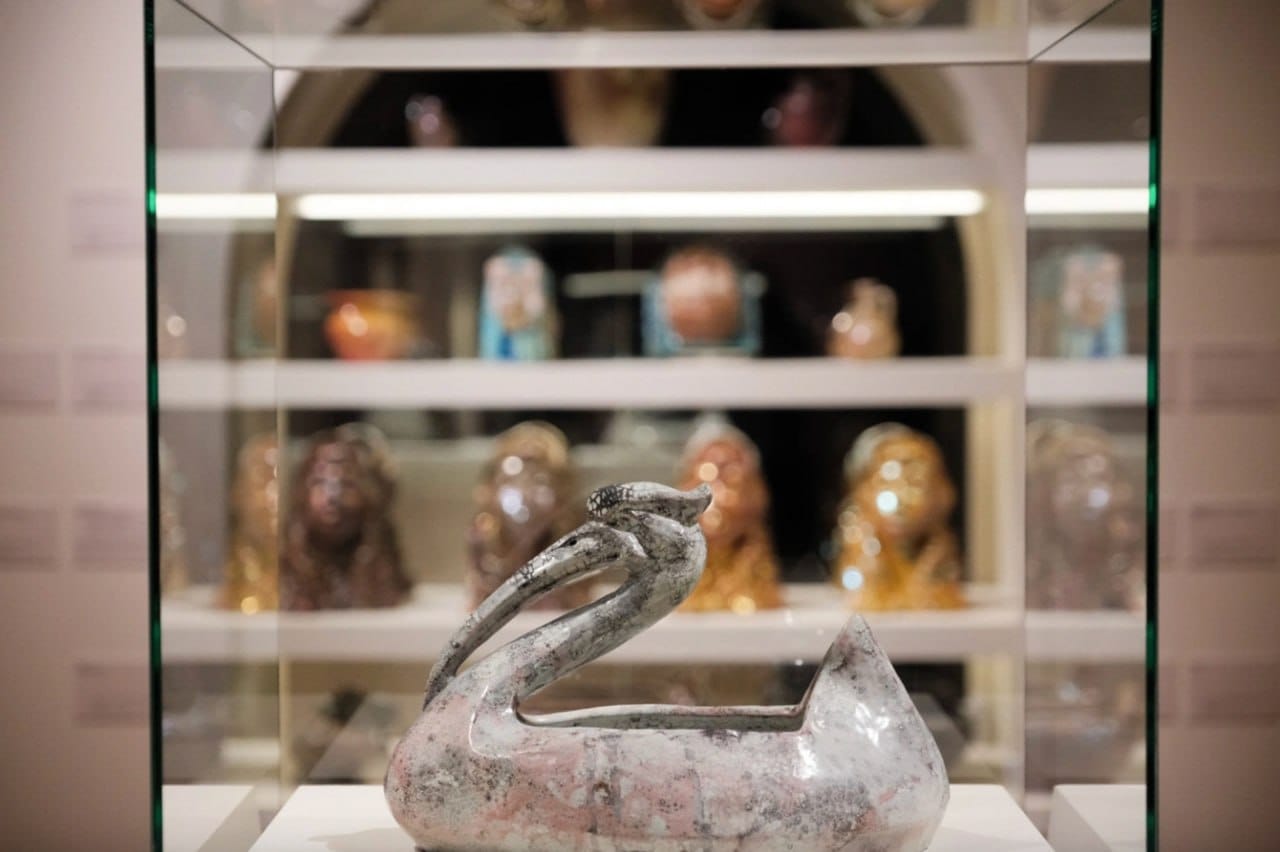
The All-Russian Museum of Decorative Art shows Vrubel from the side by which he is least known. The exhibition runs from 18 September 2026 to 17 February 2027 and is timed to the artist's 170th anniversary. The conception is built around ceramics. The visitor learns that for Vrubel working with clay was an equal form of utterance, and not a subsidiary craft. Around Vrubel's ceramics a long series of comparisons is assembled, from ancient pottery and medieval maiolica to contemporary artists.
Most of Vrubel's ceramics were born at Abramtsevo, in the pottery workshop on Savva Mamontov's estate, where the artist gained access to kilns and technologists. The Russian Museum acted as general partner of the project and brought 45 items, displaying the Abramtsevo maiolica from its own collection in such quantity for the first time.
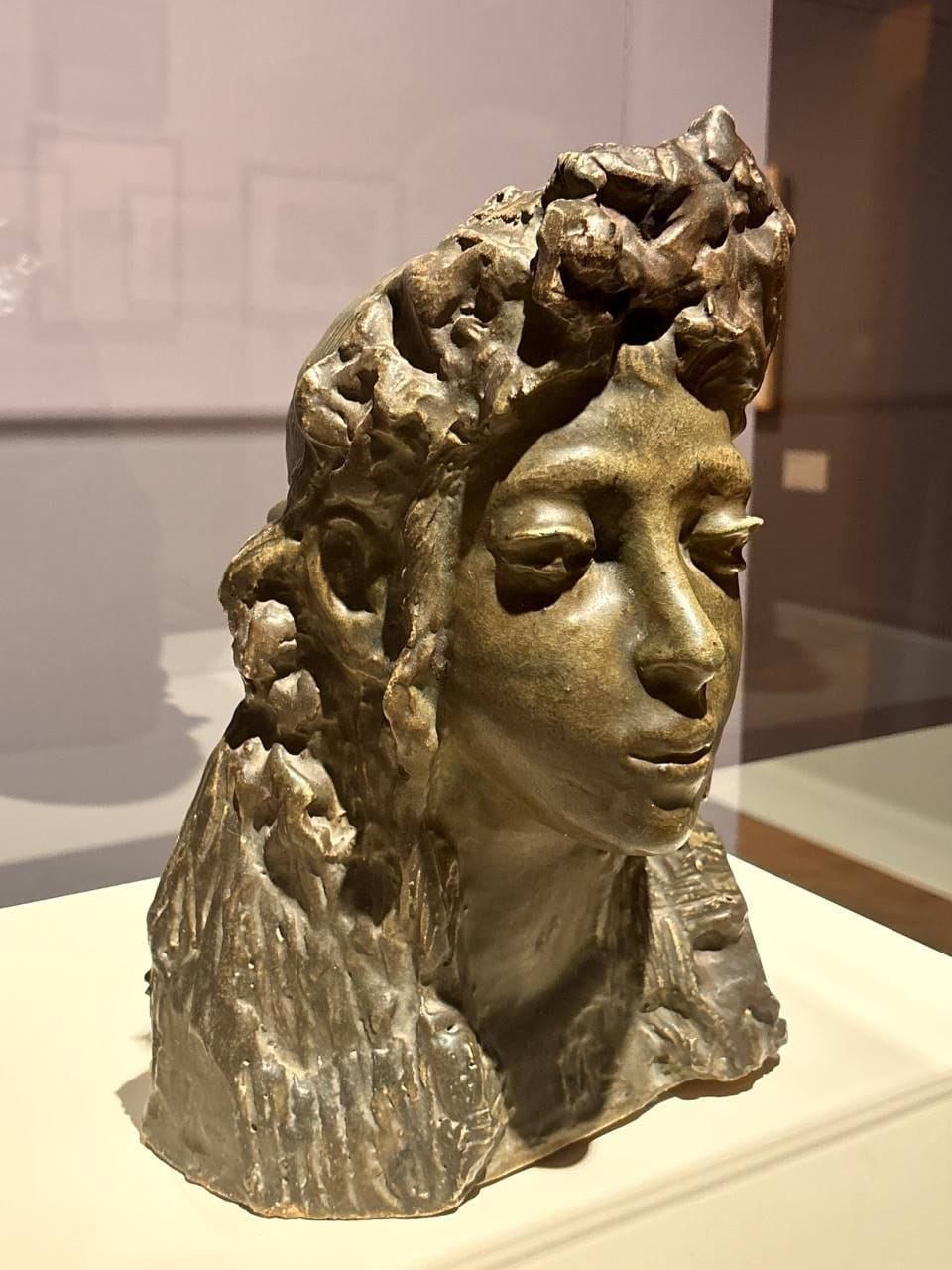
The sculpture “The Egyptian Woman”, which has a second title, “The Secret”, is presented in as many as four versions. Its prototype was Vera Mamontova, the grown-up model of Serov's “Girl with Peaches”: Vrubel saw her whispering something to her neighbour at table, and built the image on that. The woman's head is wreathed by a uraeus, the image of the sacred serpent which in Egyptian art was placed on the brow of a ruler.
The lion's mask was intended for the gates of Mamontov's house on Sadovaya-Spasskaya Street. Nikolai Prakhov, recalling the artist at work, noted an important detail: having finished the muzzle, Vrubel cut away with a knife the areas at the edges where a mane is usually modelled.
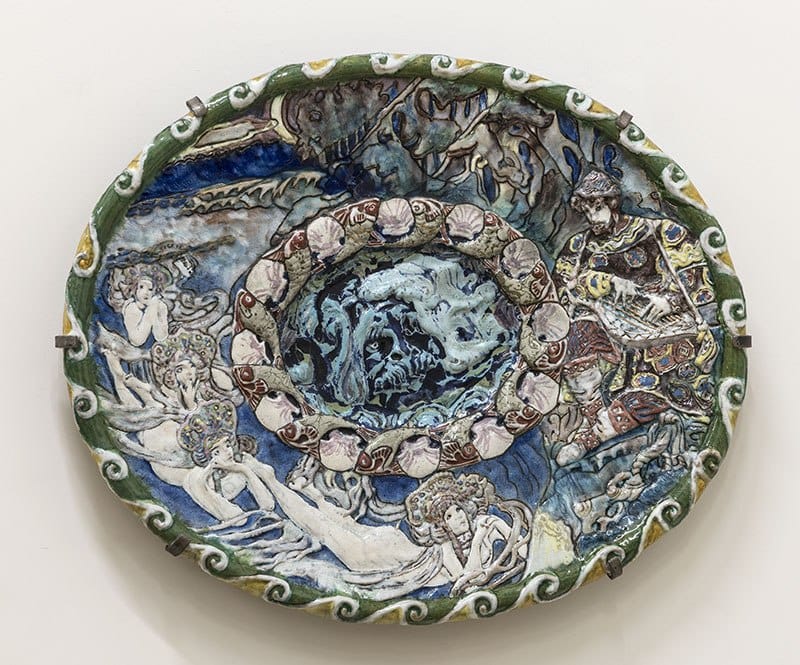
The decorative dish “Sadko” grew out of the artist's operatic circle. His wife, the singer Nadezhda Zabela-Vrubel, performed roles by Rimsky-Korsakov, including some written expressly for her, and the marine theme came into ceramics from the same source. Beside the dish is displayed a faience dish by the Frenchman Bernard Palissy of the sixteenth century, from the Nizhny Novgorod collection, and this juxtaposition explains the technological lineage.
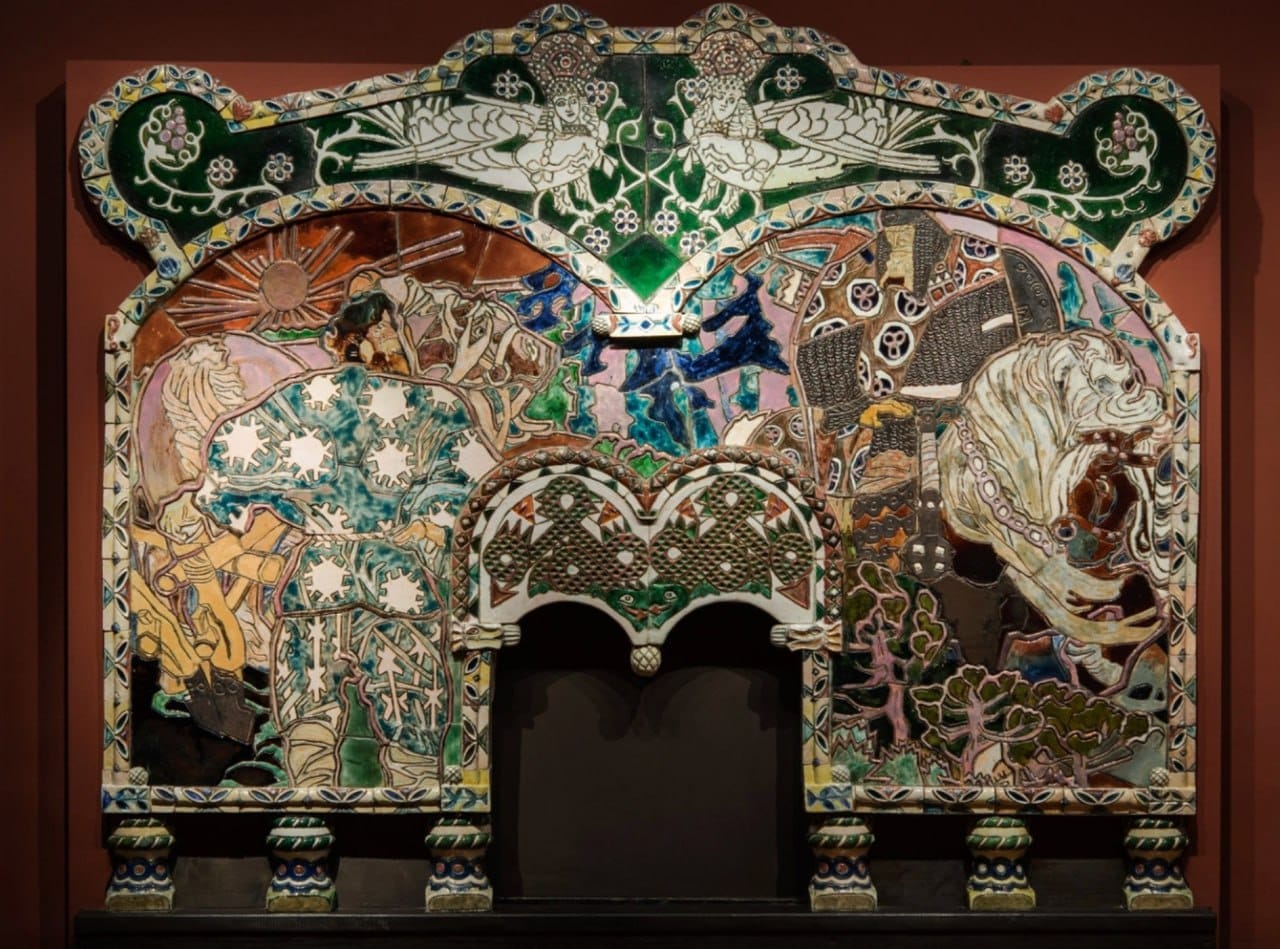
The ceramic facing of the fireplace “The Meeting of Volga Svyatoslavovich with Mikula Selyaninovich” belongs to the Museum of Decorative Art itself. A version of this fireplace was awarded a gold medal at the Exposition Universelle in Paris in 1900.
The contemporary section is represented by Irina Korina, Ulyana Podkorytova, Artyom Filatov, Leonid Tskhe, Vasily Ivanov, Mika Zohn, Dmitry Filimonov and Danila Tolstov. The historical surroundings are no less dense: Vasnetsov's “Gamayun”, Golovin's “Cockerel” loving cup, Andreyev's “Tula Peasant Woman”, Filonov's “Shrovetide”, Klement Redko's “Midnight Sun”.
The last stretch of the biography is also marked in the exhibition. From February 1902 until his death in April 1910 Vrubel was almost constantly in psychiatric hospitals, and went on working in periods of lucidity. To these years belong “The Six-Winged Seraph”, the portrait of Bryusov, “The Vision of the Prophet Ezekiel” and pencil sheets: doctors, flowers in a glass, campanulas, a large sea shell of the haliotis, given to the artist by Maximilian Voloshin. The curator describes these drawings as a movement from living form to crystal and further to ornament, and compares the artist to Andersen's Kay, who assembled from ice the word “Eternity”.