Nekrasov and his friends mock Dostoevsky's vanity in a poem of 1846
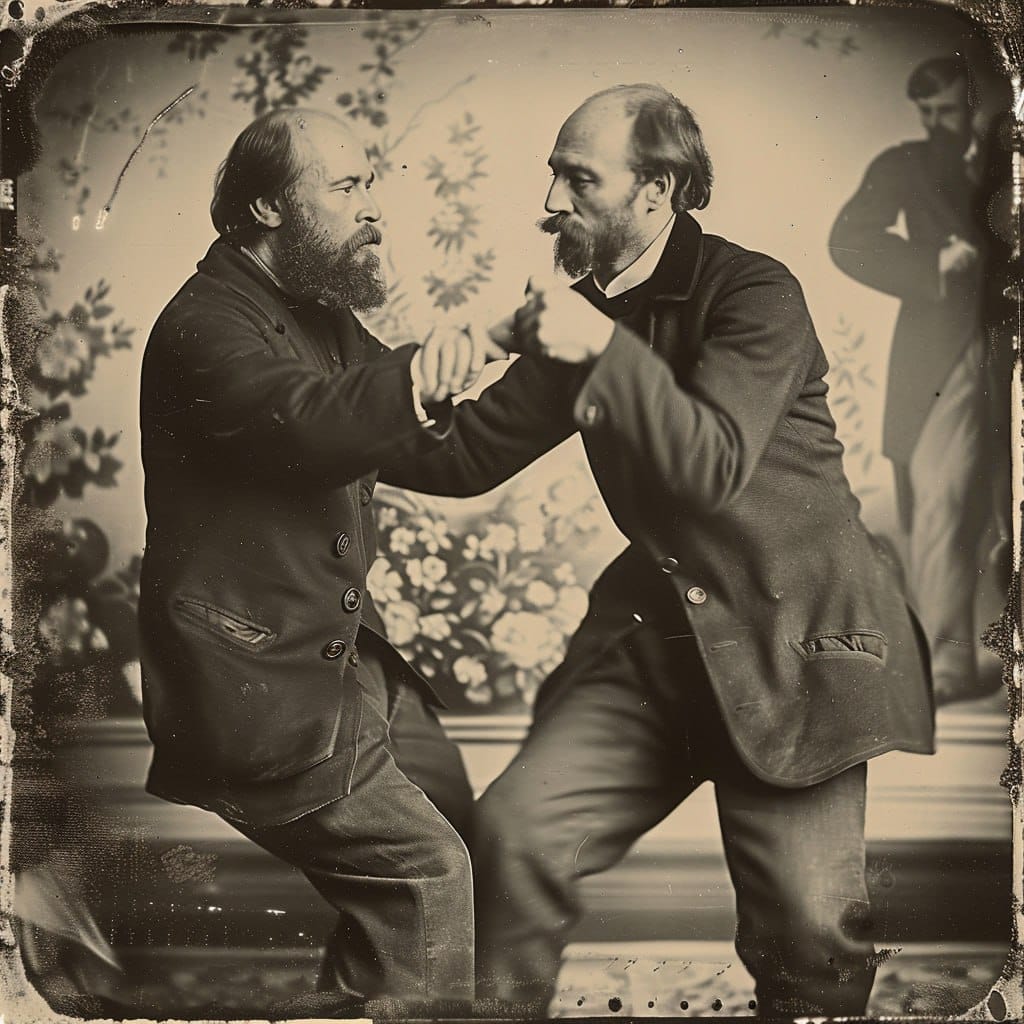
Knight of the Rueful Countenance, Dostoevsky, dear little puffball, on the nose of literature you glow like a fresh new pimple.
Among Nekrasov's verses there is one entitled "Belinsky's Epistle to Dostoevsky", written in January 1846. It is sometimes described as "collective", the work not of Nekrasov alone but of Turgenev or Panayev and others besides.
What was going on in early 1846? Belinsky was preparing texts for the almanac Leviathan, inviting, among other authors, the young Dostoevsky. It is on this occasion that Nekrasov and his cronies make merry. The brethren of the guild chiefly mock Dostoevsky's wounded vanity and his nerves.
"Belinsky's Epistle to Dostoevsky" is a stylised imitation of that very invitation from Belinsky to Dostoevsky to write for the almanac. The poem contains allusions to well-known anecdotes of the day, for example the episode in which Dostoevsky fainted when he was presented to the painted beauty Senyavina at a ball given by Count Vielgorsky.
The lines "Though you are a youthful writer, Yet you've thrown all into rapture" allude to the genuinely great success of Dostoevsky's first novella, Poor Folk, published in 1845. But here too there is irony. "I shall frame you with a border, I shall place you at the end" refers precisely to the continuing rumour that Dostoevsky insisted that the text of Poor Folk could be published only on condition that it be set off from the other texts typographically. Dostoevsky asked both Nekrasov and Belinsky to print his stories with the text on every page enclosed in a frame, making it more conspicuous. Nekrasov also plays on the fact that Belinsky was displeased with Dostoevsky's novella The Double.
But the complicated relations between the literary beau monde and Dostoevsky show up more vividly in Nekrasov's story "How Great I Am!", in which Dostoevsky is portrayed as practically the chief antagonist, precisely against the background of his debut with Poor Folk.