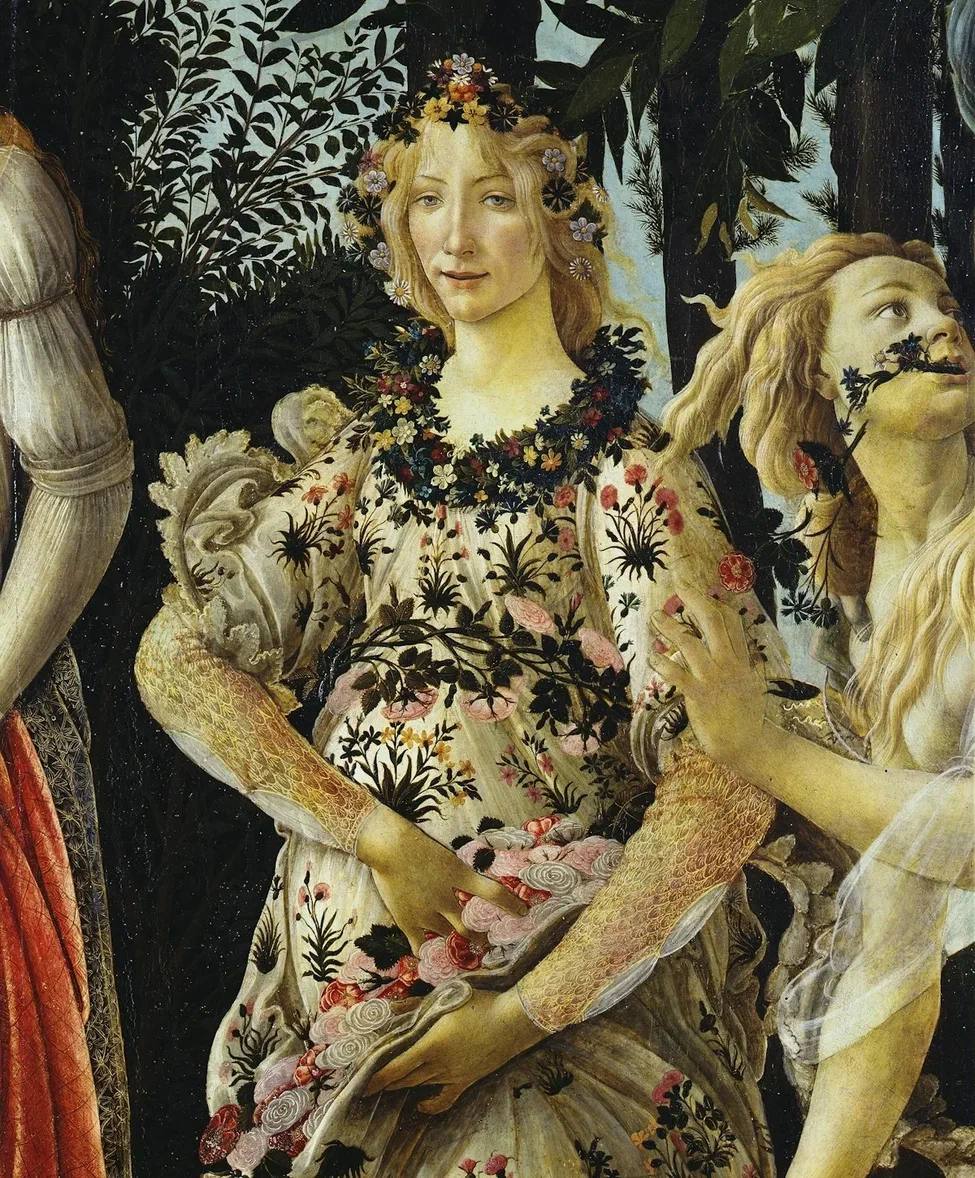
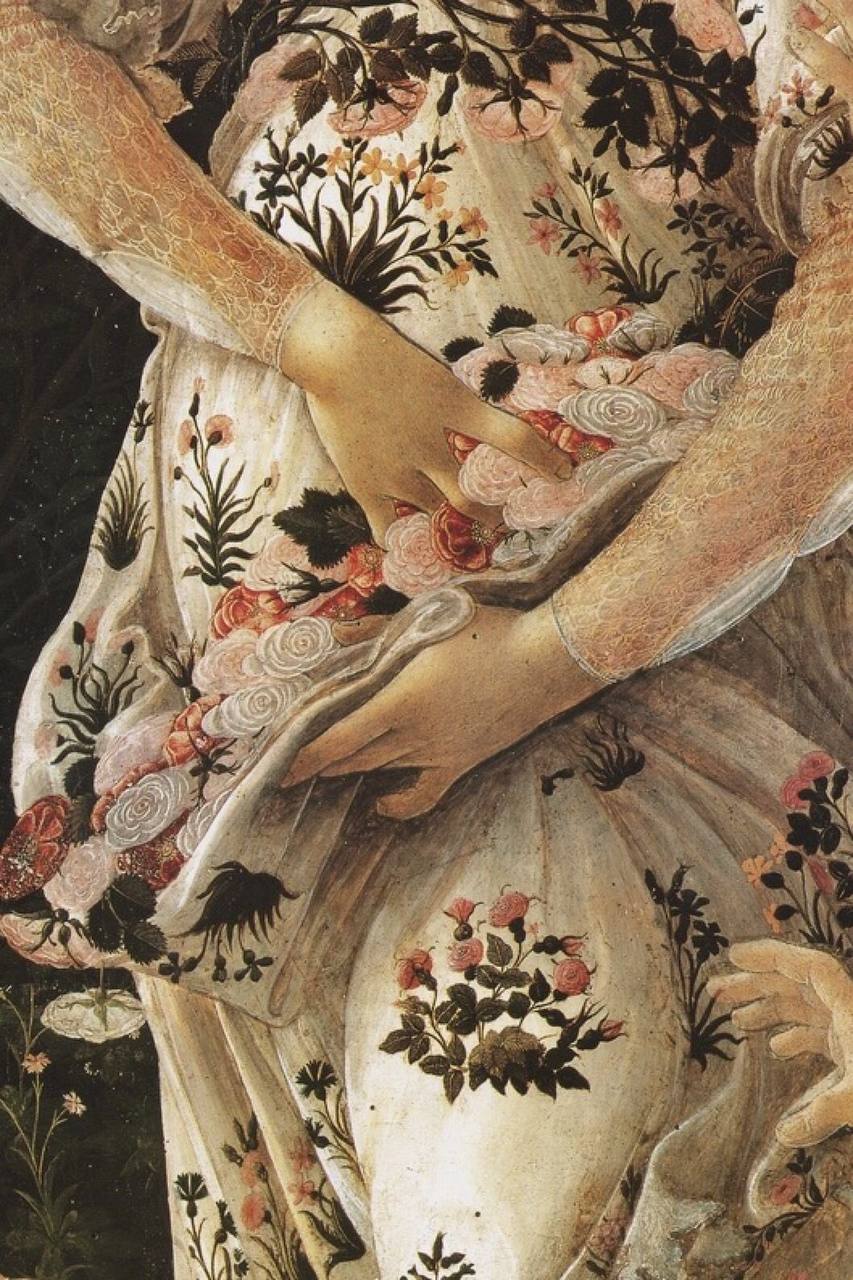
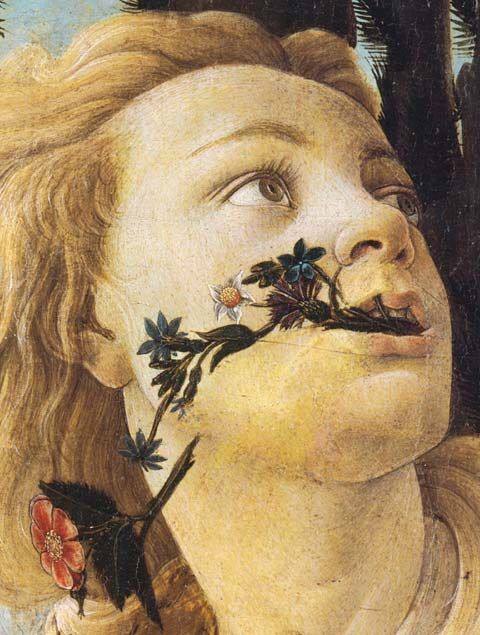
Botticelli's "Primavera" depicts nine figures from classical mythology, following one another across a flowering meadow in an orange and laurel grove
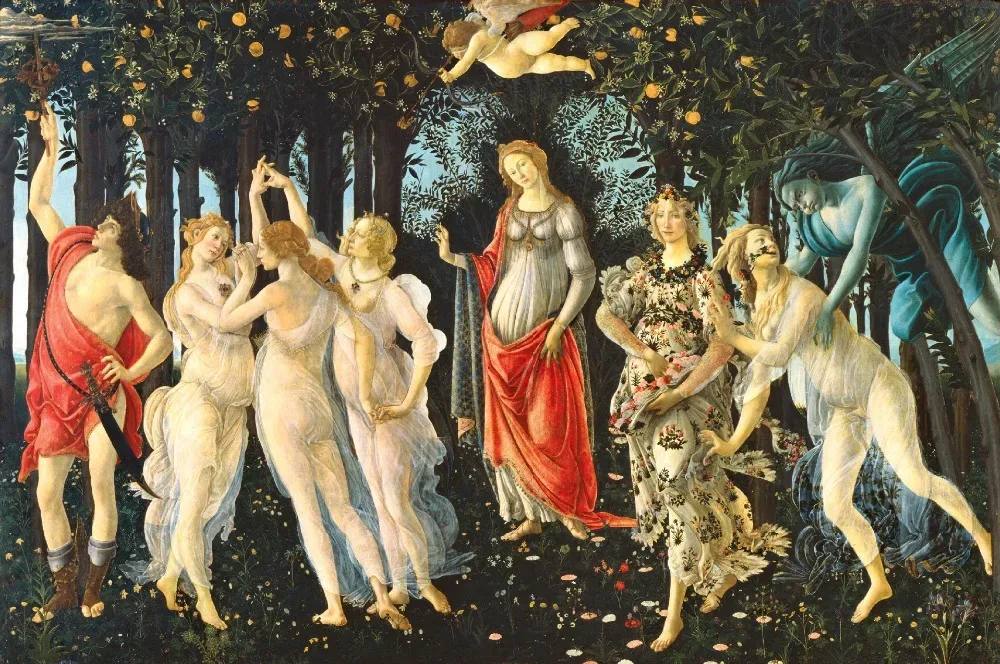
Botticelli's "Primavera" depicts nine figures from classical mythology, following one another across a flowering meadow in an orange and laurel grove. This very masterpiece of the Renaissance has had 138 species of plants precisely identified in it.
The composition of the painting remains a riddle, but its general meaning is clear: the gods are celebrating spring and love.
Zephyrus embraces the nymph Chloris. She is transformed into Flora, the goddess of spring, who stands to the left. At the centre of the composition is the chastely dressed goddess of love and beauty, Venus. Above her, a blindfolded Cupid looses the arrow of love. In front of them the three Graces dance in a ring, endowed with virtues akin to those of Venus. The composition is closed by Mercury, messenger of the gods, in helmet and winged sandals, touching a cloud with his staff.
At the end of the 15th century Botticelli's "Primavera" belonged to the heirs of Lorenzo di Pierfrancesco de' Medici, cousin of Lorenzo the Magnificent. Today it is one of the chief treasures of the Uffizi Gallery in Florence.