In an article on how the inhabitants of southern Norway could make wooden fish traps at least seven thousand years ago, I came upon a suggestion that at about the same time people carried commercially valuable salmonids, namely brown trout, into mountain
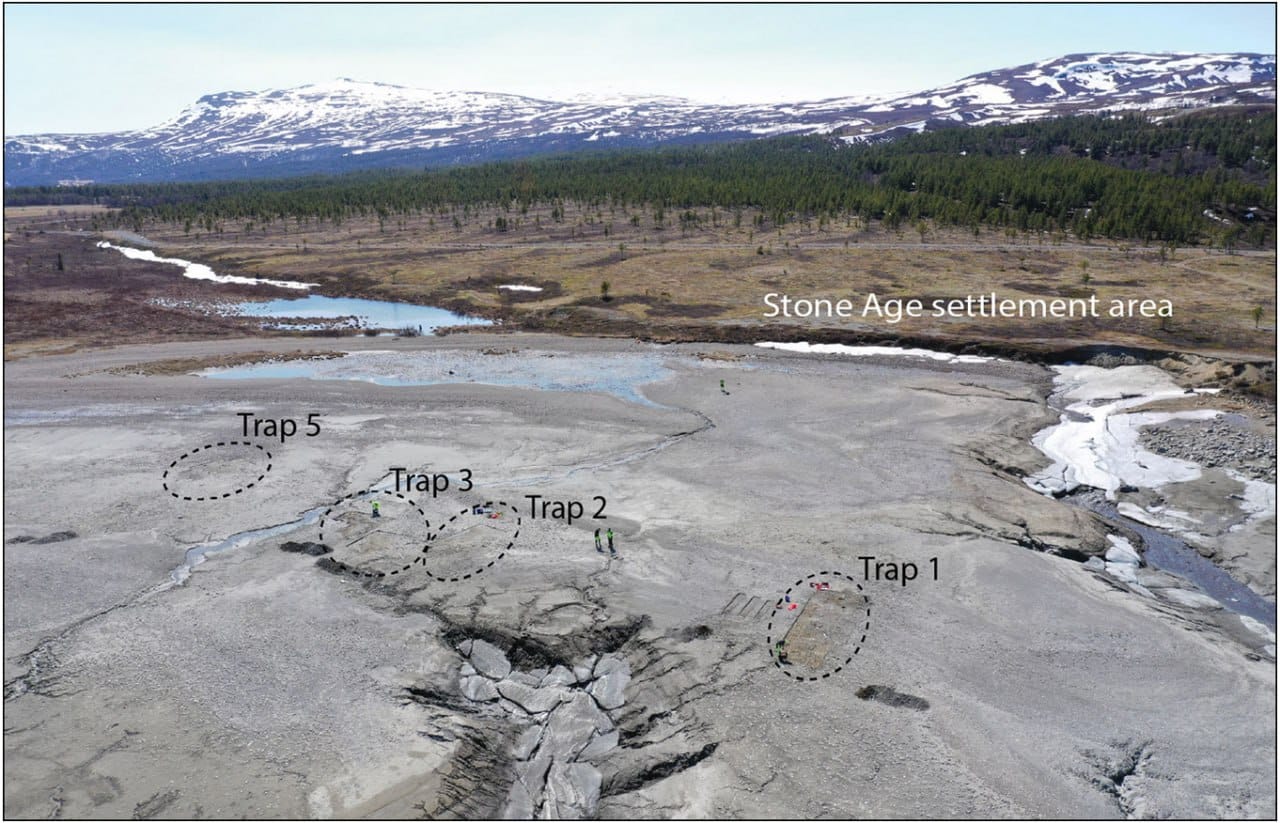
In an article on how the inhabitants of southern Norway could make wooden fish traps at least seven thousand years ago, I came upon a suggestion that at about the same time people carried commercially valuable salmonids, namely brown trout, into mountain lakes. The hunter-fisher-gatherers, according to the hypothesis, chose the brown trout because it grows large, is easily caught and is very rich in calories; they took the necessary number of fish and moved them to lakes near the places of their new settlement. These lakes are cut off by waterfalls and rapids, so it is held that the fish could in no way have got there on their own. Lake Tesse, at an altitude of 854 metres, remained under the Fennoscandian Ice Sheet until 8400 BC, and the survival of freshwater fish there since before the glaciation is out of the question. That is, the retreat of the ice is equated with the zero point of the lake's fauna. The steep fall of the bed of the river flowing out of the lake, and the waterfalls, would not have allowed fish to pass upstream from the lower waters, where some 25 species of fish lived at the same time. In the lake, only brown trout appeared. From nature programmes we may remember that fish can spread by means of eggs stuck in the plumage of waterfowl; in this case the authors reject such a possibility, since in that scenario, as they see it, the lake would have been populated by a mixture of species rather than uniformly by brown trout.
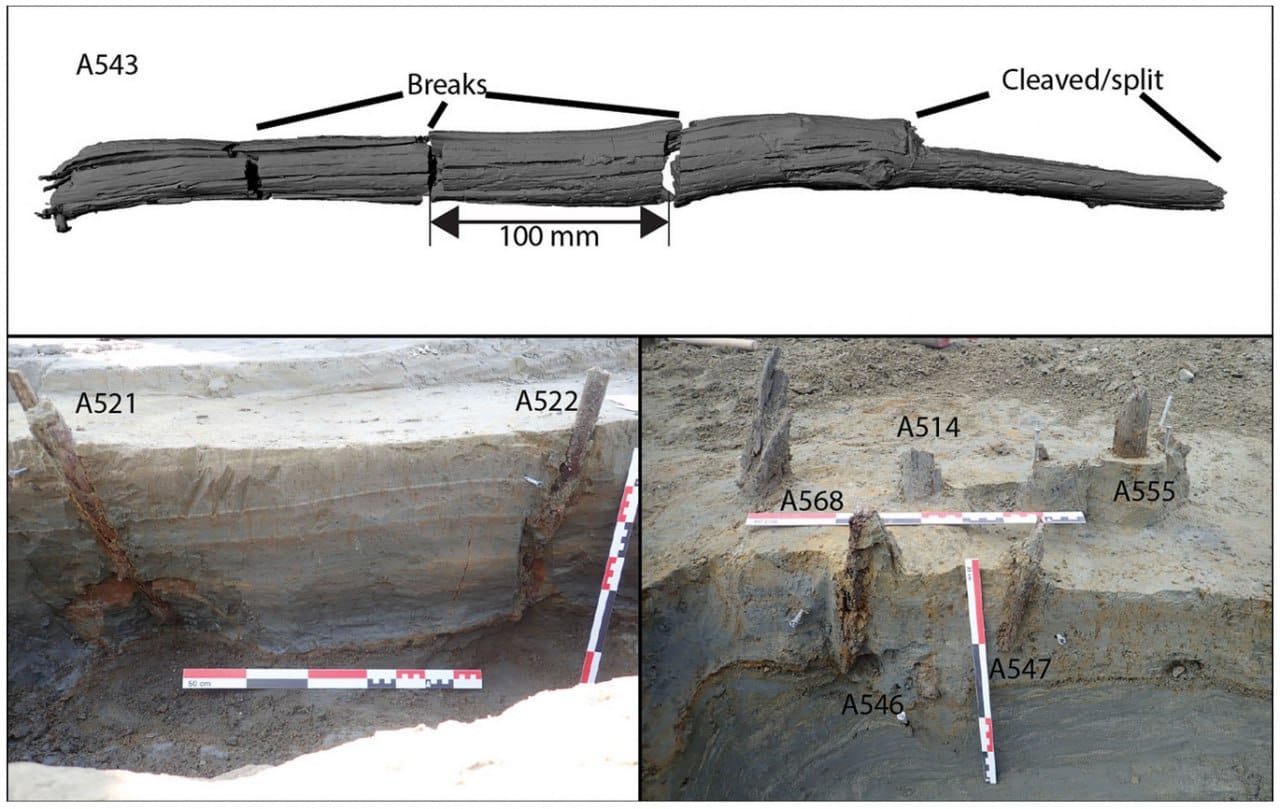
As for the traps, back in 2022 archaeological remains of such structures were found on the drained bed of one of the Norwegian mountain lakes. In the best preserved of them, 46 wooden stakes were counted, set out in the form of a wooden chamber and a passage leading to it.
Near other lakes, at neighbouring sites, burnt brown trout bones were found, dated to the fifth millennium BC. At the same time, the lowland fishing archaeological assemblages are far more varied in composition.
This is a rather old hypothesis: a hundred years ago the Norwegian ichthyologist with the picturesque surname Huitfeldt-Kaas pushed the spread of freshwater fish in Norway back to very remote times, and now, gathering scattered confirmations, it stands a chance of showing that people began to manage ecosystems in some places earlier than they took up farming.
Of course, one can criticise this conjecture, especially as regards the options for natural stocking, and in the end other ways for fish to reach high-mountain waters may well be discovered, but it sounds interesting, at least for my northern track