A survey of 200 archaeological sites in Syria has established that in 2015-2025 59% of them were looted, 118 out of 200, almost five times more than in 2011-2016, when 26 of the 200 sites suffered
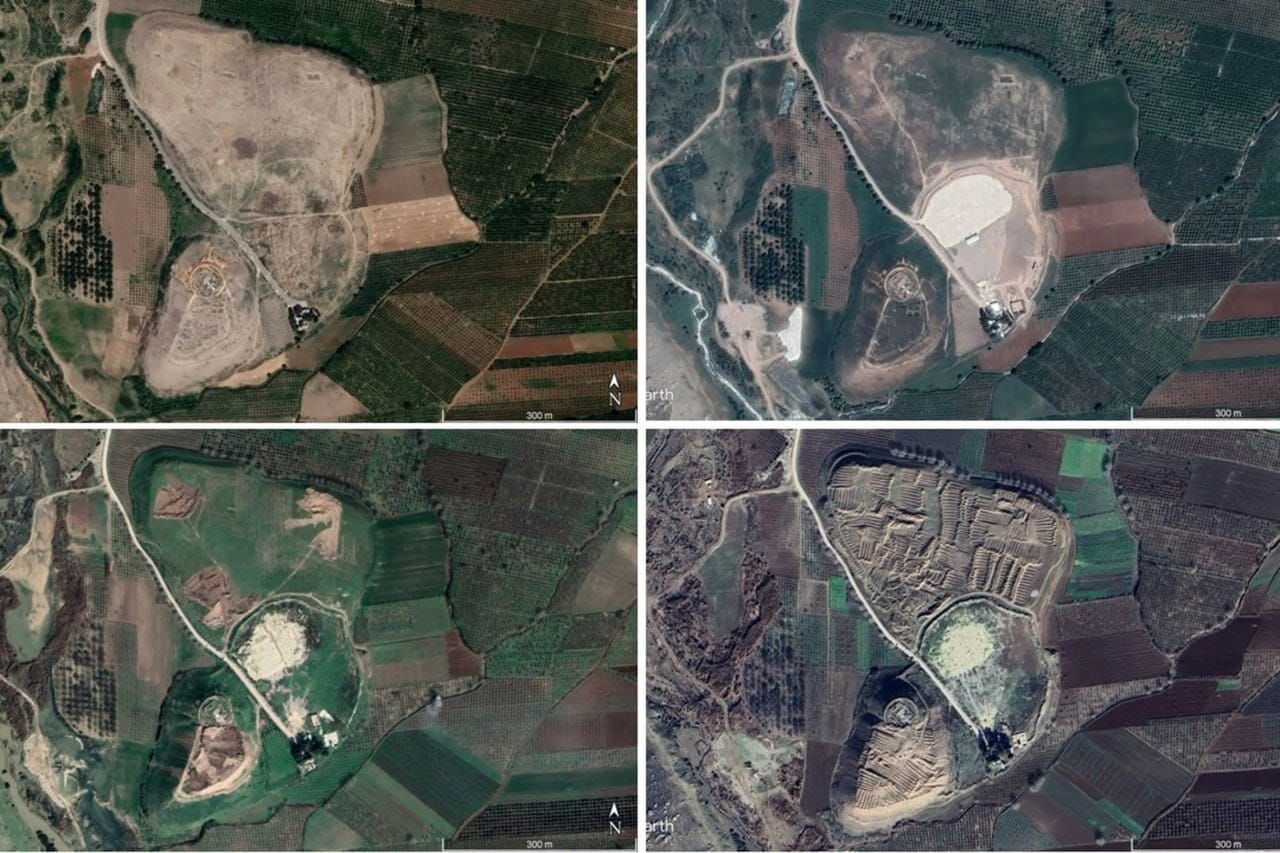
Traditionally, looting at these places means pits dug by hand. But they are also plundered with bulldozers, destroyed by the building of dugouts and fortifications on their territory and, finally, by camps, including refugee tents, pitched directly on archaeological sites.
Mechanised looting is considered the worst form of damage, and it occurs mostly in the zones of Turkish military presence in the north.
The ancient Syro-Hittite Iron Age temple of Ain Dara, for example, was still intact in 2014; in 2016 a military facility was built in its immediate vicinity, in 2018 the site was struck, and by 2022 most of its territory had already been ploughed over entirely. The fate of Palmyra and of Apamea with its Great Colonnade gives no less cause for alarm.
The most absurd thing is that the majority of these vandal excavations are carried out in search of gold alone and almost always come to nothing, yet the sites are irreversibly destroyed by them. Often the most the savages extract is a couple of cheap coins, of which the market is already full to overflowing