Last year saw the publication of a long interview by Yury Rost with Otar Iosseliani, who passed away today in his 90th year
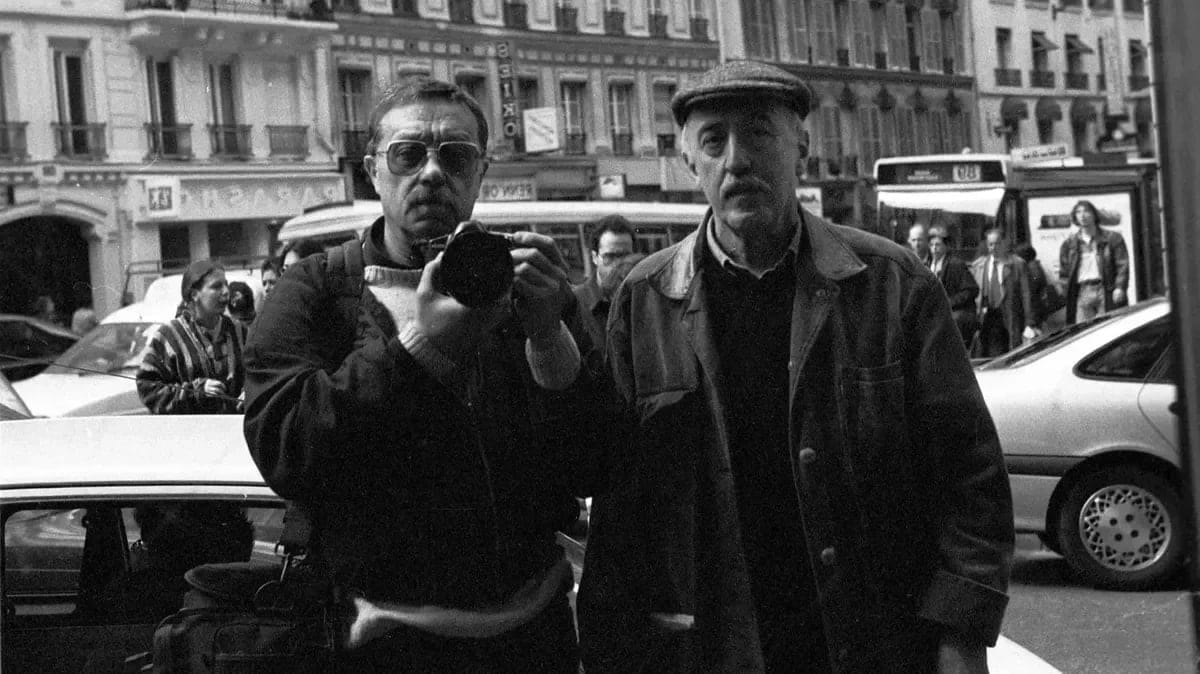
Last year saw the publication of a long interview by Yury Rost with Otar Iosseliani, who passed away today in his 90th year. The director describes how he found culture and cinema in Russia.
— You haven't been in the country for a long time. What has changed in people and in life during the time you have spent in France?
— Nothing especially tragic has happened, in my view. It is simply that, as is always characteristic of upheavals of this kind, certain changes take place. They bring liberation from something bad, and at the same time something else bad floats to the surface. So I saw nothing sad, although I had expected better.
We had a dream that as soon as we rid ourselves of Bolshevism, paradise would arrive the very next day. Then, having watched how perestroika unfolded, I decided that the process would be far more complicated. As for culture, there was a complete collapse. The fading of culture, I think, is connected with its commercialisation. I will not touch on other fields; I will speak about cinema. There, any action showed itself in sharper contrast. If Panfilov acted in a certain way, or German, or Eldar Shengelaya, or Tarkovsky did something, or even Konchalovsky, say, in «Asya Klyachina», then the very unusualness of the thing was felt.
— That is, there was a political background against which this showed itself?
— Not a political background, but an appreciation of having overcome the impossibility of creating such a work. An appreciation of the effort of overcoming. That is why in cinema there were few, but there did appear some works of genuinely high quality.
Today there are more films, but all of them, as if by order, have come to resemble the trash that was produced in the days of Soviet censorship.
— Perhaps the density of masters has simply decreased?
— There are no young people at all any more. Young people, when they begin their work in cinema, fall into the clutches of hucksters from the very start. That can be worse than falling into the clutches of the censors.
But when the censorship ceased to be taken seriously, it organised all sorts of mafia-like systems, which still have every means to turn cinema into a lackey, no longer in the ideological but in the commercial sense.