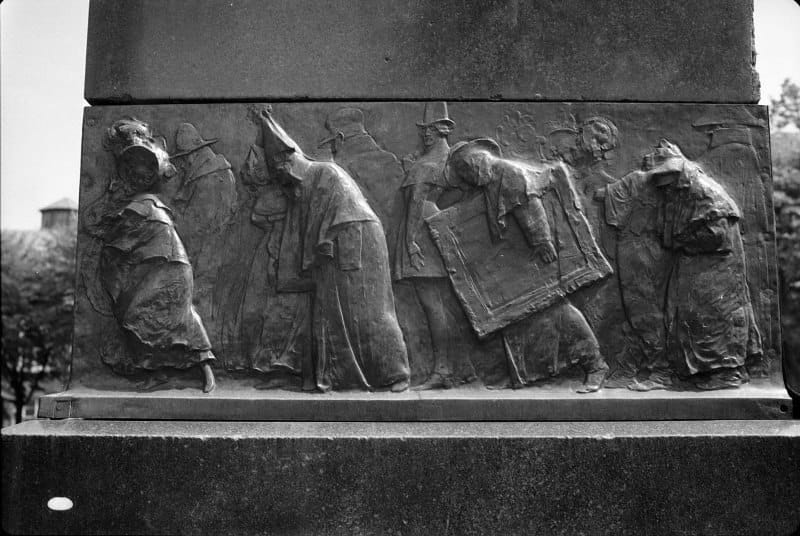
Chinese historical texts repeatedly mention the cutting off of the nose as a judicial punishment, one of the so-called five punishments
Chinese historical texts repeatedly mention the cutting off of the nose as a judicial punishment, one of the so-called five punishments. Until now, archaeologists in China had found no skeletal confirmation of the practice. Now researchers describe the first probable case.
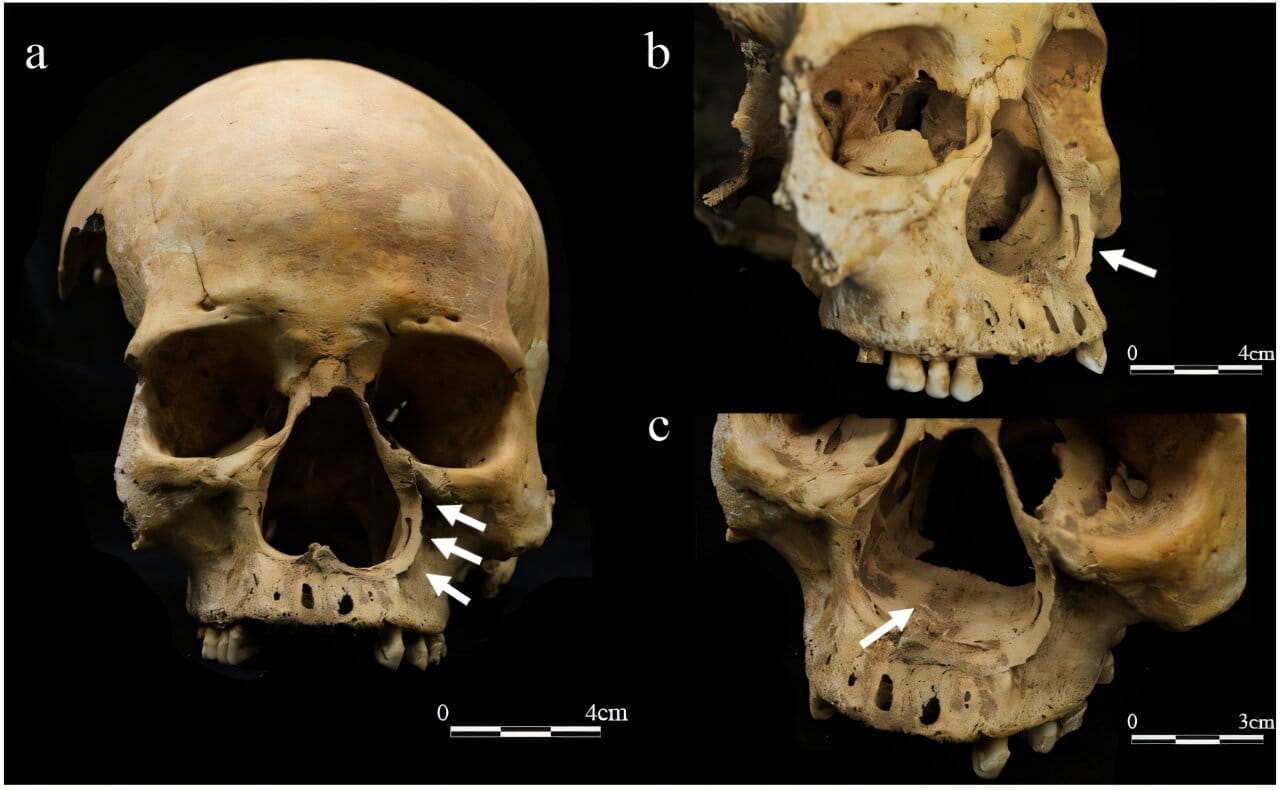
The remains of a woman who lived some seven hundred years ago were excavated in 2019 from the Sanzhiyuan cemetery in Henan Province. She had been buried face down, which was sometimes done with criminals, and her skull showed extensive damage in the nasal region. Of the site's 213 historical burials, she was the only one to lie in such a position and the only one with facial injuries.
The skull was scanned with a computed tomography machine, which assembles a detailed three-dimensional image from many X-ray pictures. The scan showed that part of the nasal bones and several delicate structures inside the nasal cavity had been sliced away. At the same time, the neighbouring facial bones show neither fractures nor signs of healing of that kind, and the front teeth are intact. This makes a fall or an accident unlikely, since in such cases facial injuries usually turn out to be more extensive. The authors of the study conclude that the most probable cause of the disfigurement of the middle of the face was precisely the punitive severing of the nose.
According to the study, the woman lived for at least several years afterwards and may have worn a nasal prosthesis covering the opening. Among the possible grounds for such a sentence, the researchers name the theft of horses or cattle