In the Bronze Age, it was chiefly the young who moved house in Greece
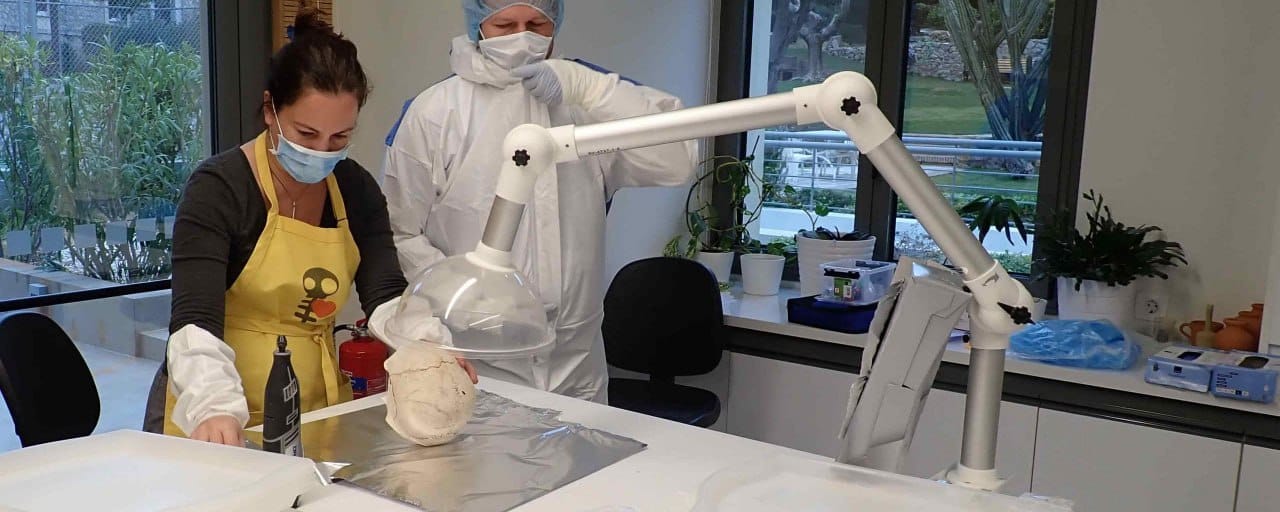
Researchers have analysed the skeletons of 199 people, found by archaeologists at six sites in central and southern Greece, and concluded that in the Bronze Age it was young people who moved between communities most often. The study forms part of the European project The Rise II, which brings together ancient DNA, isotope analysis, linguistics and archaeology to examine key processes in European prehistory.
The researchers established where each person had spent their childhood by means of strontium isotope analysis. A person takes in strontium from water and food, which are usually obtained close to home, so the strontium isotope composition of the skeleton reflects the geology of the place where he or she grew up. Scientists compare this composition with the isotopic values of the terrain around the burial. If the values do not match, the researchers conclude that the person grew up somewhere else.
Researchers have often assumed in the past that it was women who more often left the community of their birth, since on marriage they passed into their husbands' families. Historians call this arrangement patrilocality. The new study showed that in the communities examined, incoming women and men were present in roughly equal numbers. In other words, people were moved to migrate after all by a great variety of reasons.
In each community examined, in the Middle and Late Bronze Age, between 5 and 10% of people had grown up elsewhere. Incomers were buried both in ordinary graves and in richly furnished ones, which is why the researchers believe that people moved regardless of wealth and social standing. Among the children examined, the scientists found not a single incomer, and it was adults under 30 who most often proved to be newcomers.