In the ancient city of Laodicea in south-western Turkey, a marble statue of Athena almost two metres tall has been found in the ruins of the western theatre
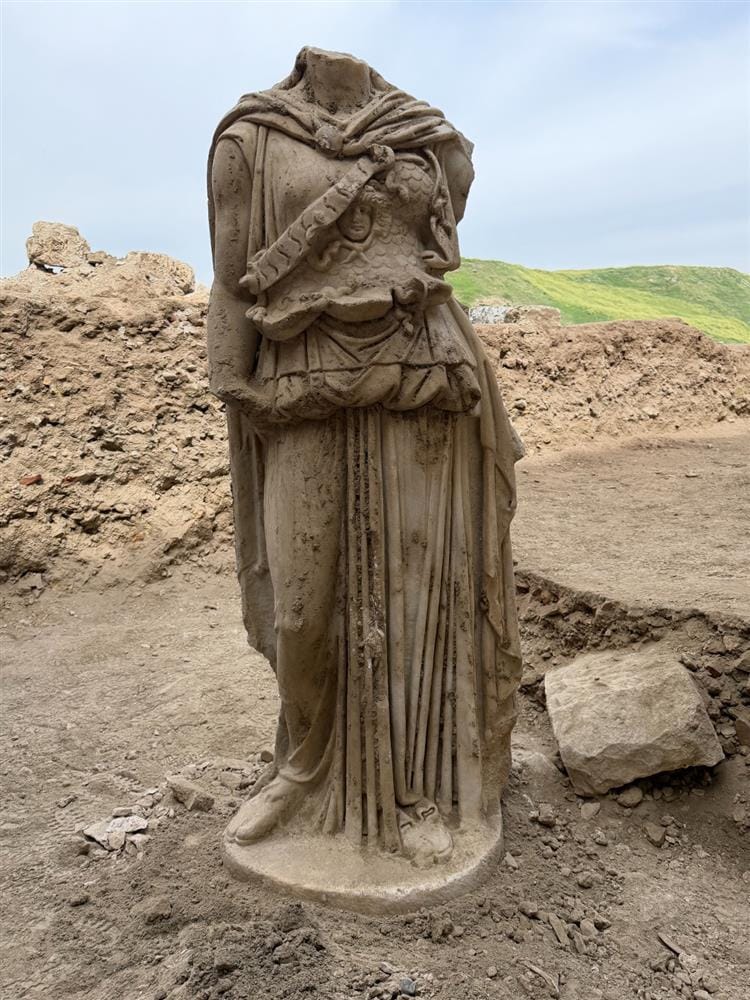
In the ancient city of Laodicea in south-western Turkey, a marble statue of Athena almost two metres tall has been found in the ruins of the western theatre. The statue lay face down in a collapse of rubble by the outer wall of an administrative building. The head and arms have not been found, and the back is unworked, which means that the statue originally stood in a niche or against a wall and was meant to be seen only from the front. It is therefore most likely a decorative and representational statue that formed part of the adornment of a public building.
On the style of the carving, the sculpture is dated to the age of Augustus, that is, between 27 BC and AD 14. Athena is depicted in a sleeveless peplos and a cloak, a himation, fastened at the neck. On her chest she wears an aegis with the head of Medusa and carefully worked snakes.
Laodicea was a major city, known above all for its production of wool; weaving was the chief branch of its economy. Athena, as is well known, was regarded, among other things, as the patroness of crafts and spinning.