In 1898 the photographer Secondo Pia photographed the Shroud of Turin and discovered that the image behaves like a photographic negative
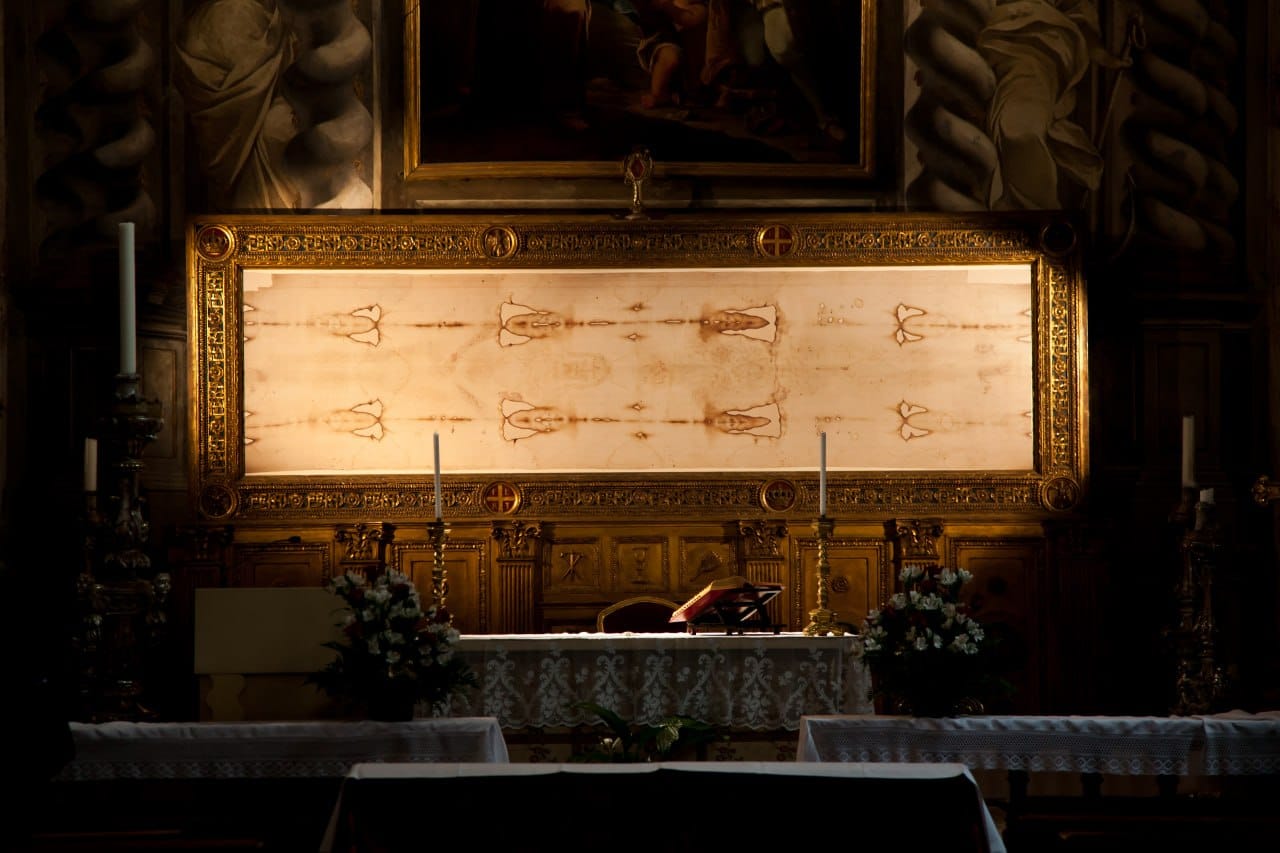
In 1898 the photographer Secondo Pia photographed the Shroud of Turin and discovered that the image behaves like a photographic negative. The positive appeared only on the negative plate. This observation became the first scientific fact about the relic that received no simple explanation.
In 1969–1973 the Vatican formed a commission of eleven scholars to conduct a preliminary analysis of the Shroud and to work out methods for its further study.
In 1978 came the principal expedition in the history of research on the Shroud: 26 American scientists of the STURP project were granted direct access to the relic for 120 hours. The investigators established that the image had not been applied with dyes, pigments, acids or scorching, yet the mechanism of its formation remained unexplained. In the same year the microscopist Walter McCrone reached the opposite conclusion: by his findings, the image had been applied in ochre in a gelatine medium, although other members of STURP disputed his results.
In 1988 three independent laboratories, at Oxford, Zurich and Tucson, carried out radiocarbon dating of samples of the cloth and obtained a result: the Shroud dates from the period between 1260 and 1390, which coincides with the relic's first documented appearance in historical sources around 1355. Most scholars still regard this result as the standard one.
In 2008–2010 the physicist John Jackson and the Italian researcher Paolo Di Lazzaro tested experimentally the hypothesis of ultraviolet radiation and showed that a flash of UV of extreme intensity partly reproduces the properties of the image. At the same time, the power of radiation required proved unattainable for any known medieval technology, and the question of the source remained open.
In 2015 researchers of the University of Padua carried out a DNA analysis of dust and threads collected from the Shroud as long ago as 1978, and established that the genetic material on the cloth points to contacts with people from the Mediterranean, the Middle East and India. The authors expressly stipulated that metagenomics cannot date an artefact, and that the results are compatible with both a medieval and an earlier origin.
In 2022 the Italian Institute of Crystallography applied the method of X-ray diffraction and declared that the degradation of the linen fibres corresponds to linen of the 1st century AD. Headlines proclaiming proof of authenticity swamped the world's media, but the authors themselves took care to state that they drew no conclusions about the authenticity of the relic. Independent experts received the results sceptically, pointing to the small size of the sample, and explained the discrepancy with the dating of 1988 by possible contamination of the specimen.
In 2024 Italian researchers repeated the X-ray analysis on new samples and found in the fibres of the cloth haemoglobin, albumin and immunoglobulin, as well as markers characteristic of people who had suffered severe trauma. This study demonstrated that human blood with traces of traumatic stress is present on the cloth, but established neither whose blood it was nor when it came to be on the fabric. Independent experts noted that the blood could have got onto the Shroud at any moment in the last seven hundred years.
In April 2025 the University of Padua published an extended metagenomic analysis showing traces of plant pollen not characteristic of medieval Europe but typical of the Middle East. The authors pointed out that the data obtained are compatible with a history of the Shroud before 1204 in the Middle Eastern region, yet refrained from dating the artefact.
In August 2025 the historian Justin Robinson analysed a Byzantine coin of the 10th century bearing an image of Christ and found that the features of the face on the coin coincide with the image on the Shroud down to specific anatomical details that are hard to explain without direct copying from the original. If this conclusion is correct, the Shroud existed in Constantinople as early as the 10th century, that is, earlier than the radiocarbon dating of 1988 allows.
The research of recent years offers indirect arguments in favour of an earlier origin of the Shroud, yet none of it refutes the dating of 1988, and the Vatican has never pronounced on the authenticity of the relic