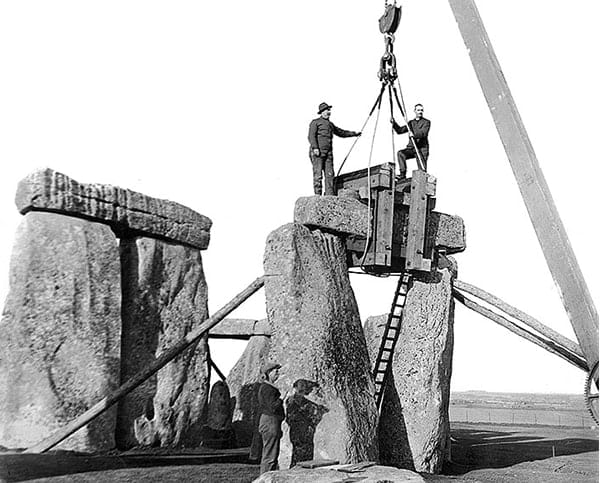
Cement from the 1960s damages Stonehenge stones and was replaced with lime mortar in 2021
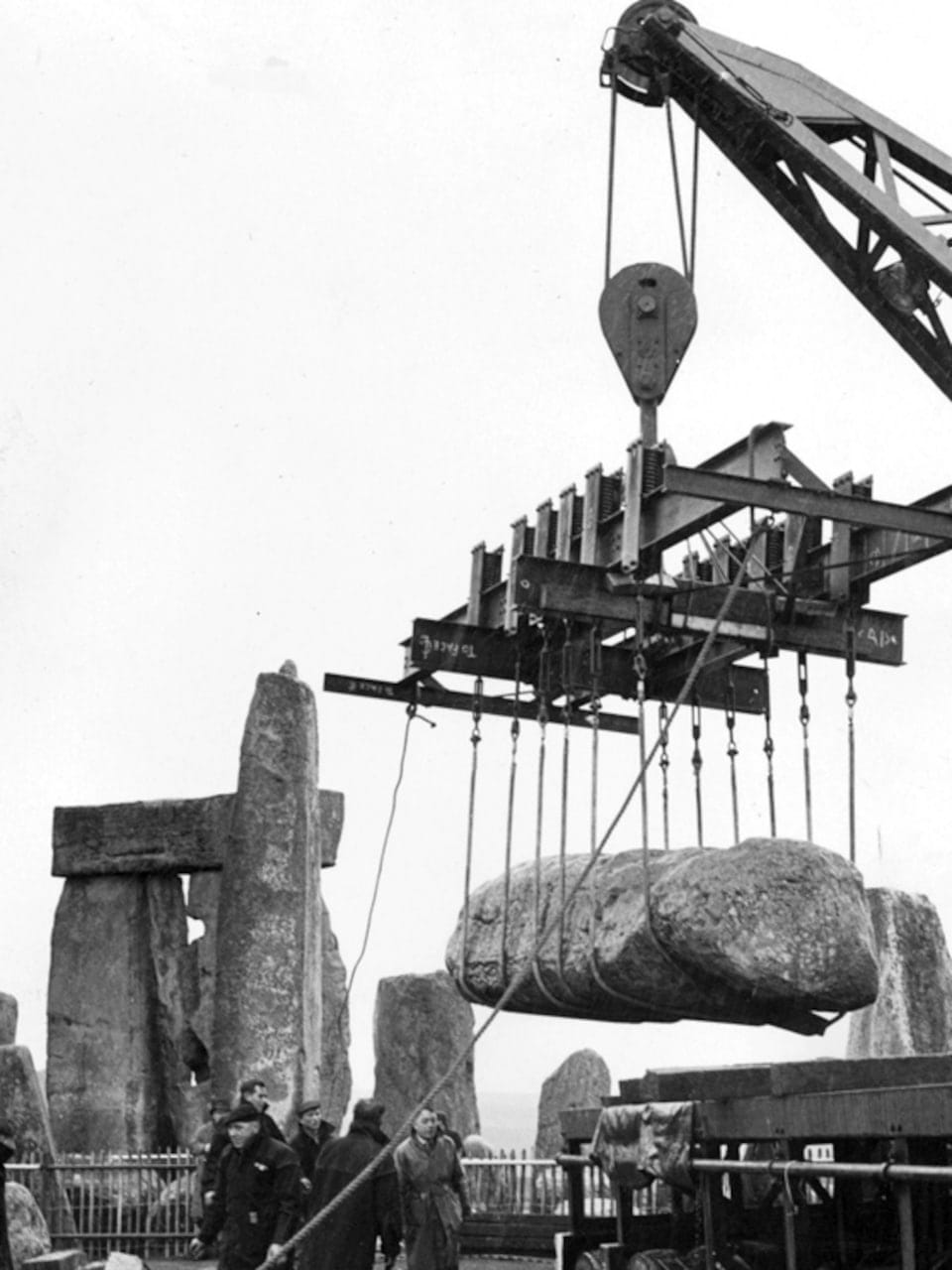
The cement grout used to fill cracks in the horizontal stones of Stonehenge in the 1960s may lead to its destruction. Sixty years after the restoration, it has emerged that the airtight cement causes moisture to accumulate and the blocks to crumble as it freezes and thaws. In September 2021 the cement was removed and replaced with lime mortar, so the problem ought to be solved, but the fate of the stones after many years of ruinous exposure remains in question. Earlier interventions were not without consequences either: in 1963 a stone of the outer circle collapsed, and this after the restoration of 1958-59, when a stone that had lain on the ground for 161 years was raised, along with nine others. It was damaged while the neighbouring stone was being set up, and the other megaliths began to shift. In 1964 it was decided to set all the stones in concrete. If everything begins to fall again, new stones can always be put up and the whole thing reassembled, but in that way sooner or later nothing will remain of the original cromlech except the ground it stands on, and the blocks in the centre, which in all this time no one has dared to touch