Léon Frédéric’s triptych “The Ages of the Worker” from the Musée d’Orsay at the “Brussels 1900” exhibition at the Petit Palais
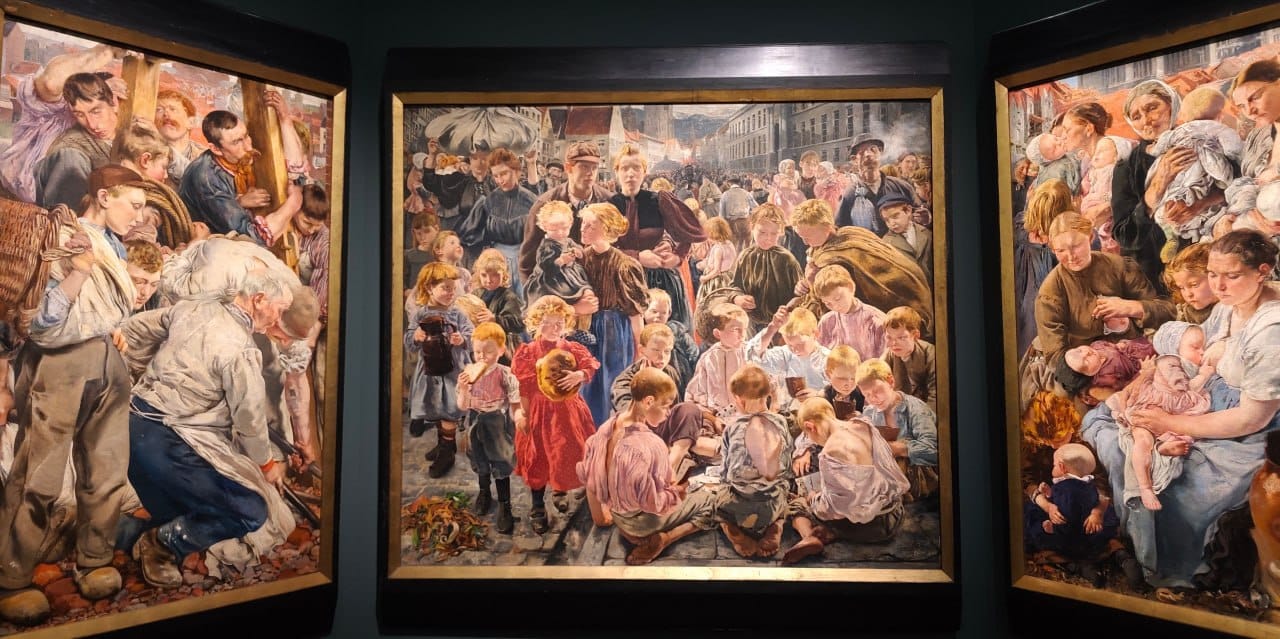
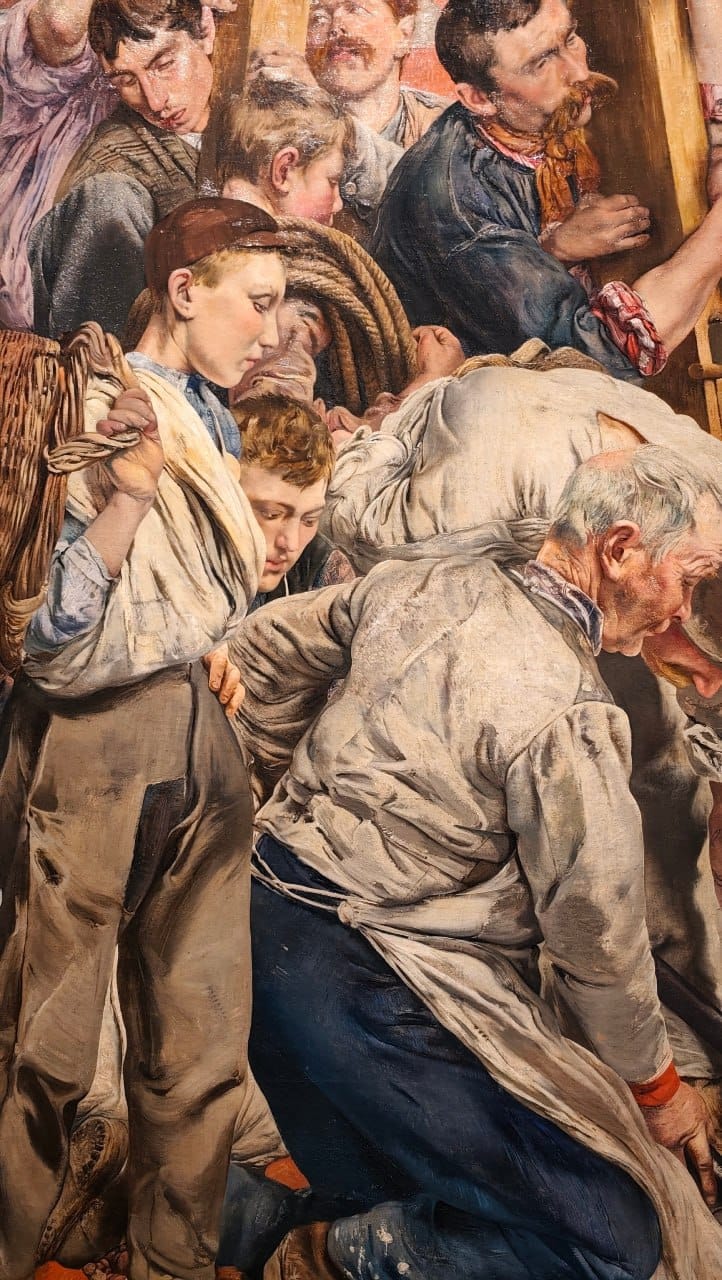
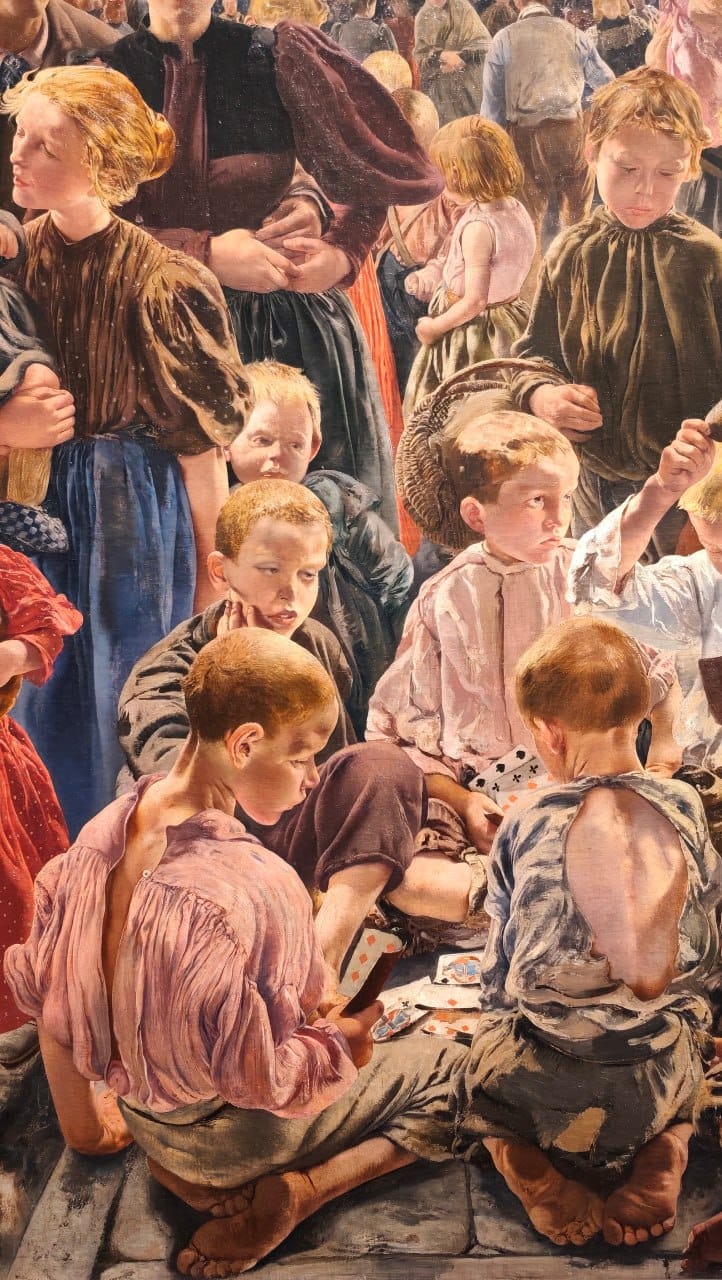
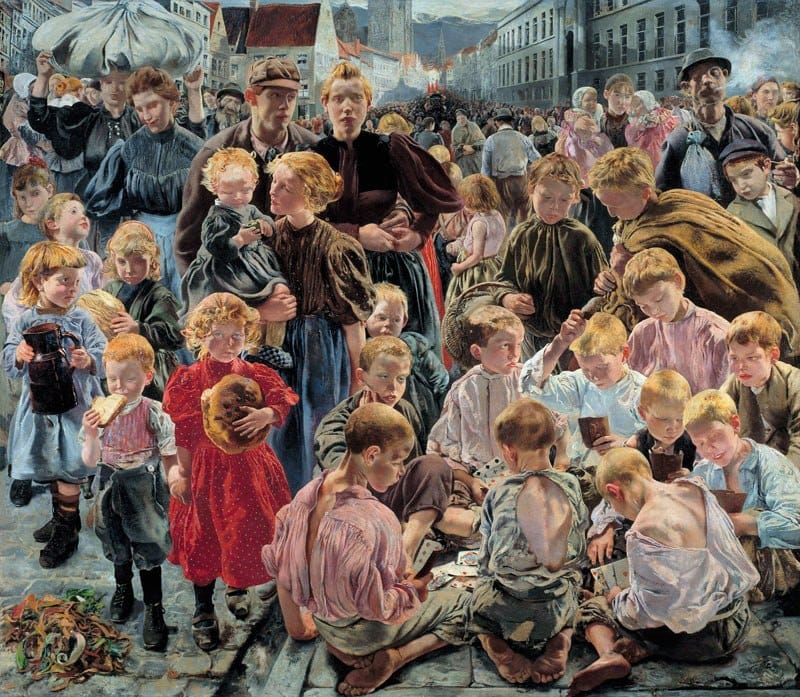
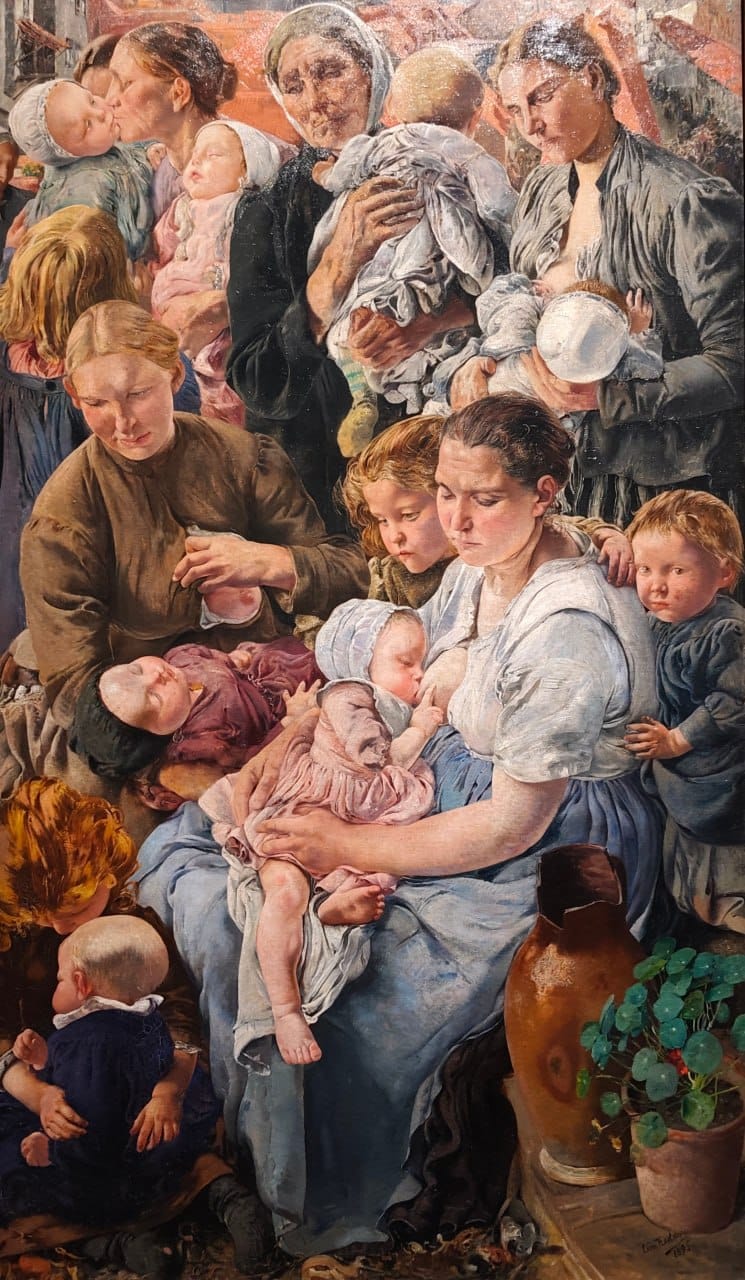
A triptych by the Belgian Symbolist Léon Frédéric entitled "The Ages of the Worker", painted between 1895 and 1897. It belongs to the collection of the Musée d'Orsay and is currently on show at the "Brussels 1900" exhibition at the Petit Palais in Paris.
The first thing that came to mind was Deineka's painting "In Occupied Territory". Though what we have here is a less dramatic work, there is something shared in the composition, the palette and the general mood.
At the end of the century, when Léon Frédéric was working on this project, Belgium saw a series of bloody strikes and workers' uprisings, which were put down by the army. Against the rather grim backdrop of the working class's condition, social debate around the subject finally grew heated. The artist is believed to have been interested in the ideas of social messianism, and that is precisely why he chose such a form, the classical altarpiece triptych of the old Flemish masters.
Before us is an entirely secular subject presented in a recognisably religious format, which, on the whole, raises the everyday life of the working man to something close to martyrdom and ministry.
Naturally, each panel has its own parallels with Christian iconography, from the Madonna and Child on the right, through the Way of the Cross in the middle, to the Raising of the Cross, with elements of the Resurrection, the Passion of Christ, the Division of the Loaves, the Trinity and the Entombment of Christ.
The triptych is called "The Ages of the Worker" because the pictures capture the whole life's journey of a person from the labouring classes, from infancy to deepest old age. And at every stage of this earthly path, heavy physical labour holds the person in its power.
The painter created the panel with the mothers first, and the one with the navvies last.
Immediately after its completion in 1898, the canvas was acquired by the French state for the Musée des Artistes Vivants in the Luxembourg Garden, then ended up in the collection of the Louvre, and afterwards in the hall of Belgian art at the Musée d'Orsay.