The strange appearance of the elephants in Giovanni Battista Tiepolo's painting "The Triumph of Manius Curius Dentatus" in the Hermitage is explained by the fact that the artist had never seen the animal and imagined it from written descriptions and eyewi
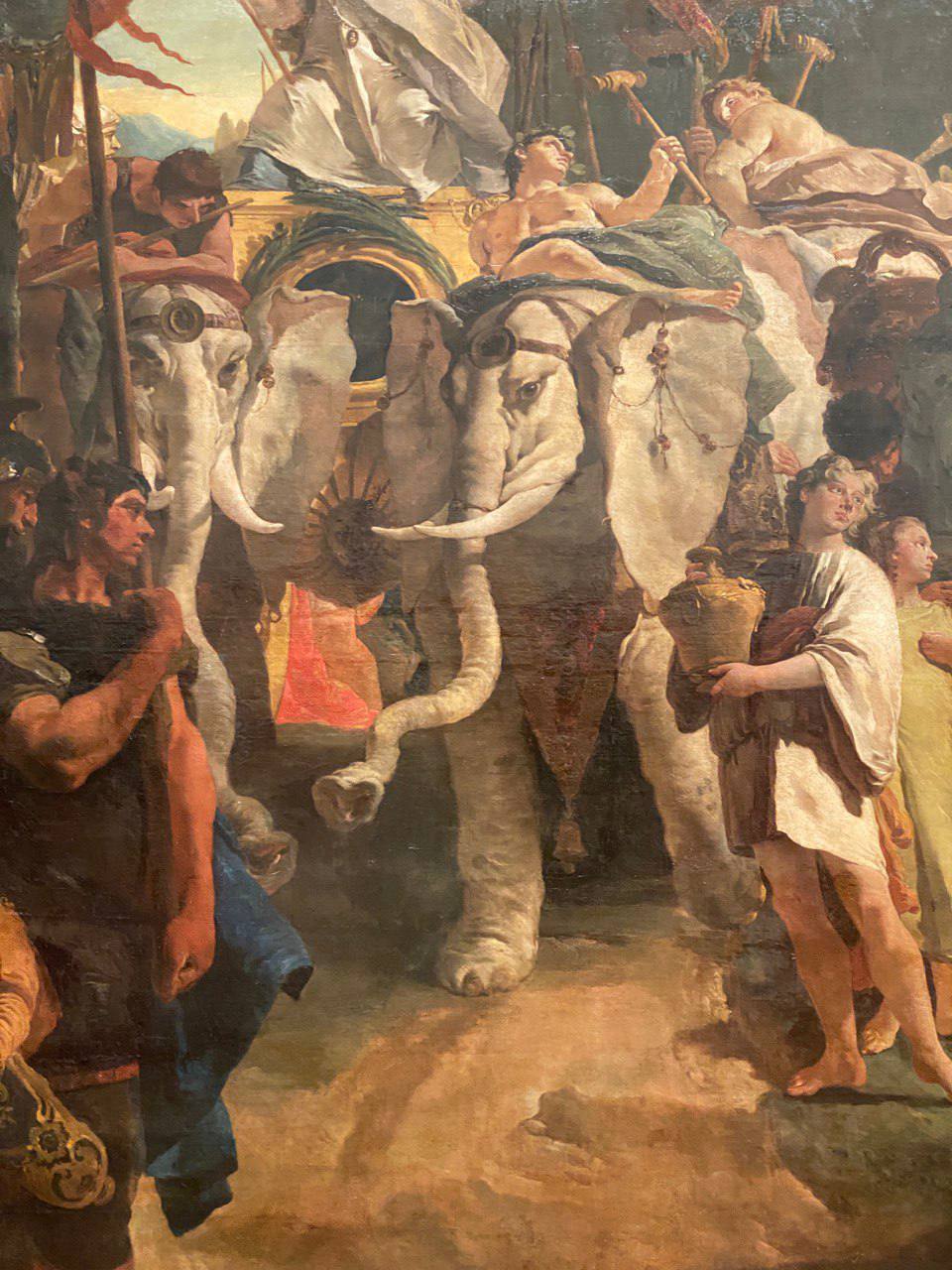
The strange appearance of the elephants in Giovanni Battista Tiepolo's painting "The Triumph of Manius Curius Dentatus" in the Hermitage is explained by the fact that the artist had never seen the animal and imagined it from written descriptions and eyewitness accounts. With that in mind, the elephants may be considered quite a success.
The Romans themselves, on first seeing elephants in battle with Pyrrhus, took them for enormous oxen. After the defeat of Pyrrhus, the consul Curius Dentatus received from the senate the right to hold a triumph in Rome, at which he displayed four captured elephants. In time the wars with Carthage acquainted Rome with elephants rather better: after the battle at Panormus more than a hundred were captured and ferried across on rafts made of barrels, but, having no use for the beasts, the Romans simply slaughtered them in the circus for public amusement.
It took Rome decades to master the use of elephants in battle. The Roman war elephants of North Africa appear in 198 BC in the battles with Philip V of Macedon. We are speaking of a few dozen animals, which were at times not even sent into action. The larger Indian elephants appear in the Roman army by the Third Macedonian War.
Marcius Philippus led the Roman elephants across the mountains, and Aemilius Paullus sent his elephants to trample the Macedonians as they fled into the river. Elephants were used constantly in the Spanish wars, in the war with Carthage and against the Gauls, and once even in Britain; true, only a single elephant with a tower for archers on its back is known to have been used there, but even that was enough to ford the river and force the enemy to retreat.