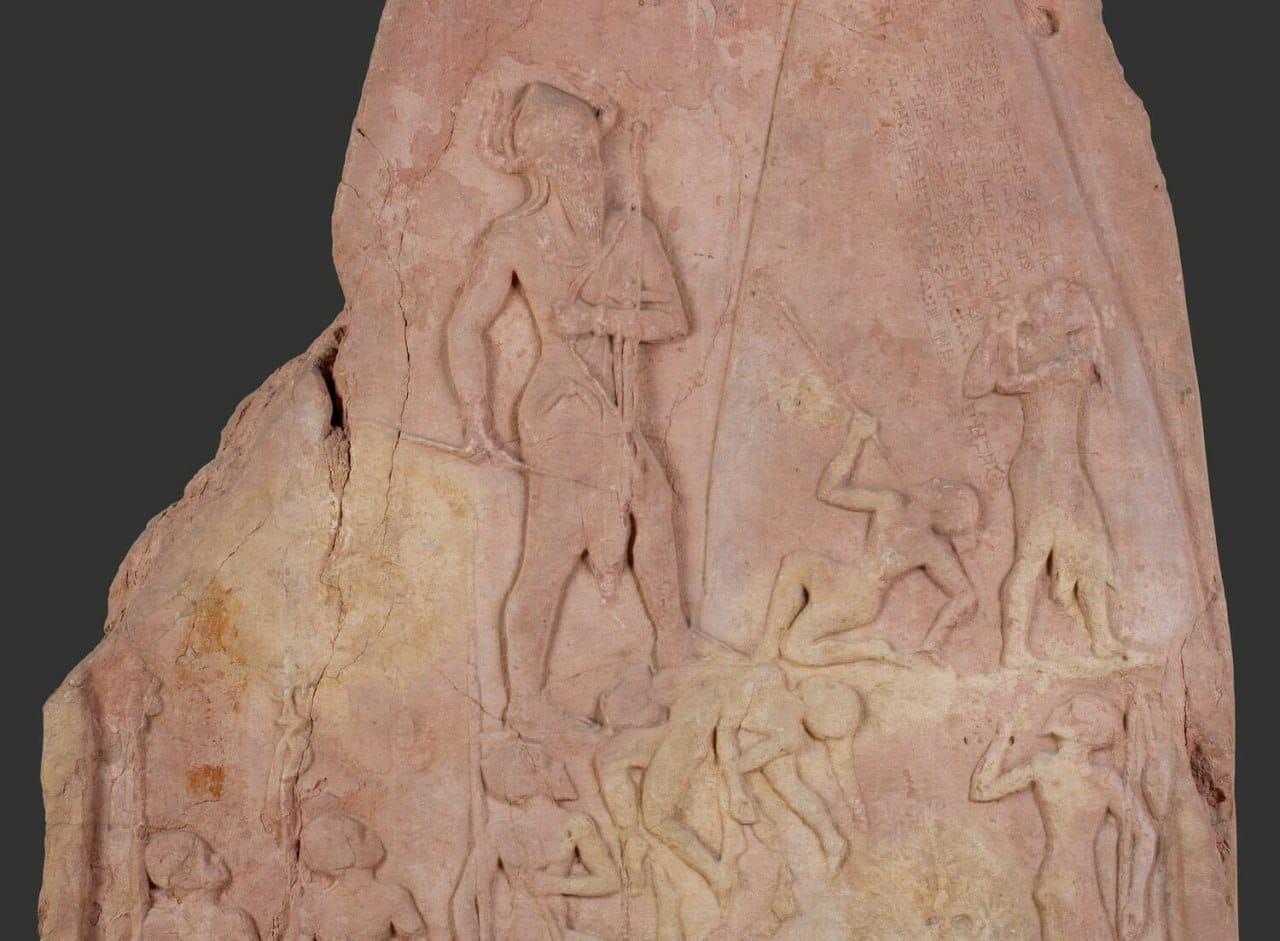
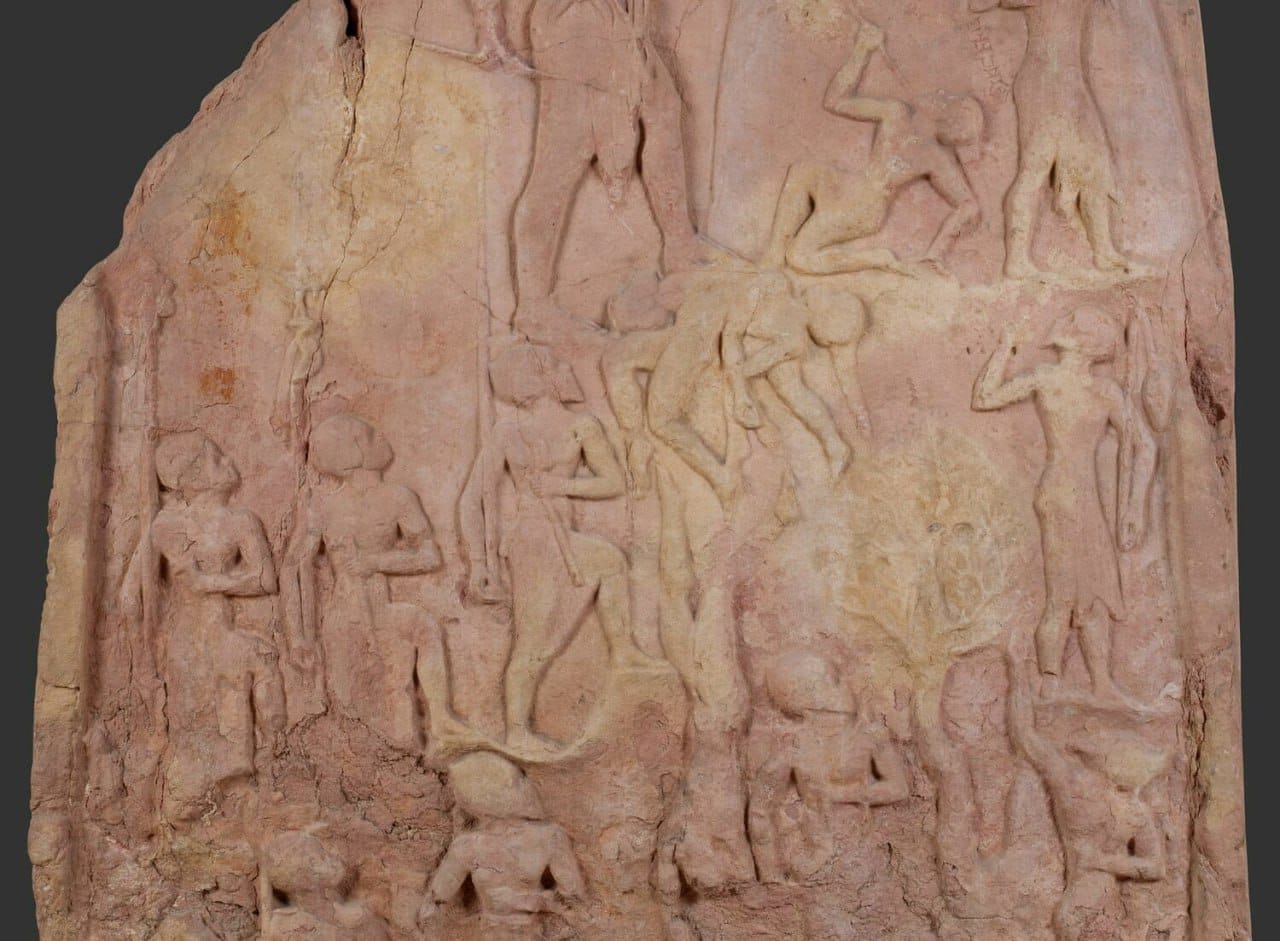
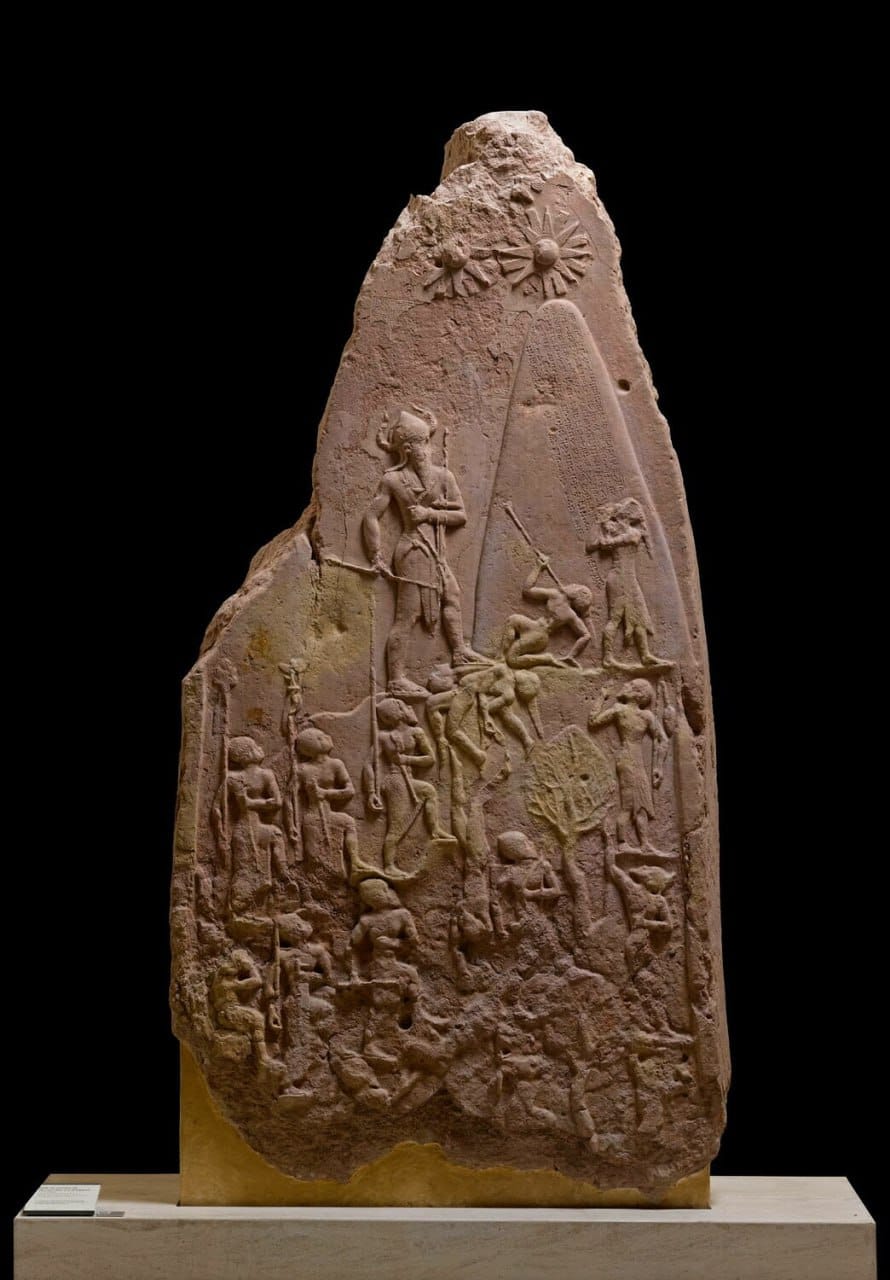
Stele of King Naram-Suen depicting his victory over the Lullubi
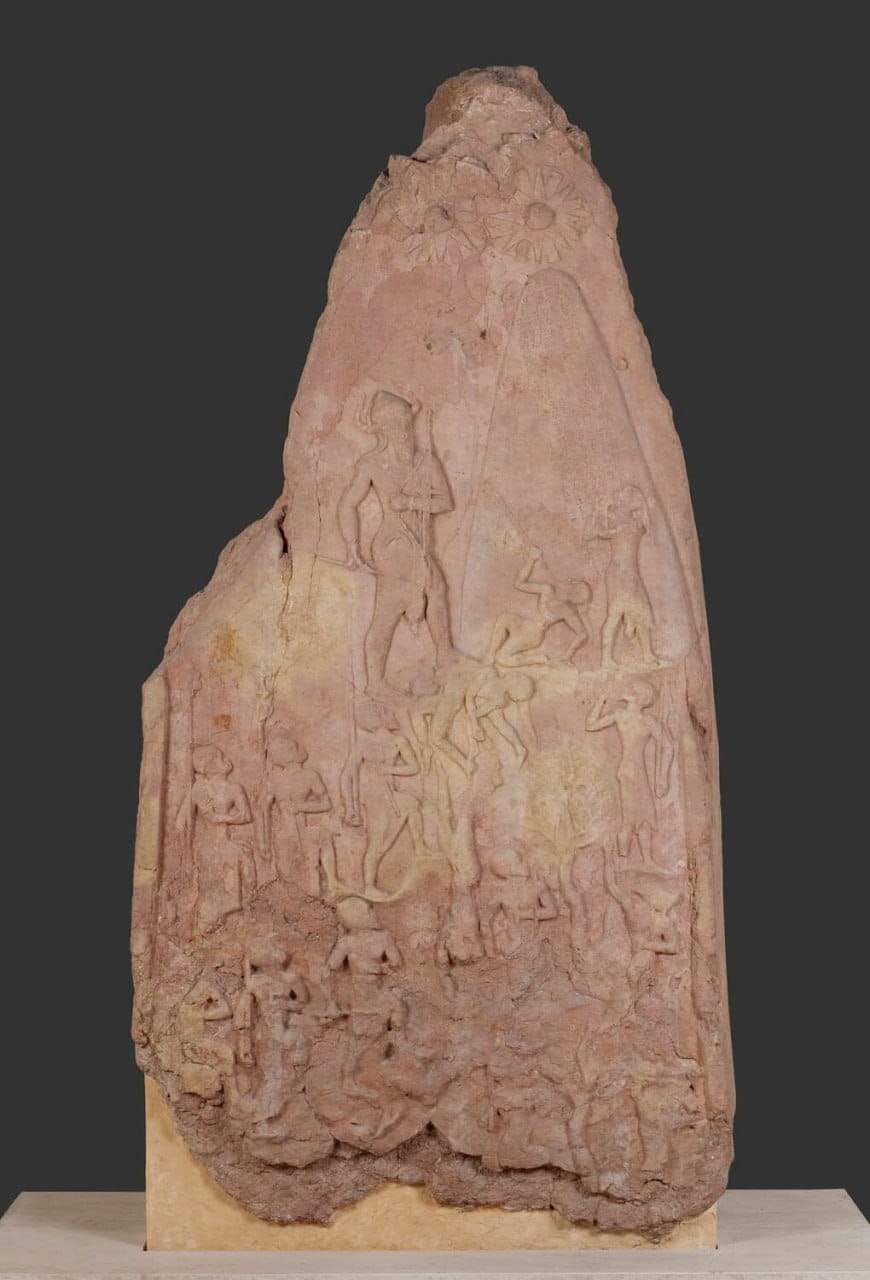
Down the mountain comes the routed army of the enemy, begging for mercy, while up the mountain climb Naramsin's soldiers, full of vigour.
One of the outstanding monuments of Akkadian art, dating from around 2250 BC, though found in Iran rather than Iraq: in 1898 French archaeologists discovered the stele during excavations in the city of Susa. The monument is displayed in the Louvre.
The stele reached Iran in the 12th century BC, some 1,000 years after its creation. The Elamite king Shutruk-Nakhunte seized it during a campaign against Babylonia and carried it off to his capital, Susa, as a symbol of victory. Having captured the stele, the Elamite king ordered an inscription in his own language to be cut into it, thereby enrolling a Mesopotamian masterpiece in the art history of Elam, the ancient state in south-western Iran. In essence, King Shutruk-Nakhunte appropriates the glory of King Naram-Sin and even places his text quite literally over the landscape.
As Vipper writes, this is one of the most striking works of art in which the landscape is shown as a gently rising mountain. Babylonian and Assyrian artists strove to escape the laying of objects upon a horizontally conceived picture plane, and laboured to set the plane upright. This they achieved by tilting the plane of the earth upwards at an angle. Thus the victory stele of King Naram-Suen belongs among the first attempts in the history of art to introduce into the depiction of reality the data of optical perception, proceeding from notions of the extension of space and the duration of time.