Strauss’s waltz “On the Beautiful Blue Danube” triumphs in Paris in 1867 and draws Brahms’s remark
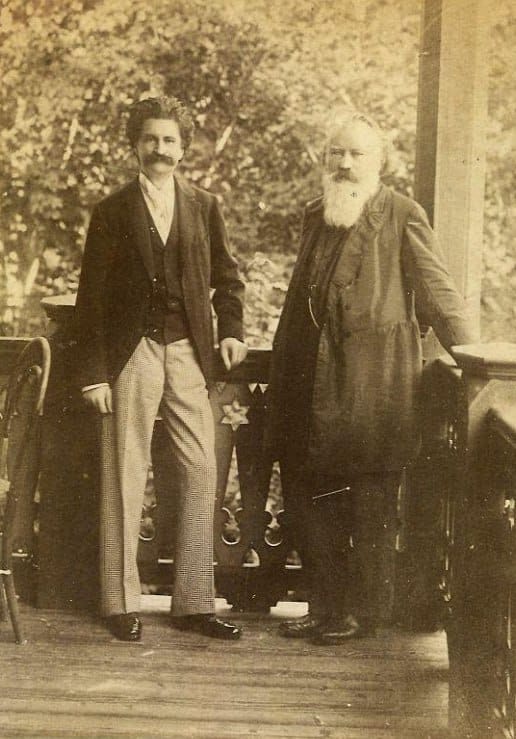
Old Friends Johann Strauss the Younger and Johannes Brahms.
When Brahms looked through the score of Strauss's waltz "The Blue Danube", he wrote beneath it: "Alas, not by Johannes Brahms."
This waltz became Strauss's triumph, eclipsing the successes of his father, Johann the Elder: he decided to perform "The Blue Danube", which had initially met with no success in Vienna, at the Paris World's Fair of 1867. After the very first section there was deafening applause. It was a victory, and before long the score was published in a print run of a million copies.
Johann Strauss was welcomed by Gustave Flaubert, Dumas fils and Ivan Turgenev. Among composers, an admirer of Strauss's music was not only Brahms but also Wagner, Tchaikovsky, Glinka, Rachmaninoff, Mahler, Berlioz and Rimsky-Korsakov.