Aeneas's escape from burning Troy in the Aeneid and Rome as the heir of Troy
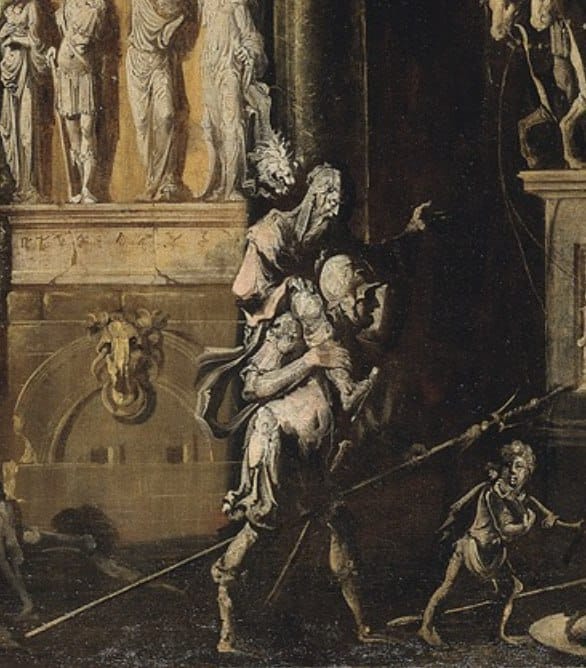
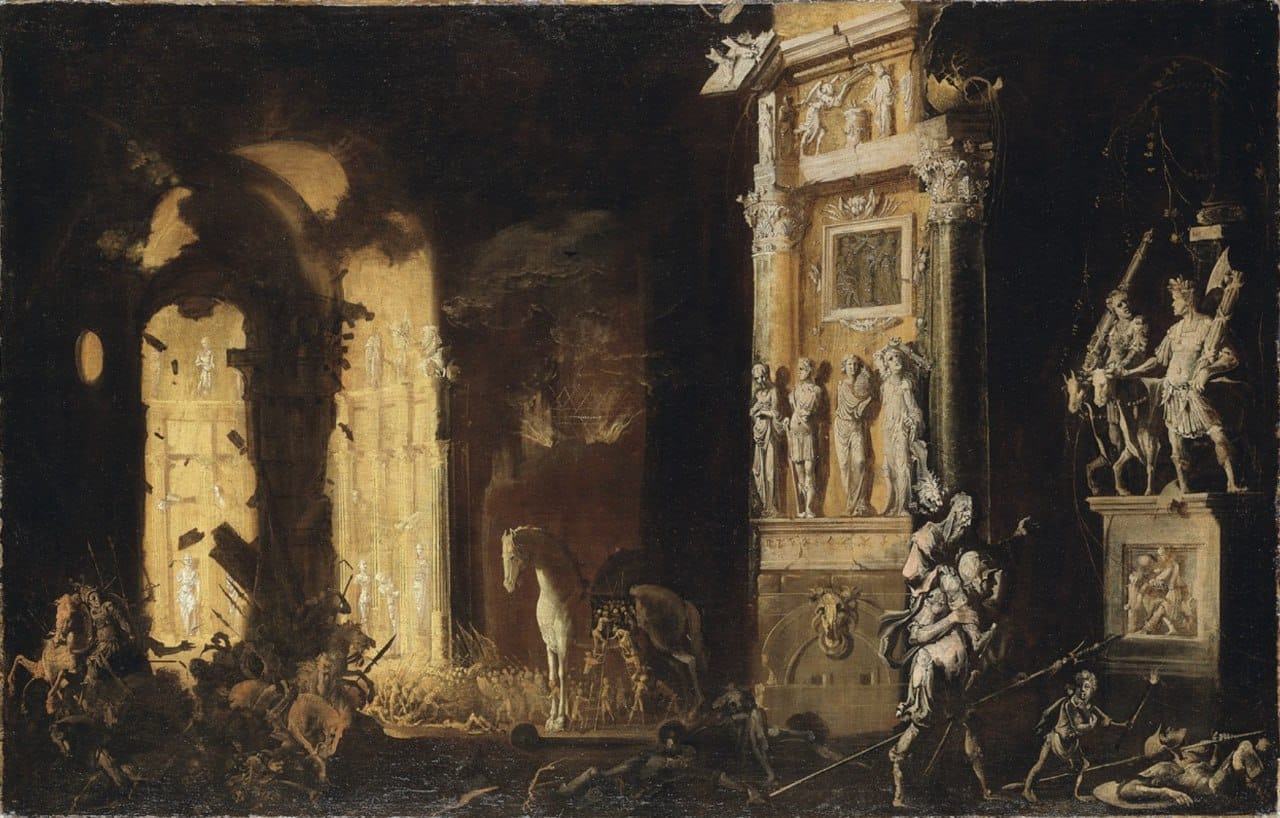
The Burning of Troy, with the Flight of Aeneas and Anchises, by François de Nomé (1593-1644)
We learn of the flight of Aeneas, his aged father Anchises and his young son Ascanius from blazing Troy in the second book of Virgil's "Aeneid". The subject is well known in classical art, usually under the title "Roman Charity".
The blind old man Anchises, seated on the back of his son Aeneas, held in his hands a vase containing the ashes of his ancestors. Little Ascanius, for his part, carried a bowl with the eternal fire from the temple of Vesta.
The legend takes on a particular significance when one learns that, after the flight from Troy, Aeneas is regarded, in one version, as the founder of a kingdom in Italy, and hence of Rome, which became the direct successor of ancient Troy. Anchises, no less, is descended from the line of the Dardanian kings and is a great-grandson of the legendary King Tros, or Troy, who named his father's kingdom after himself. Tros, in turn, is a great-grandson of Zeus himself.
It follows, therefore, that Rome inherits from Troy and contains in its very foundation the ashes of the descendants of Zeus and the eternal fire of the goddess Vesta.