René Guénon writes that "intellect" once meant the perception of transcendent realities, and introduces the Sanskrit term buddhi, all but forgotten in the West
René Guénon writes that "intellect" once meant the perception of transcendent realities, and introduces the Sanskrit term buddhi, all but forgotten in the West. He explains that buddhi is the faculty of glimpsing another world, whose traces appear in the soul as intellectual intuitions. Apparently, the term is close to the understanding of gnosis and to Plato's theory of perfect forms.
Guénon's interpretation echoes ancient Greek and Hindu conceptions that point to an intuitive faculty lying beyond reason, for example the vision of truth. Contrary to a world in which nothing is invented but rather discovered and perceived in the realm of ideas, in our own time the notion of wisdom has drawn reason closer to operating with precise, well-founded categories and calculations.
Before my philosophy exam I shall simply resolve that all the necessary knowledge will somehow reveal itself of its own accord.
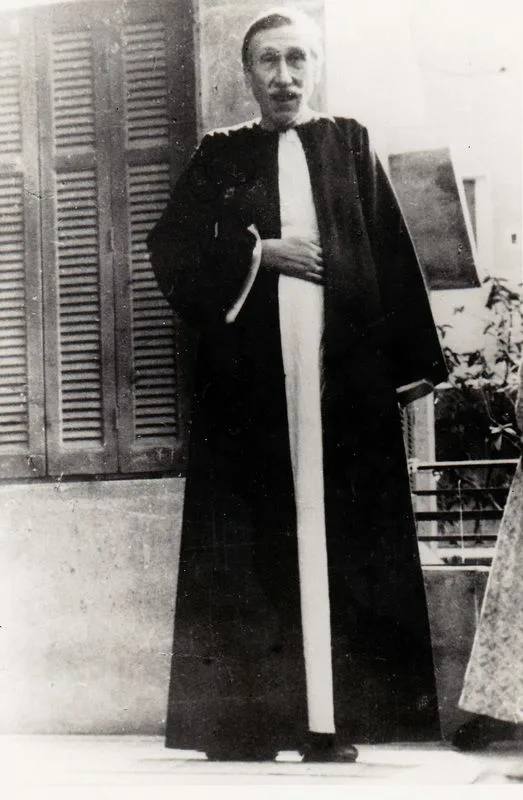
From Guénon's attire it is not hard to guess that he lived somewhere in the East; I had pictured India or Nepal, but it was Egypt. In Cairo Guénon was given a villa, and he lived there from the 1930s until the end of his days.