Continuing our reading on plague among the hunter-gatherers of the Baikal region 5,500 years ago
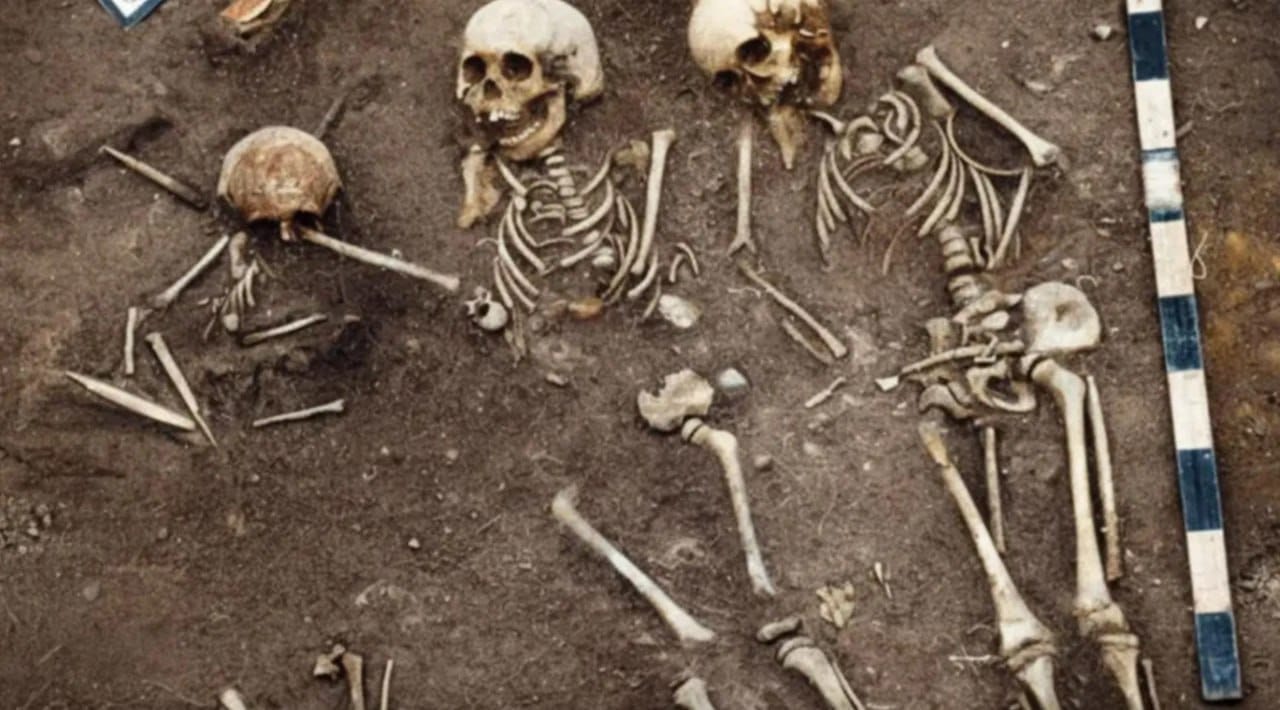
Continuing our reading on plague among the hunter-gatherers of the Baikal region 5,500 years ago. An international team has studied ancient DNA from human remains at four burial grounds in the Lake Baikal area and, by sequencing genetic material preserved in teeth, has reconstructed bacterial genomes and identified previously unknown early forms of plague.
The DNA of the bacterium Yersinia pestis was found in 18 of the 46 people examined. That proportion is higher than at some medieval plague cemeteries.
It was previously held that early strains could not have caused severe outbreaks, since they lacked the genetic features that later enabled bubonic plague to spread efficiently via fleas and rodents. The new data challenge this. Eske Willerslev of the University of Copenhagen and Cambridge says that the question of whether the early forms were mild or deadly had remained contested, and the find shows them to have been highly lethal.
At the two largest burial grounds, an unusually large number of children and adolescents turned up. Andrzej Weber, an archaeologist at the University of Alberta and head of the Baikal Archaeology Project, notes that attempts have been made to explain the cause of this since the 1990s. Radiocarbon dating has shown that many of the deaths occurred close together in time, with brothers and sisters dying together in some cases, and parents and children lying in the same graves in others.
The ancient strains contained a superantigen, that is, a genetic factor producing a toxin absent from historical strains. Superantigens make the immune system react with unusual force, leading to severe inflammation. Martin Sikora of the University of Copenhagen explains that even before efficient transmission via fleas had appeared, these strains carried a combination of virulence factors that made infection deadly.
This lends support to the theory that plague originated in Central or North-East Asia. The archaeological evidence shows that the inhabitants of the Baikal region were in close contact with marmots, large burrowing rodents that carry plague to this day, and the researchers therefore suppose direct transmission of the disease from marmots to humans