The Council Code of 1649 forbade Russians to serve unbaptised foreigners
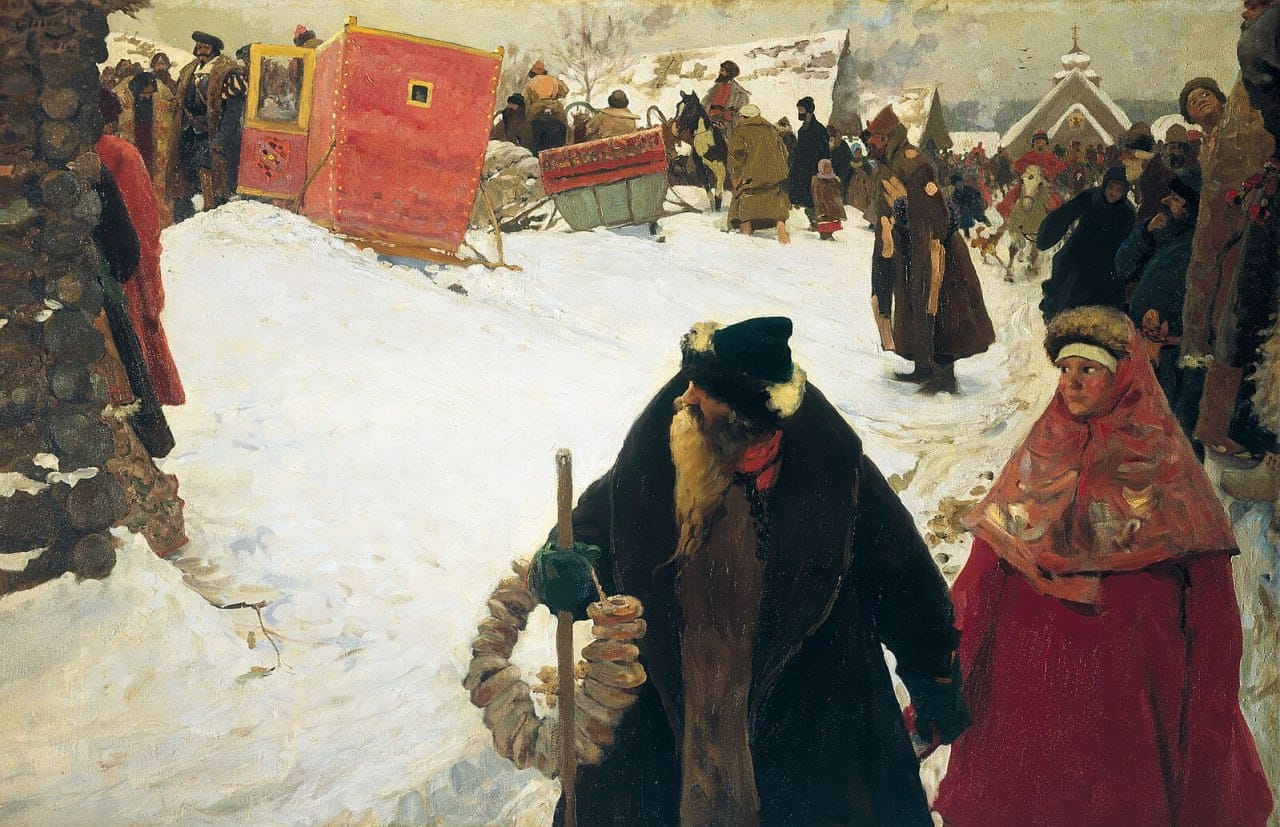
The Arrival of Foreigners in Moscow in the Seventeenth Century, Sergei Vasilyevich Ivanov, 1901.
Until the reign of Peter, all Europeans in Russia were called, and written down as, unbaptised.
And the Council Code of 1649 laid down outright a prohibition on Russians serving, or being in bondage, to unbaptised foreigners.
For "in Moscow and in the towns Orthodox Christians serve the heterodox, unbaptised foreigners, and these Orthodox Christians suffer from the heterodox constraint and defilement, and many die without repentance, without spiritual fathers, and in the Great Fast and in other fasts are made to eat meat and all manner of scoptic fare against their will."
Tsar Mikhail Feodorovich ordered that Orthodox Christians be taken out of the service of unbaptised foreigners and that in future they be forbidden to serve the heterodox or to be found in their households, lest Christian souls suffer oppression and defilement.
"And should any Russian people begin to serve in the households of unbaptised foreigners, whether under bonds or of their own free will, they are to be sought out and harshly punished, that neither they nor others like them be tempted to do so."
Foreigners who wished to baptise their unbaptised bondsmen or captives living in their households were to be paid compensation for each baptised person on the strength of the deeds of purchase presented, though not "fifteen roubles per man".