Fine gold Roman helmets of the fourth century from the Museum of Vojvodina in Novi Sad, Serbia
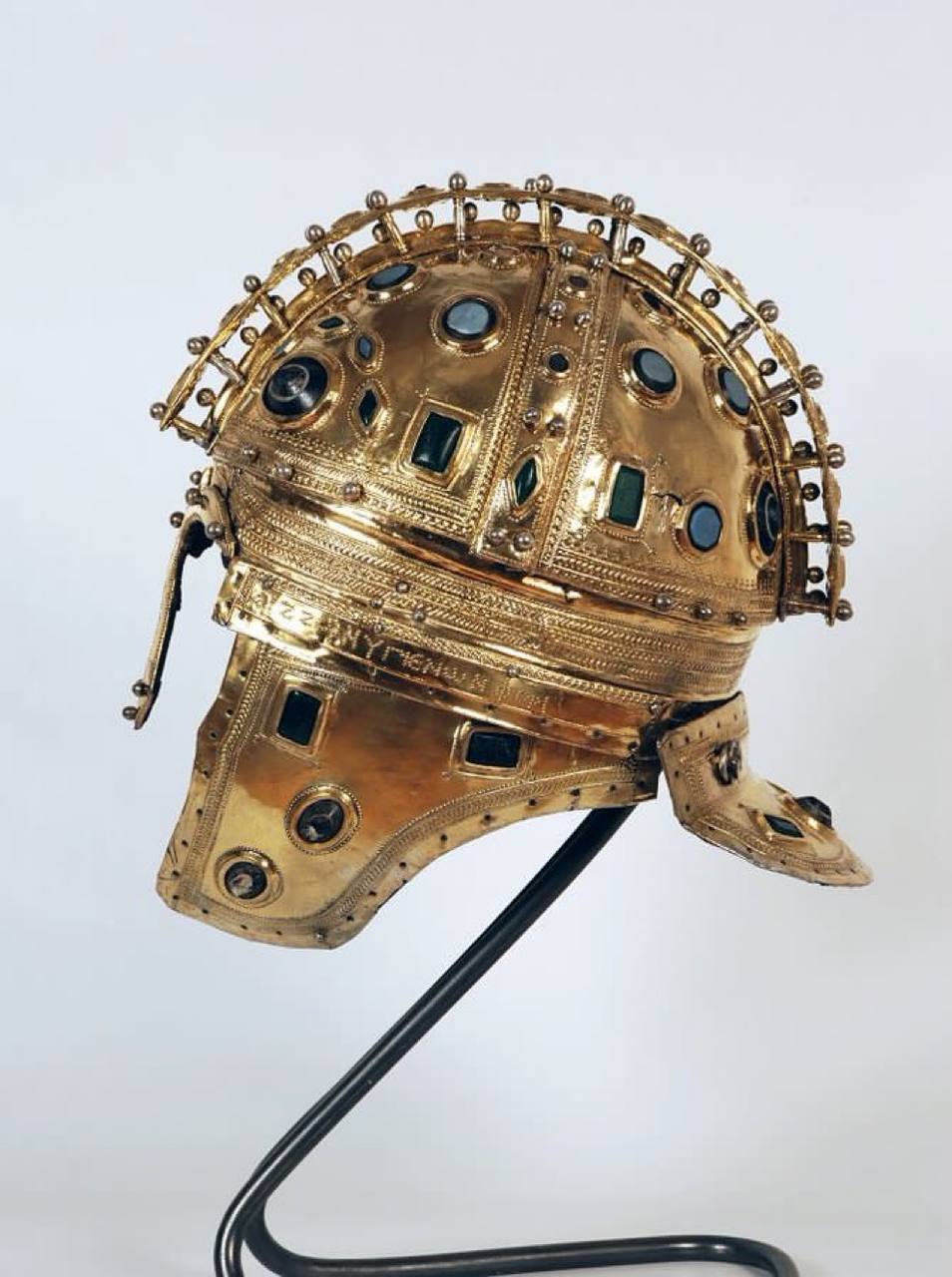
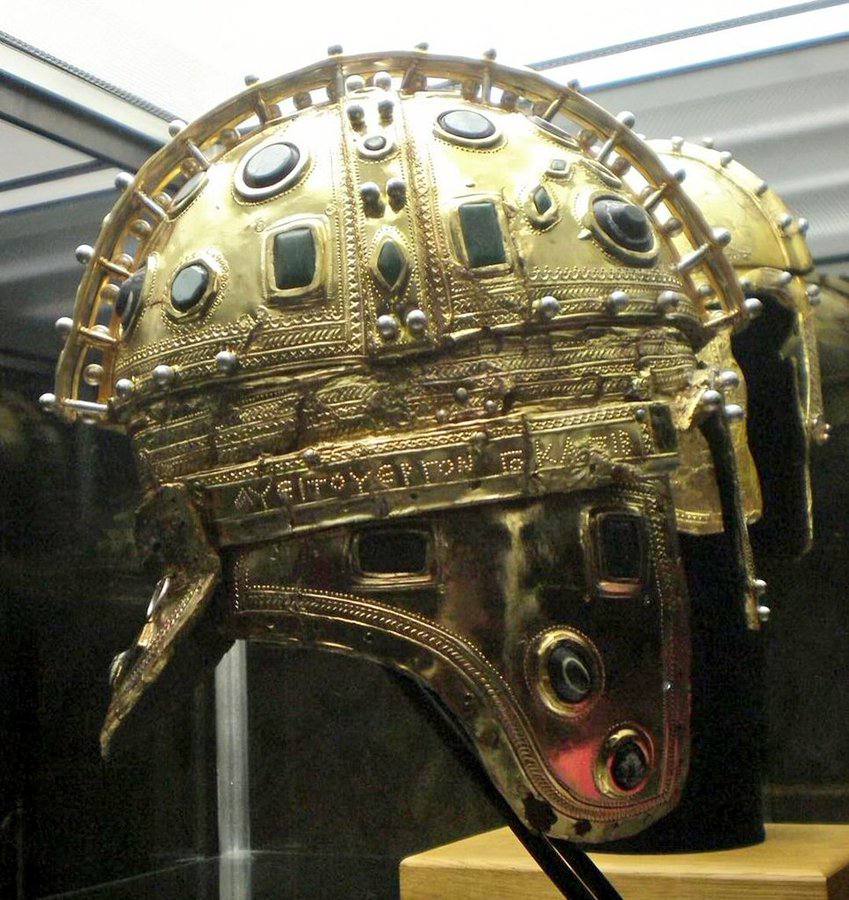
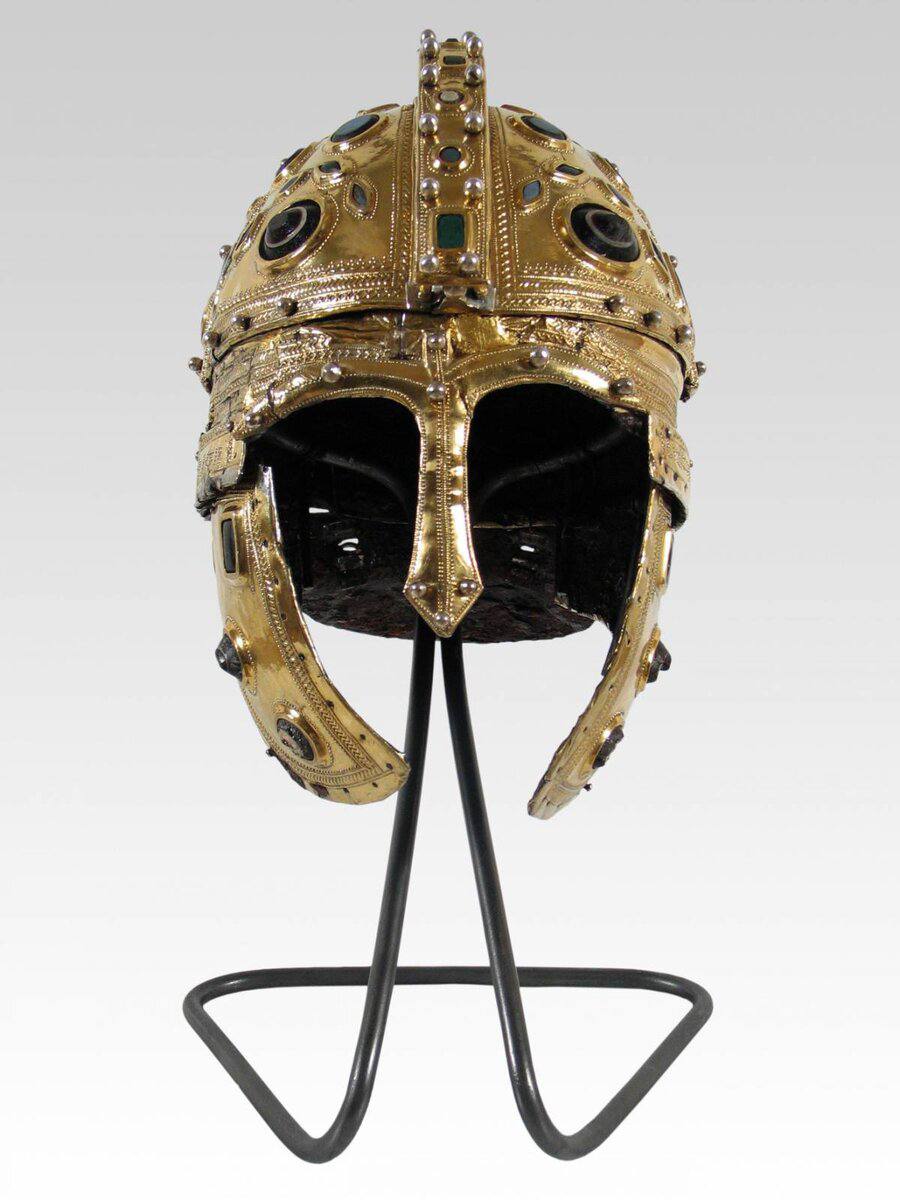
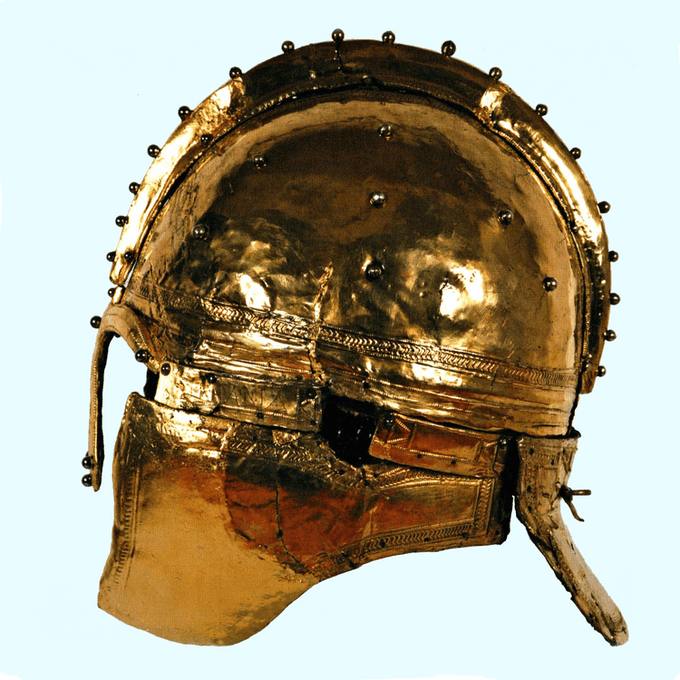
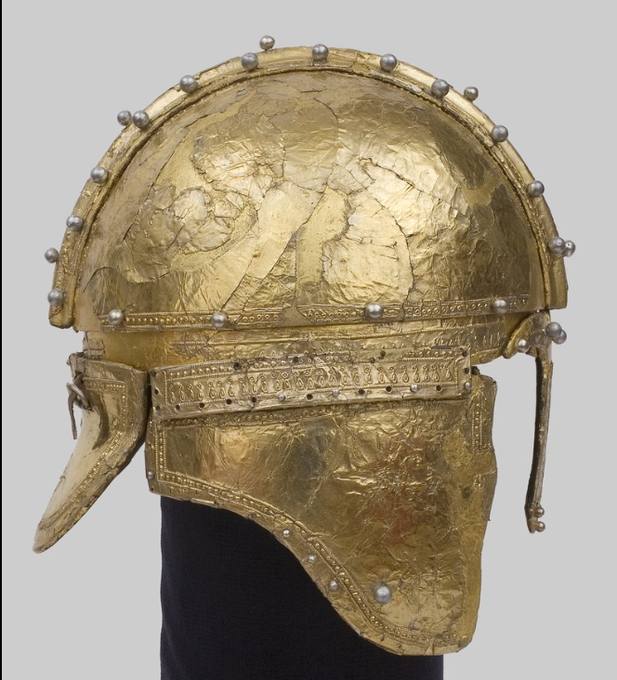
Fine gold Roman helmets of the fourth century from the Museum of Vojvodina in Novi Sad, Serbia. These are the so-called Berkasovo-Jarak helmets. Two similar gold pieces were found in one place. They probably belong to a hoard assembled by a barbarian warrior after combing a battlefield.
The helmets are made of gold, silver and iron (the last long since rotted away in the earth), with jewelled inlays in the form of stones, which are in fact coloured glass made to imitate them. The helmets did not belong to a ruler or to one of the commanders of the army, since in that case the stones would most likely have been genuine, but the gold and the skilled workmanship certainly point to the noble origin, wealth and high standing of their owners.
Curiously, the Greek inscriptions do not show that the helmet was, say, Byzantine: Greek was a language of the Roman Empire on a par with Latin. And the inscription reads: “Wear it, Dizon, and be well. From Avitus.”
The helmets were found in the Yugoslav village of Berkasovo in 1955. A peasant woman, Angelina Vrkatić, was working with her daughter in her maize field when her hoe struck something metallic. Having dug the object out, she discovered a “golden crown”, which, as it was later explained to her, was a soldier’s headgear.