Withdrawal of coins from circulation and exchange at unfavourable rates in medieval Europe
The Right to Issue Currency Has Always Been a Source of Colossal Revenue for Those Who Held It, and of Incredible Injustice for Everyone Else.
In medieval Europe there existed a practice of withdrawing coins from circulation. It happened constantly, sometimes twice a year. People were obliged to hand in their old coins and receive new ones in exchange, only the exchange did not proceed at what would seem a perfectly reasonable rate of 1 to 1, but rather, say, 12 to 9. For 12 old coins you were given 9 new ones, absolutely identical, of the same weight, denomination and fineness, simply bearing a new inscription or image. The 3 remaining coins were kept by the lord who held the right of coinage.
By the twelfth century in Germany the right to mint coins belonged not only to monasteries and to great ecclesiastical and secular magnates, but also to middling and comparatively petty lords. And each of them had the right to recall the coins struck at his mint at any time and to fix, at his own discretion, the rate at which old coin was to be exchanged for new.
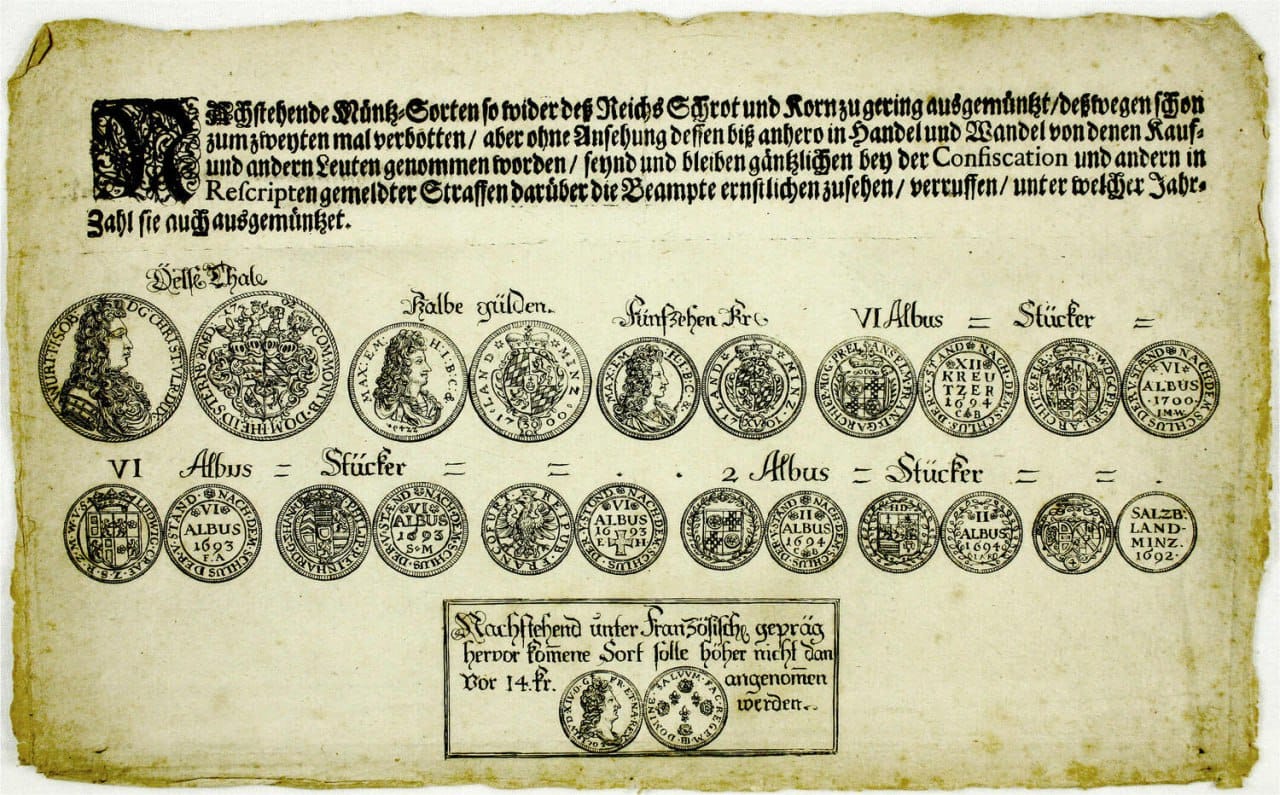
In all the public spaces of towns and villages notices were put up bearing those very coinage edicts, announcing that from a certain date a coin of such and such a type was declared void, or valid only to a limited degree, for example for use in particular territories and at a newly proclaimed value. An edict might also forbid a given coin to be exchanged for goods or accepted in payment of taxes at all, compelling people to carry their pennies to the lord, who exchanged them for new ones.
This monstrous practice of debasement persisted as late as the end of the eighteenth century, with coins sometimes losing half their value, and the recalls affected not only silver and gold money but even paper notes. Each time various explanations were offered, citing the circulation of foreign coin or the introduction of a new national currency, yet the result was always the same: the poor grew poorer still, while those who held the right of issue grew richer, without any effort whatsoever.