While the notorious $450 million "Salvator Mundi" sits aboard a Saudi prince's yacht, another, perhaps no less authentic, appears on the art market
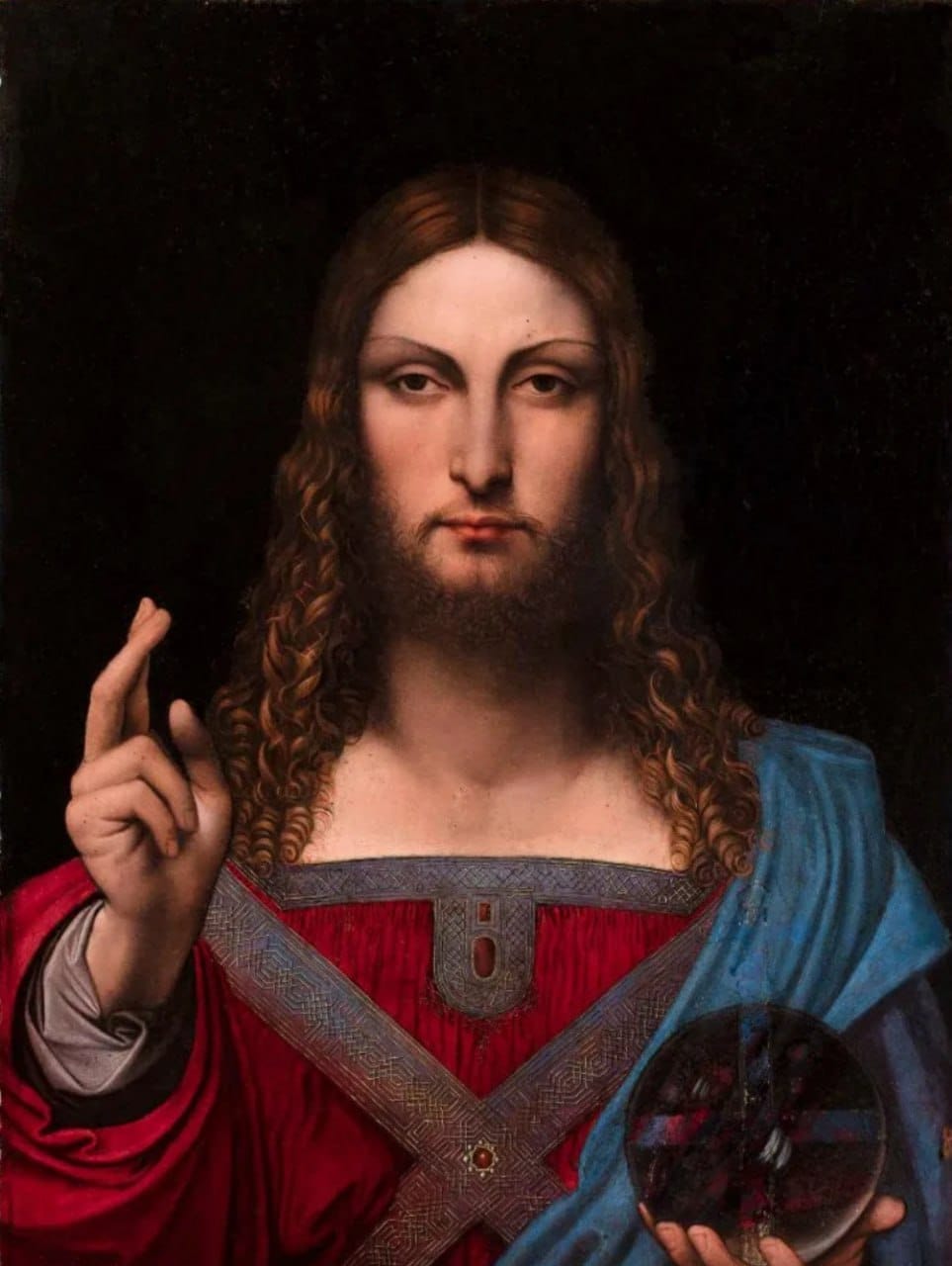
At TEFAF Maastricht this week, yet another version of Leonardo da Vinci's "Salvator Mundi" has been put on show.
This is the so-called "de Ganay version", painted in oil on a walnut panel and dated 1505-1515.
The picture is being presented by the London gallery Agnews. It was formerly in the collection of the French aristocratic family of de Ganay. On the stand it is displayed together with infrared reflectographic images and is presented as "the version by the master's faithful pupil, painted, without doubt, under his direction and with his possible participation". Given the scandalous history of the previous attribution of "Salvator Mundi", the author of this Salvator Mundi is cautiously said to be possibly the same artist who painted the famous copy of the Mona Lisa in the Prado. And although the de Ganay version is the most disputed of all, it was nonetheless included in the Leonardo retrospective at the Louvre in 2019, whereas the version bought by Rybolovlev for 127 million from the adventurer Bouvier and later sold at Christie's to a wealthy Arab for 450 million is described as "attributed to" or as a workshop piece executed under Leonardo's supervision.
Meanwhile, here in the Pushkin Museum there hangs, in all likelihood, that very Salvator Mundi from the collection of King Charles I, for which the Christie's experts may have mistaken Rybolovlev's picture, hence the sky-high estimate, assuming, that is, that they did not know of the existence of the Moscow "Saviour". But this very picture is almost certainly attributed to Giampietrino, a pupil of Leonardo.