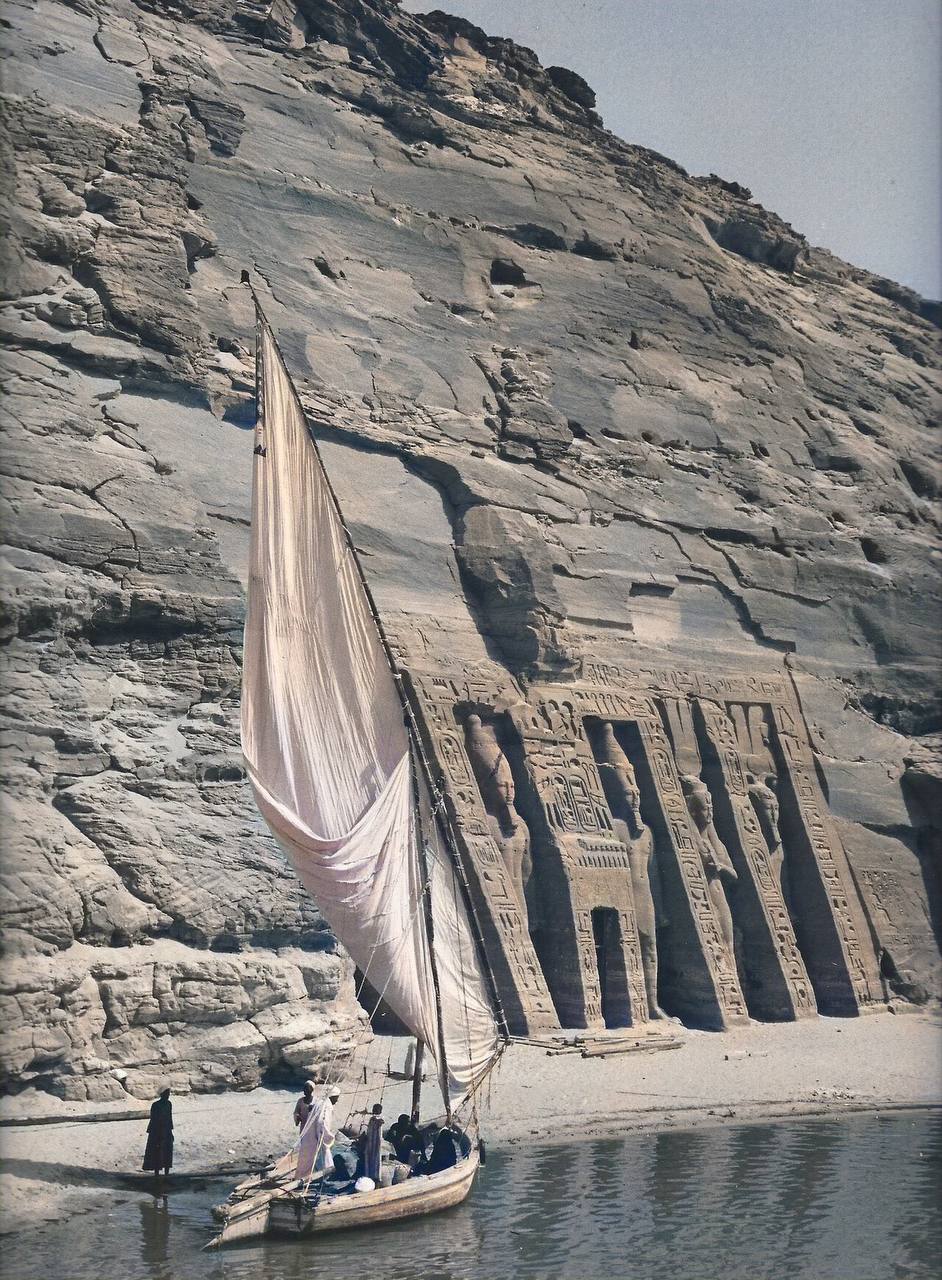
Before the Temple of Nefertari at Abu Simbel in 1968, photograph by Kees Scherer
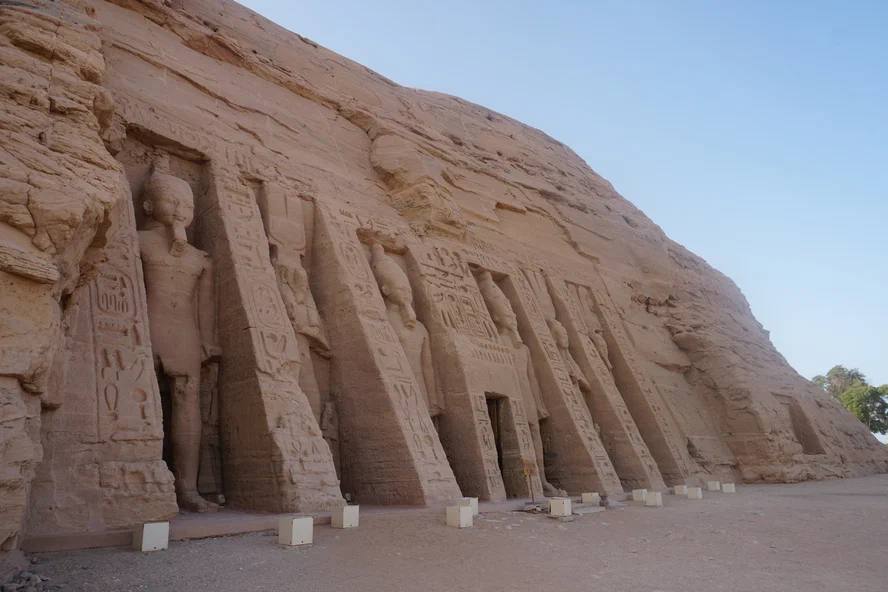
Today, before the rock-cut temple of Nefertari, the first wife of Ramesses II, there lies not the bank of the Nile but desert. How did this come about? Let us see.
The temple was built in the mid-thirteenth century BC, after the victory over the Hittites, and was dedicated to the goddess Hathor. In the centuries of the decline of Egyptian civilisation the temple was buried under sand, which is why it has survived so beautifully. It was dug out only in the nineteenth century. And in the middle of the twentieth century the waters of the Nile began to creep up to its walls and to the walls of the neighbouring structures, when the USSR was building the Aswan High Dam for Egypt. This put in jeopardy the existence of monuments 3,000 years old.
Soviet specialists managed to devise and carry out a plan to save the temples threatened with flooding: with consummate skill they simply moved the historic monuments to a new site, where the temples stand to this day.