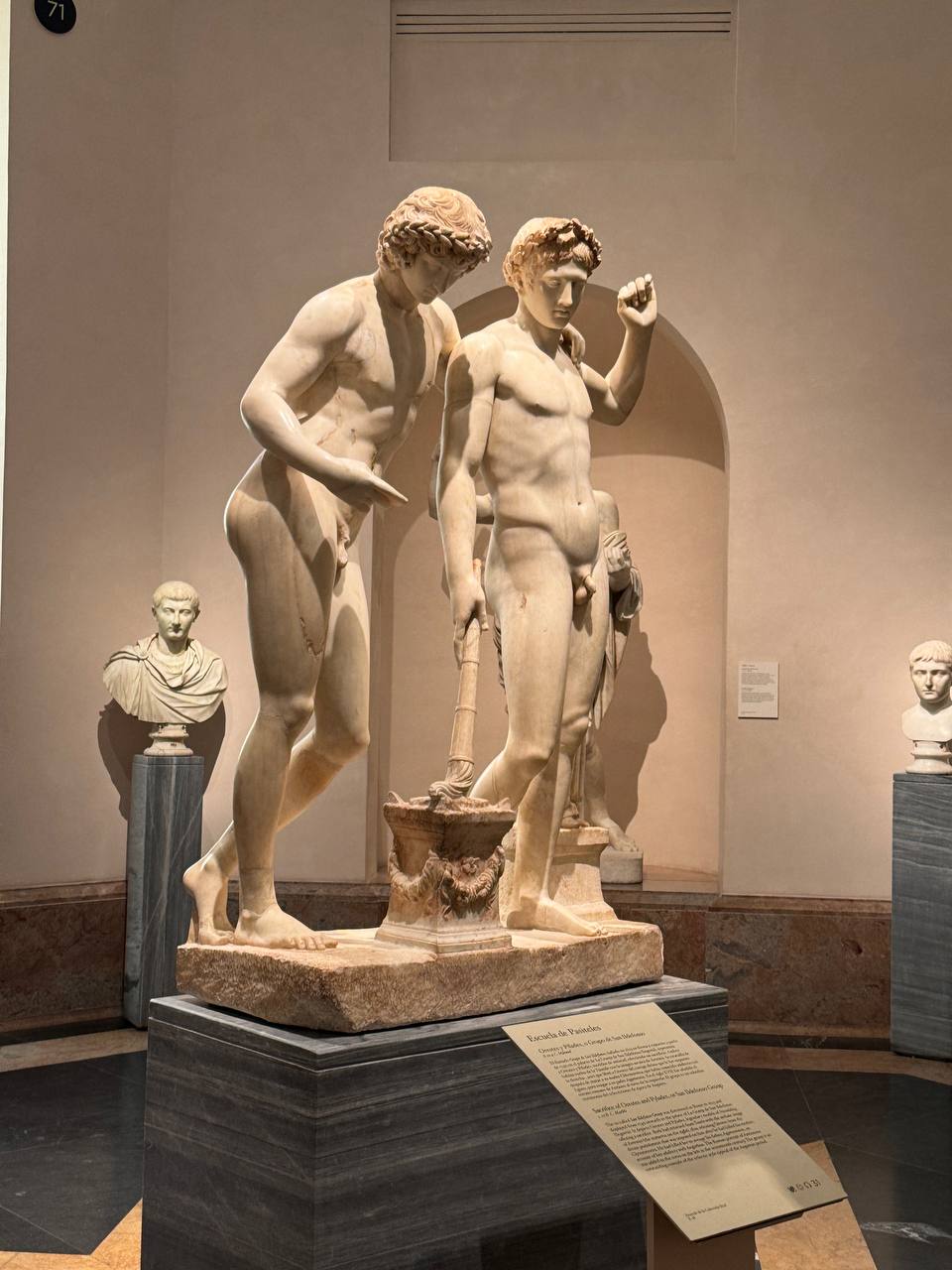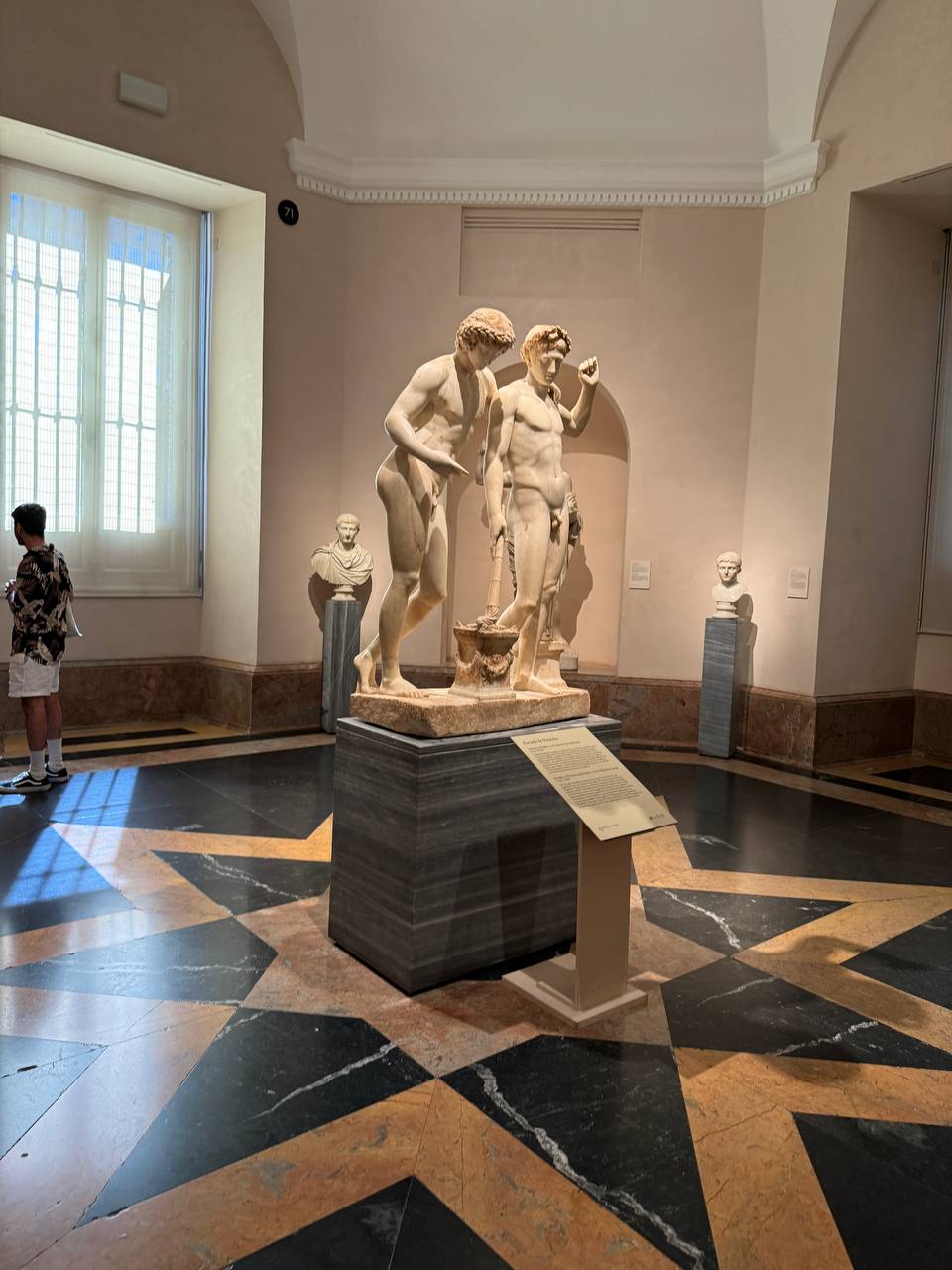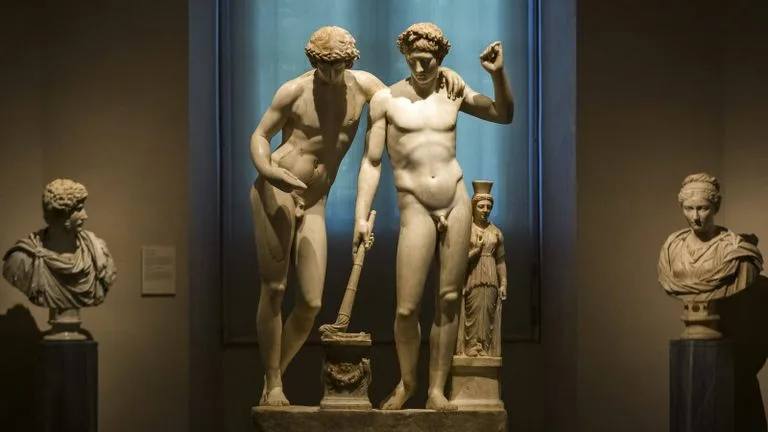
Orestes and Pylades, Castor and Pollux, Antinous and Hadrian: it is not known for certain whom the San Ildefonso Group in the Prado Museum collection actually depicts
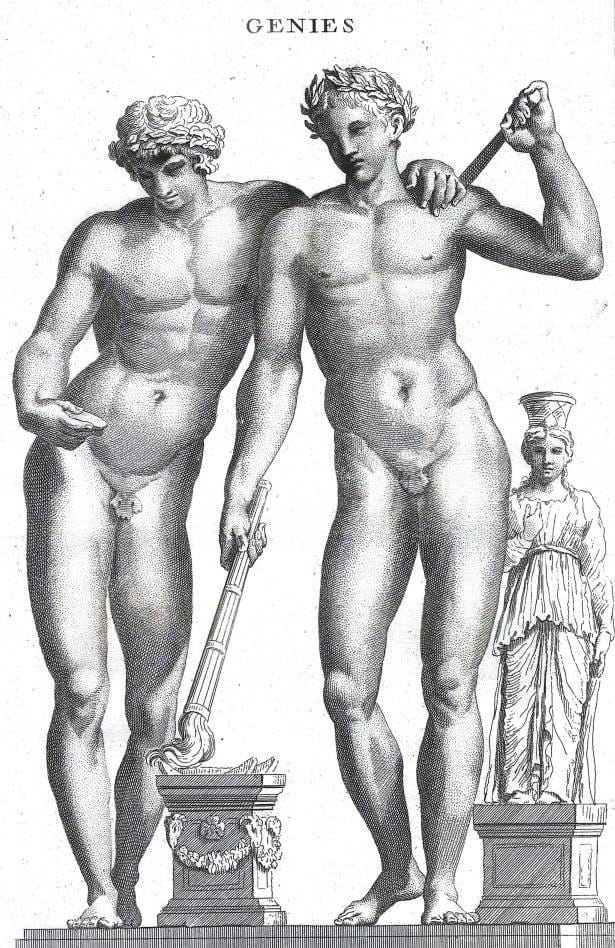
Most often the youths are identified as Orestes and Pylades at the moment of a sacrifice in gratitude for their successful return from Tauris. The statuette of the woman on the left is Artemis or Persephone, to whom the sacrifice is made. The sacrificial character of the scene is indicated by the torches: the one lowered towards the ground and a second, now lost.
The Antinous version is simpler still: it arises from the fact that a Roman copy of the head of Antinous was attached in place of the lost head.
At its first mention, in 1623, this sculpture from the age of the Emperor Augustus stood in the Villa Ludovisi in Rome, a veritable treasury of sculpture. It reached the Prado after passing through many hands, including those of Queen Christina of Sweden, the Spanish queen Elisabeth Farnese and King Philip V