Orest Adamovich Kiprensky, already a very celebrated artist in Russia (1805: Large Gold Medal for the painting “Dmitry Donskoy on the Field of Kulikovo”; 1812: academician; his contemporaries called him the Russian Van Dyck), lived for long stretches in R
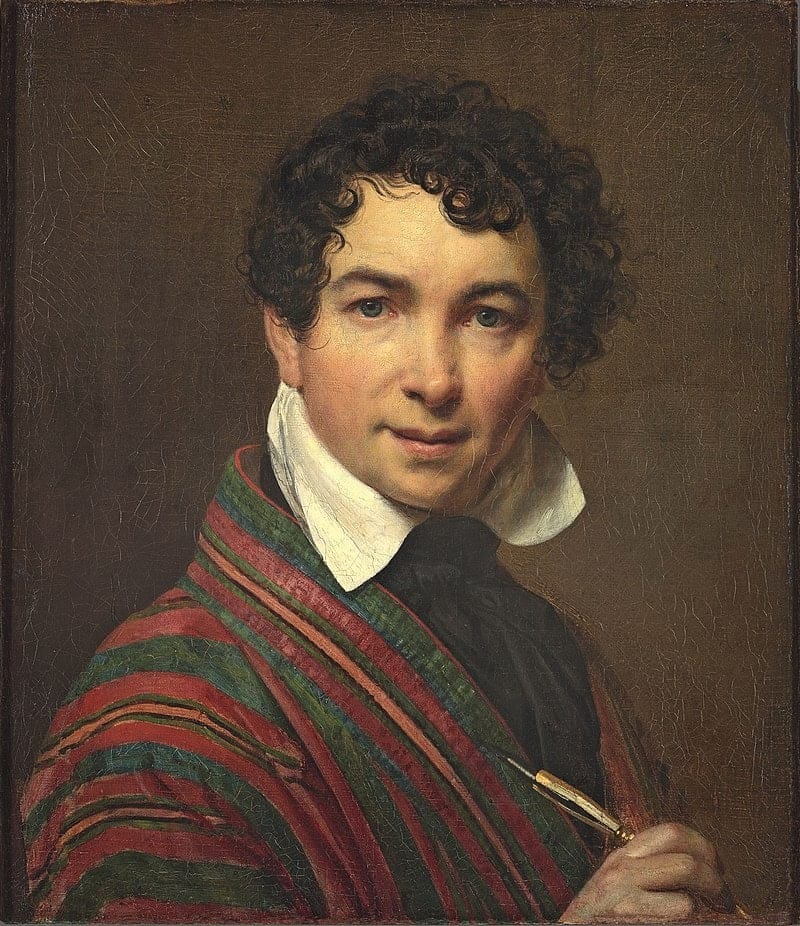
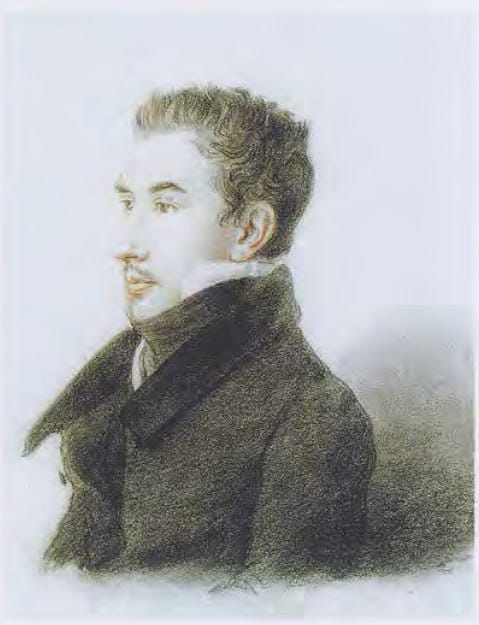
Orest Adamovich Kiprensky, already a very celebrated artist in Russia (1805: Large Gold Medal for the painting “Dmitry Donskoy on the Field of Kulikovo”; 1812: academician; his contemporaries called him the Russian Van Dyck), lived for long stretches in Rome, which he first reached in 1816, at the age of 34. But, to tell the truth, his life in Rome was rather a sad one, and it earned him a contradictory reputation. Though he worked a great deal and productively, and even became the first Russian painter to receive a commission for a self-portrait from the Uffizi Gallery.
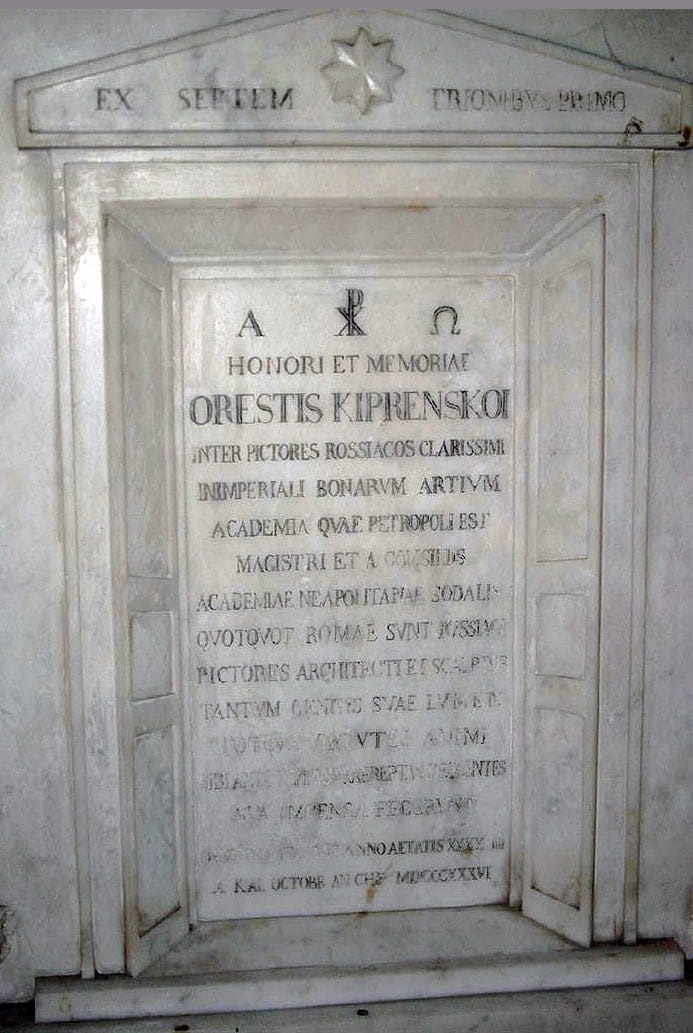
In Rome the pioneer of Russian Romanticism also died. He is buried in the centre of the city, in one of its beautiful churches, Sant’Andrea delle Fratte. Kiprensky’s Roman existence was blackened by the tragic death of his model, a woman of easy virtue, whose body was found burnt beneath a canvas soaked in turpentine. The probable murderer was the woman’s lover, but malicious tongues accused Kiprensky, which did his reputation great harm. Kiprensky was subjected to a veritable persecution, people literally pelted him with stones, and soon he returned to Russia, but ill fame caught up with him there too. Many years later the artist took as his wife the grown-up daughter of the deceased woman, who had become a waif even in her mother’s lifetime and had been taken in by Kiprensky to be brought up at the age of 6.
Paustovsky retold a popular story about Kiprensky walking about Rome with his pockets stuffed with bread to feed the stray dogs, which ran after him in a pack and waited in the street whenever he went anywhere indoors.