One of the most unusual manuscripts submitted for the new season of the Hypertext Prize is a work by the writer and science journalist Sergei Korostelev, "Earth — Venus: The Two Lives of Leonid Xanfomalidi"
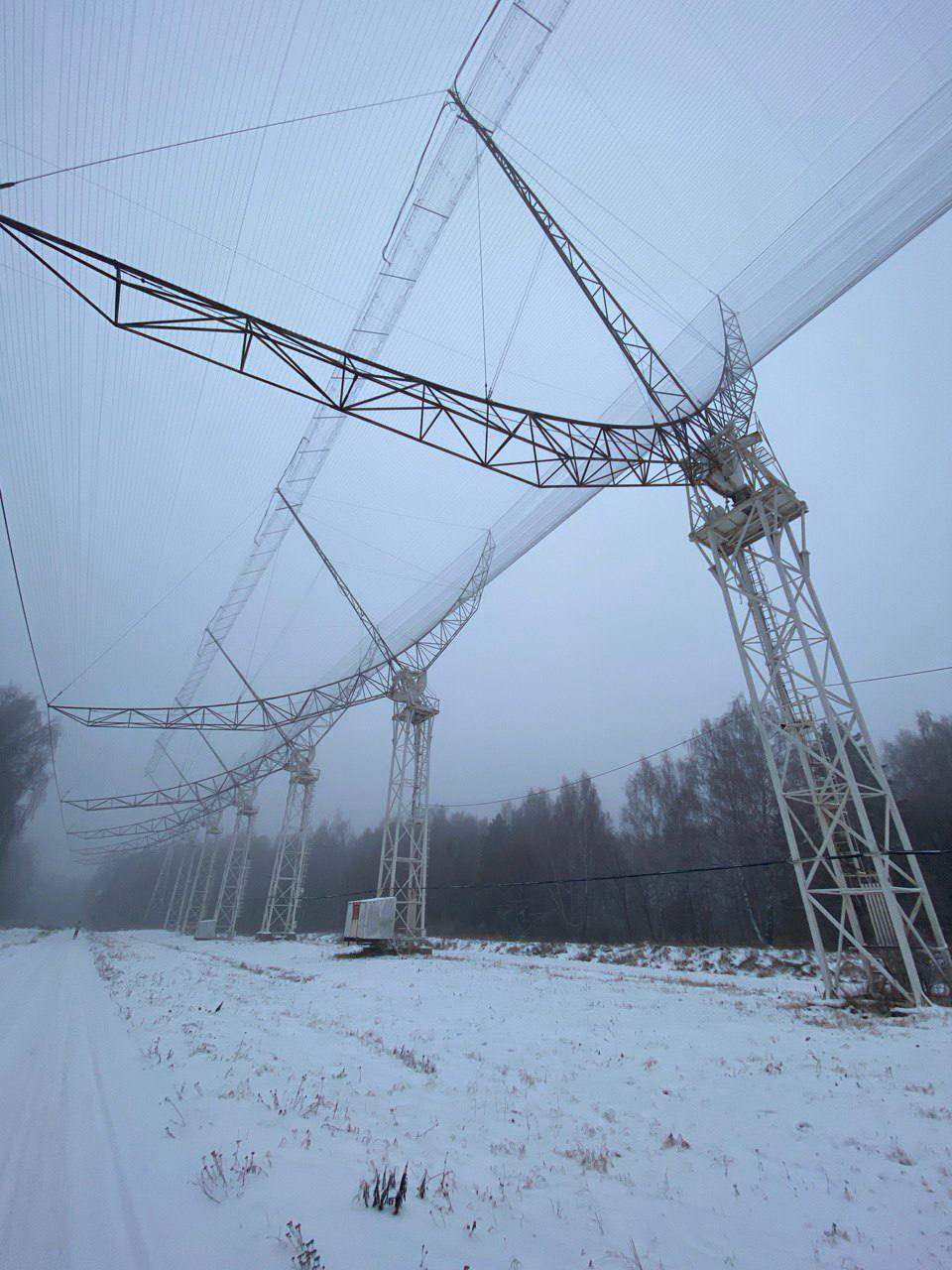
It is a large-scale biography of the distinguished Russian astronomer and space researcher Leonid Vasilyevich Xanfomalidi (1932–2019). A Doctor of Physical and Mathematical Sciences, he led experiments on the Soviet automatic stations that explored Mars, Venus and Halley's Comet.
Venus played a special part in Xanfomalidi's fate. On 21 December 1978 the "Groza" ("Thunderstorm"), a receiver-spectrum analyser for long and very long waves that he had designed, aboard the Venera 12 lander, registered numerous electromagnetic pulses, which Xanfomalidi interpreted as electrical discharges. Until that day we had known for certain of the existence of lightning on only one planet: the Earth.
It is a great achievement of Xanfomalidi's, and a deeply symbolic one. The atmosphere of Venus was discovered by M. V. Lomonosov on 26 May (O.S.) 1761, during the transit of Venus across the disc of the Sun.
In 2012 Xanfomalidi put forward a hypothesis about possible life on Venus. The idea provoked heated debate, but the scientist defended his theory to the end. He was sincerely convinced that only a new mission to the surface of Venus could confirm or refute his hypothesis, and he placed great hopes on the Russian project Venera-D, planned for 2031.
Sergei Korostelev's book "Earth — Venus: The Two Lives of Leonid Xanfomalidi" tells in detail of the astronomer's life and scientific achievements, including his Venusian hypothesis. The author draws on unique archival materials and the testimony of colleagues, creating an engrossing documentary work that will interest a wide circle of readers.